In this series of discussions with our experts, we will explore what Central Europe is, how we understand the concept today, and whether it helps us to describe contemporary reality and better understand our own experiences. We will consider whether this imagined and real area confines us within simplified categories, or whether it offers an opportunity for further definition. We will reflect on the definition of Central Europe and examine how many issues it touches upon – straddling history and the present, locality and global processes. Instead of obvious narratives, we will offer a fresh perspective, an alternative map and history of the region, full of unexpected places, ideas and figures.
The less obvious regions of Central Europe
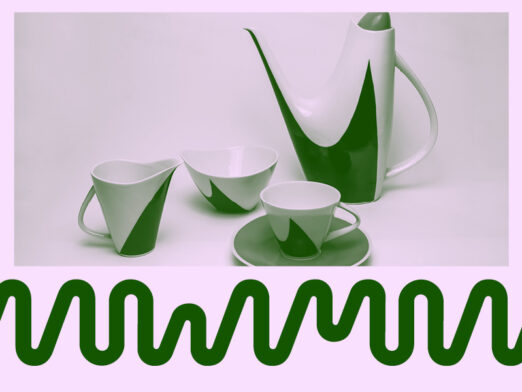
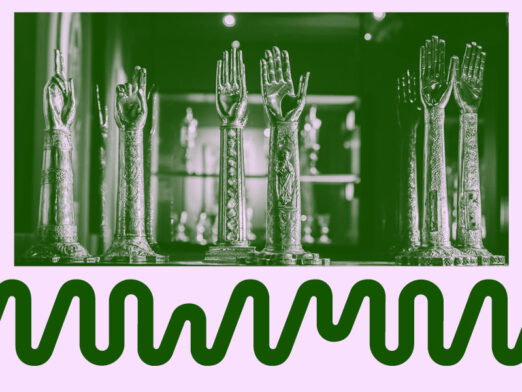
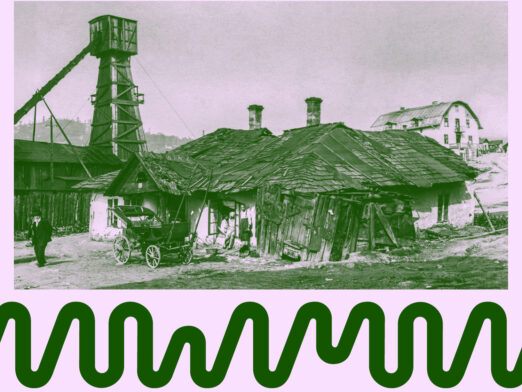
The starting point will be a story about Galician oil and its impact on modernity, as well as a discussion about the cities where national identity was born; however, there will be many more topics. In the upcoming episodes of the podcast, we’ll hear interviews with Agata Wąsowska-Pawlik, director of the ICC, and Marzena Daszewska, programme director. During the on-air sessions, Prof. Jacek Purchla will also discuss Galician myths and the extent to which they remain alive and present in today’s reality. Dr Monika Rydiger and Natalia Żak will explore the world of everyday objects and the existence of a Central European style, taking us into the realm of design.
We will travel to Moravia with Bartosz Sadulski, whilst Drago Jančar and Prof. Maciej Czerwiński will take us to the Balkans with their complex history and the difficult experiences of the 20th century. In our conversations and reflections, we will challenge stereotypes about places and cultures, venture off the beaten track and explore less obvious regions.
Join us on a journey through some of Central Europe’s lesser-known topics and regions!
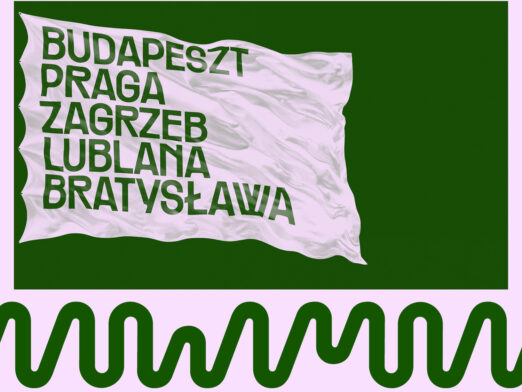
The second episode of the podcast “An Alternative Map of Central Europe” – a conversation with Dr Łukasz Galusek about imaginary capitals
The third episode of the podcast “An Alternative Map of Central Europe” – a conversation with Professor Maciej Czerwiński about Croatia and the writer Miroslav Krleža.
Guest biographies:
Prof. Maciej Czerwiński, PhD – a philologist specialising in Croatian studies, a professor at the Jagiellonian University, director of the Institute of Slavic Philology at the Jagiellonian University, and director of the Doctoral School of Humanities at the Jagiellonian University. His research focuses on the languages, cultures and literatures of the former Yugoslavia, as well as the intersection of language and literary theory, including issues of historical discourse. He has lectured and delivered presentations at symposia in many European countries and the United States. He is the author of several books published in Poland and Croatia, as well as numerous articles and essays. At the ICC, he co-curated the exhibition “Adriatic epopee. Ivan Meštrović” (2017) and has published essays in the journal “Herito”. He is also the author of the book “Croatia. History, Culture, Ideas”, published by the International Cultural Centre.
Dr Łukasz Galusek – architectural historian. Director of the Silesian Museum in Katowice, previously Programme Director of the ICC. His research interests focus on the culture and art of Central Europe, especially the relationships between space, memory, and identity. He is the author of over one hundred and fifty scientific publications on the cultural heritage of Central Europe and issues of memory and cultural education. Co-author and curator of exhibitions presenting the art and heritage of Central European cultures: Slovenia (2006), Poland and Ukraine (2007), Romania (2013), Croatia (2017), as well as Architecture of Independence in Central Europe (2018–2019).
Dr Beata Nykiel – historian and archivist, Deputy Head of the Institute of European Heritage at the International Cultural Centre in Kraków. She has been with the ICC since 2006. Her research focuses on the history of Central and Eastern Europe in the early modern period, particularly the social history of the eastern territories of the Polish–Lithuanian Commonwealth (primarily the Podolia region) from the 14th to the 18th century. Her second area of interest concerns the Galician war cemeteries from World War I and issues related to the protection of cultural heritage, with a special emphasis on Eastern Europe. She is a member of the editorial team of the quarterly Herito and the author of numerous scholarly and popular publications.
Dr Monika Rydiger – art historian and critic, curator. She curated or co-curated such exhibitions as Hunting Down Modernism: “The Prohibited Arts in the Third Reich” (2011), “Memory: Registers and Territories” (2013), “MAKOM. Dani Karavan. The Essence of Place” (2015), “The Logic of the Local: Norwegian and Polish Contemporary Design” (2016). She is a member of the Polish section of AICA (International Association of Art Critics), vice president of the Association of Art Historians, Kraków Branch. Author of texts on modern and contemporary art, specialising in sculpture and architecture.
Natalia Żak – art historian, curator, and writer. She has collaborated with art galleries in Poland and abroad. She works at the ICC in Krakow, where she curated exhibitions such as: ”Lithuania. Two Centuries of Photography” (2023, with Adam Mazur), ”Travelling Images. Małgorzata Mirga-Tas” (2022, with Wojciech Szymański), ”More Than Bauhaus. German Photography between the Wars and Polish Parallels” (2021, with Adelheid Komenda, Sebastian Lux and others), ”Photobloc. Central Europe in Photobooks” (Krakow 2019–2020, Olomouc 2020, Vilnius 2021; with Adam Mazur, Łukasz Gorczyca), ”Architecture of Independence in Central Europe” (2018–2019, with Łukasz Galusek, Żanna Komar and others). She is currently working on a project about Central European design after 1945.
Produkcja: Radio Kraków