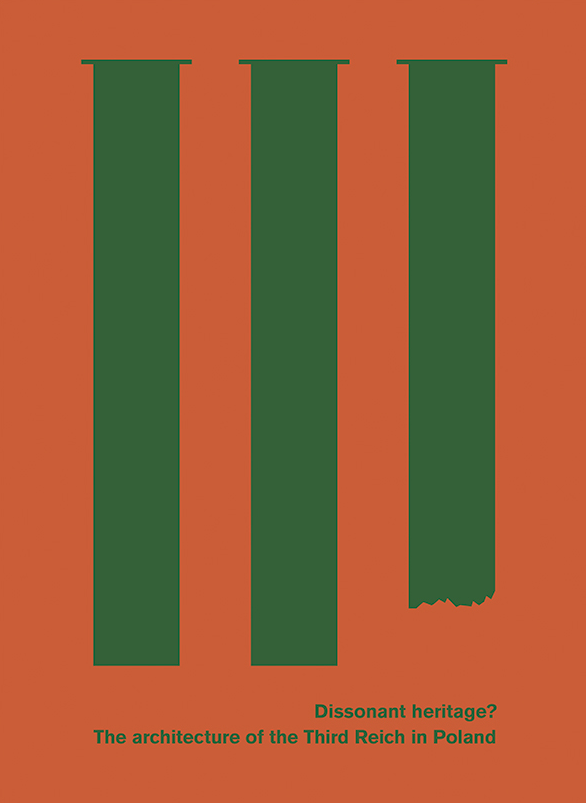
For over a decade, the International Cultural Centre (ICC) has been researching the difficult legacy of the Third Reich, which remains visible in the urban landscapes of European cities under German occupation during the Second World War, with a particular focus on Poland.
In 2018, the ICC organised a conference entitled “The Difficult Heritage of the Third Reich in Poland”, during which German and Polish researchers discussed contemporary attitudes towards the heritage of hatred and the challenges of its interpretation. The conference culminated in a publication of the same title.
In 2022, the ICC Gallery hosted the exhibition “An Unwanted Capital: Architecture and Urban Planning in Kraków during the German Occupation, 1939–1945”, which sought to examine an unprecedented experiment imposed on Kraków in the complex history of Central Europe.
The ICC is part of an informal network of Polish and German research institutions that meet to discuss architecture and urban planning in the territories of Eastern Europe occupied by the Third Reich. The aim of these meetings is to create a platform for dialogue on difficult heritage.
This year’s initiative was a workshop held at the ICC in June, organised in cooperation with the German Historical Institute Warsaw and with the support of the Foundation for Polish-German Cooperation, entitled “Nazi Urban Planning, Architecture and Their Visual Media in German-Occupied Poland and Other Central European Countries”. The workshop sought to explore how architecture and urban planning were used to shape the reality of occupation, and how we can responsibly communicate today the traces of violence inscribed in the built environment.
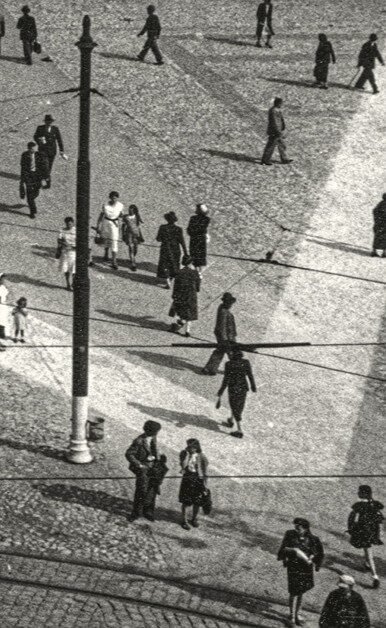
Experts from several European countries gathered at the ICC to discuss how photographs, maps and visual representations produced during the Second World War not only supported but also actively contributed to the Germanisation of occupied cities, and how such materials should be interpreted today.
Our research also extends to the post-war period. We are particularly interested in examining the reuse of Nazi-era materials, as well as the creation of new materials based on them, in historical research and museum exhibitions.
This year, we also initiated discussions with a partner institution in Germany regarding a new exhibition project aimed at presenting a reimagined version of “An Unwanted Capital: Architecture and Urban Planning in Kraków during the German Occupation, 1939–1945” to audiences in Germany.
Publications