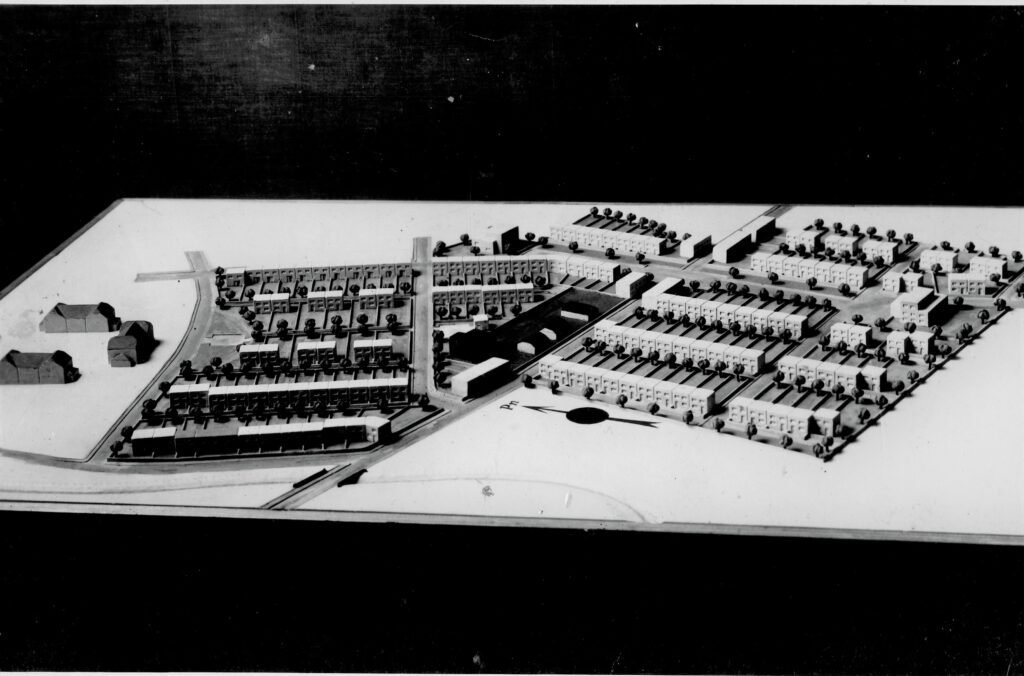
The name of the New Homes housing estate from the early 1930s referred to the German term Neues Bauen. In Germany, this concept meant the use of comprehensive modernization, whose guiding idea was to build modern housing estates, develop the idea of a minimum apartment and modern interior design. Bauhaus workshops were the “forge” of new homes before the First World War.
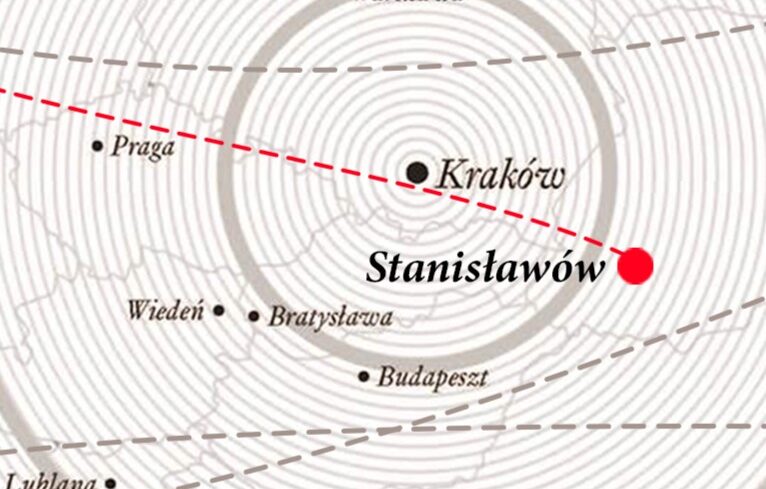
The initiator of the creation of New Houses in Stanisławów was Benedykt Lieberman, son of the owners of a powerful yeast and spirit factory, who after returning from a few years in Vienna and Frankfurt decided to take steps to modernize the family business. One of them was the decision to create a modern housing estate, partly for factory workers, and partly for real estate investment.
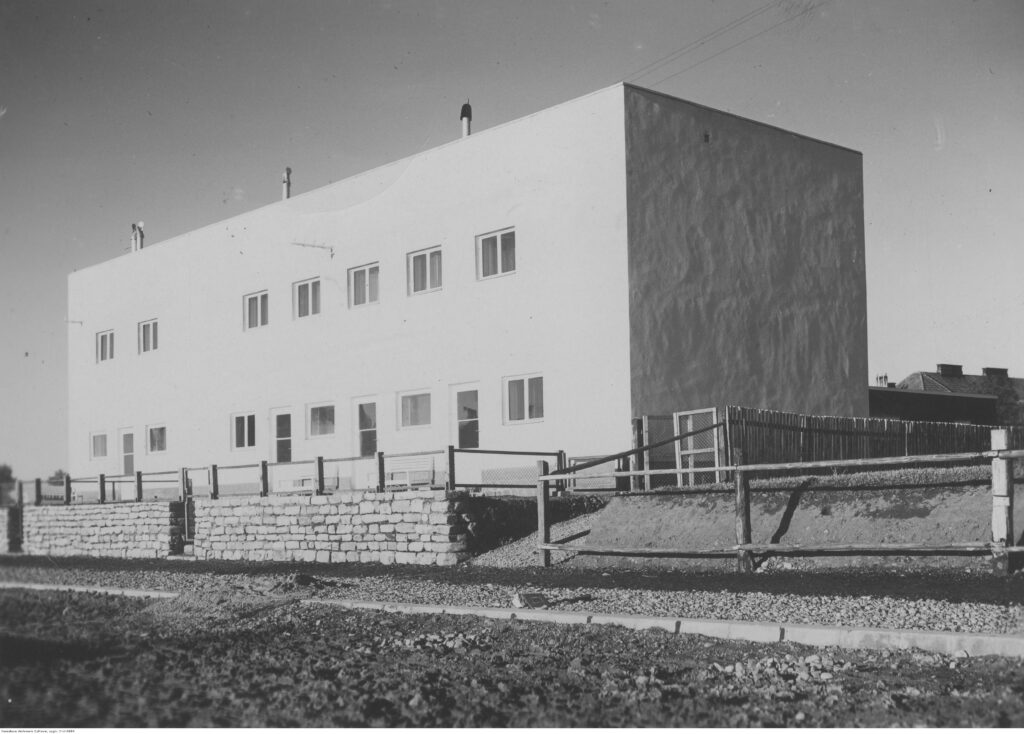
Paul Engelmann, the cousin of the wife of Benedykt Lieberman and the outstanding Austrian architect and philosopher, was the author of the design of the new housing estate from both the urban and architectural side, as well as the interior design. Engelmann was one of the favorite students of Adolf Loos in his Bauschule in Vienna. He was also the personal secretary of the writer, critic and culture expert Karl Kraus, and a friend of the philosopher Ludwig Wittgenstein at the time when he was just finishing his “Tractatus logico-philosophicus”. The fruit of this friendship was the joint work on “Haus Wittgenstein” – a modernist house built on the order of sister Ludwik Margaret Stonborough-Wittgenstein, completed in 1928.
In the early 1930s, Paul Engelmann had no permanent employment, and Benedict Lieberman had the resources and was eager to do something innovative. So he got Paul involved in the Stanisławów project. The New Homes housing estate turned out to be the architect’s largest work to date, and thanks to him Stanisławów became a place of architectural events on a European scale.
Publications
Publications
The assumption was that New Homes housing estate was to incorporate the seeds of social and ethical utopia, assigning architecture the power of moral improvement of man, and formally the action took the form of a housing and construction cooperative. To convince the residents of Stanisławów to buy houses and shares, Lieberman erected the first two buildings in which he arranged an exhibition and a promotional campaign. The entire undertaking was written in the journal “House. Estate. A flat, “calling it” the import of a real Bauhaus. “
Series of these once regular houses with smooth facades and flat roofs, housing modern functional apartments with gardens, give the impression of random development today. Commonly rebuilt, they lost their original modernist shape.
Publications
Publications
New Homes in Stanisławów appeared as a topic at the exhibition Architecture of independence in Central Europe in the section devoted to modern housing.