
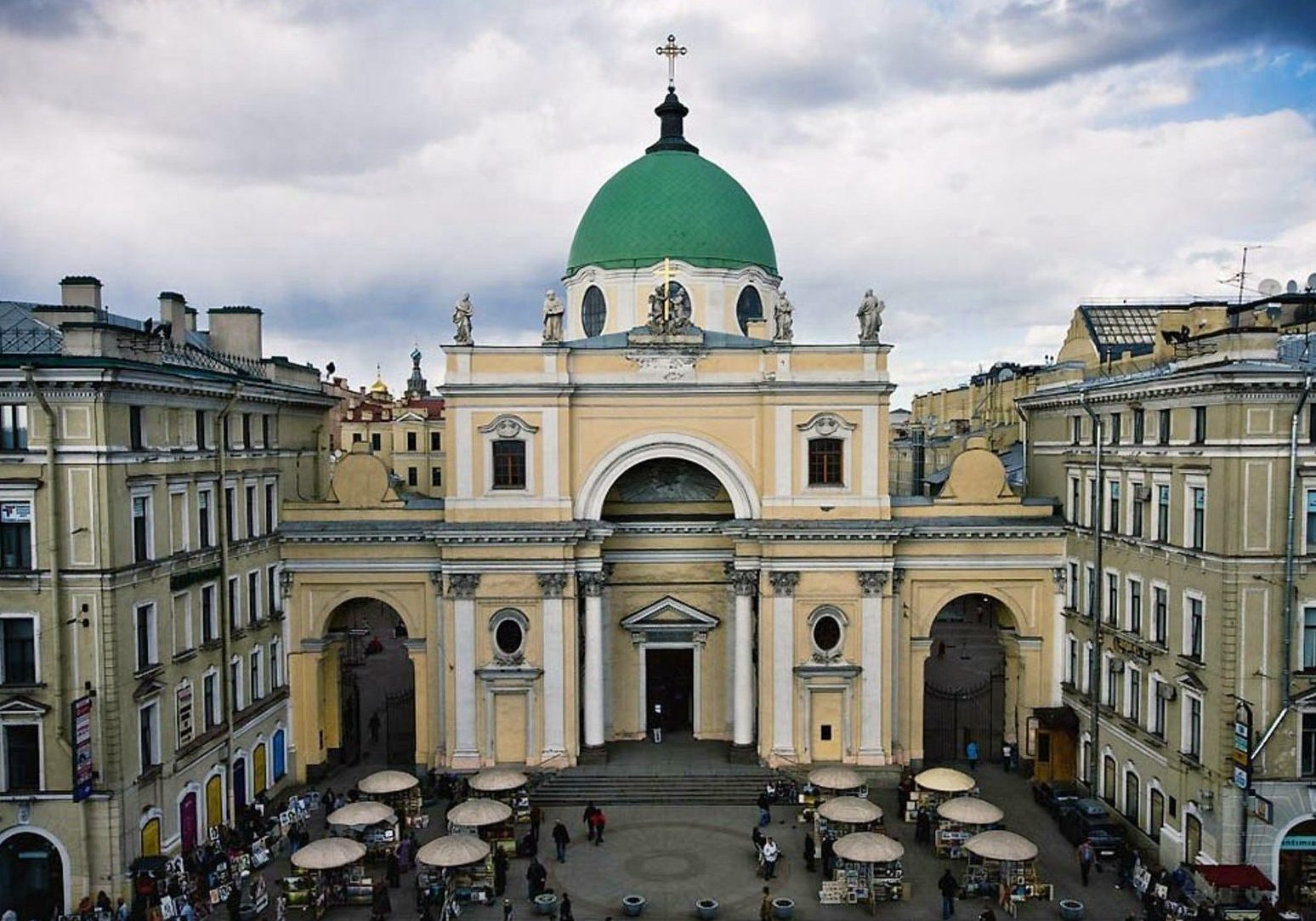
Between 2015 and 2018, an ICC research team led by Beata K. Nykiel, in collaboration with the Dmitry Likhachev International Charitable Foundation (FL), developed Polish Petersburg, a popular-science online encyclopaedia. The project aimed to introduce Polish and Russian audiences to the lives and achievements of Poles associated with St Petersburg, Petrograd, Leningrad and, finally, St Petersburg once again.
The encyclopaedia was produced in two distinct language editions: a Polish version edited by the ICC and a Russian version prepared by the FL.
As the historian, diplomat and one of the encyclopaedia’s editors, Hieronim Grala, observed: “There is no history of Polish exile and pilgrimage without the history of Polish St Petersburg.” The Polish community on the Neva evolved both in character and in size, depending on historical circumstances. At the beginning of the 20th century, it numbered approximately 65,000 people; during the First World War, with the arrival of refugees, it grew to more than 100,000.
After the First World War, a substantial part of the Polish community chose to return to the land of their ancestors and contribute to the reconstruction of the Polish Republic, reborn in 1918. Many others, however, decided to remain, and for them Petrograd—and later Leningrad—became a new home. Tragically, a significant number of them, like many other inhabitants of the city of different nationalities, fell victim to the so-called Great Terror in the 1930s. These losses were compounded by the tragedy of the Siege of Leningrad (1941–1944). In 2010, the Polish community in St Petersburg was officially estimated at approximately 2,600 people.
The Polish Petersburg encyclopaedia comprises nearly 3,000 pages, including 300 core entries and a subject bibliography covering the years 1945–2018 (27 pages of Polish-, Russian- and English-language publications). Alongside the predominantly biographical entries—including those restoring attention to overlooked figures—the portal also features, often for the first time, thematic entries of varying scope. These highlight, among other aspects, the creative contribution of Poles to the development of modern St Petersburg and the role they played after 1918 in building an independent Poland.
The Polish-language entries were written by more than 50 scholars representing nearly all major academic centres in Poland, including Warsaw, Kraków, Gdańsk, Poznań, Lublin, Wrocław, Opole, Białystok and Toruń. The encyclopaedia also includes texts by Russian researchers, including Professor Tamara M. Smirnova, author of publications on the Polish community in St Petersburg and its organisations. Most of the encyclopaedia’s Polish and Russian texts are based on publicly available sources; some, however, draw on years of research, including archival work.
The encyclopaedic narrative is complemented by an interactive map presenting selected places and addresses connected with the life of the Polish community on the Neva.
The development of the encyclopaedia was preceded by the Poles and St Petersburg programme, carried out by the ICC from 2012 at the commission of the Ministry of Culture and National Heritage. It was conceived as one of the key initiatives planned for the 2015 Year of Polish Culture in Russia. The launch of the website formed one element of this large-scale project, which also envisaged, among other initiatives, the preparation of an exhibition and the organisation of an international scholarly congress.
Partners:
Ministry of Culture and National Heritage; State Museum of the History of St Petersburg; State Museum of Political History of Russia; Citywalls.ru portal
Following Russia’s annexation of Crimea and the outbreak of the war in Donbas in 2014, the Year of Polish Culture in Russia was cancelled. The encyclopaedia was therefore initially conceived as a means of preserving the body of research generated through the project. Above all, however, it was driven by the need to make reliable information available to Polish and Russian audiences about the centuries-long presence of Poles on the Neva—an aspect of history that remains little known and insufficiently represented in broader public awareness.
The encyclopaedic project was complemented by the freely available digital collection of essays entitled St Petersburg and Poland. Prepared by the ICC under the scholarly editorship of Dariusz Konstantynow and richly illustrated, the publication presents, through 17 essays by Polish and Russian authors, the history, size and social structure of the Polish community in St Petersburg from the late 18th century to the 1930s.
Link to the Polish Petersburg encyclopaedia (Polish-language version)