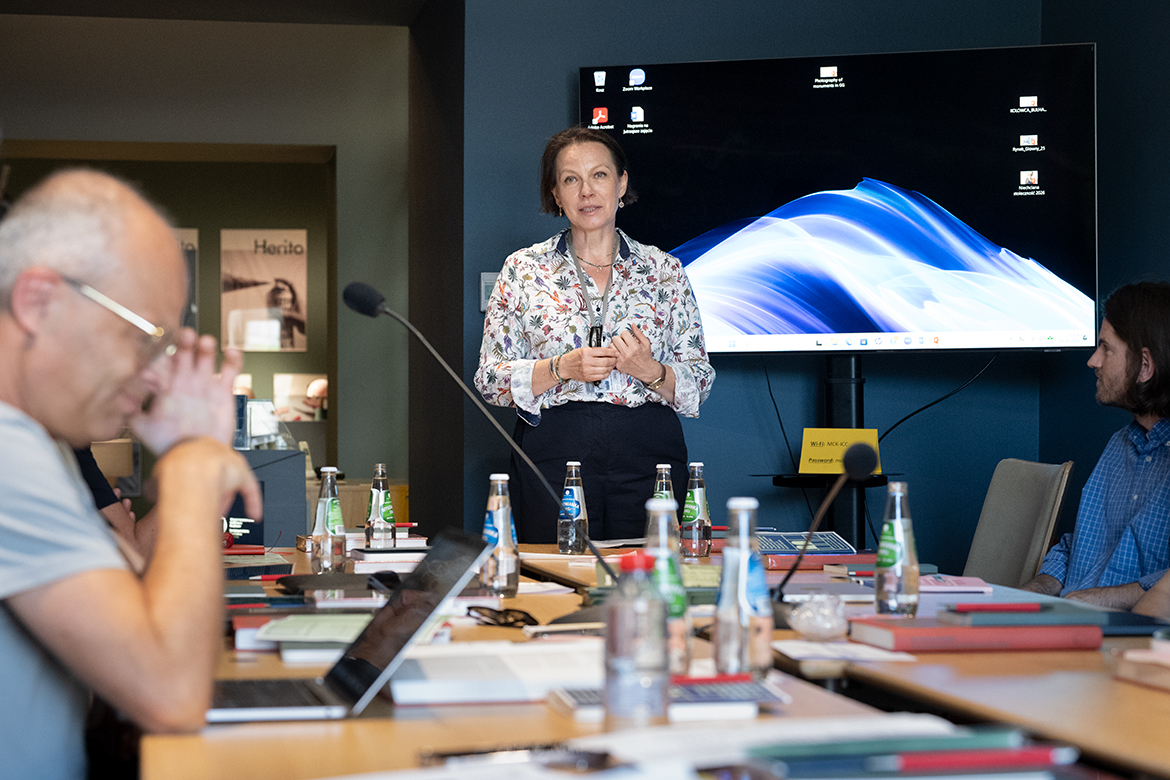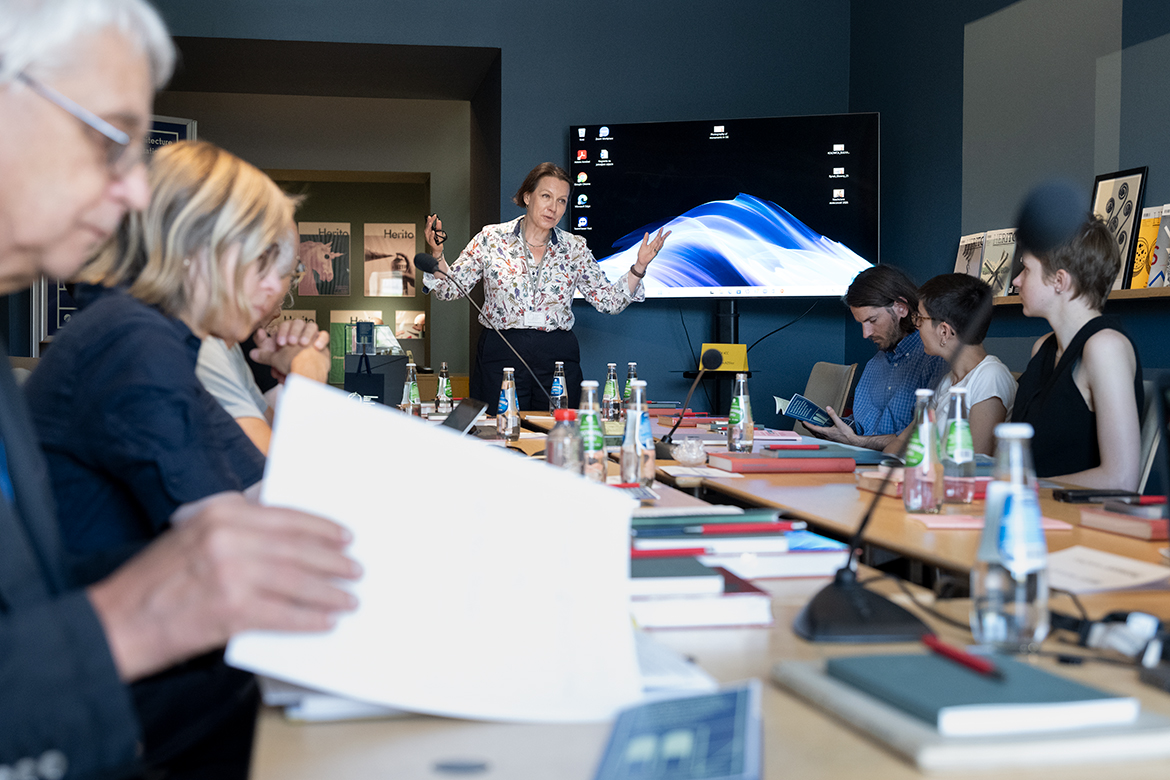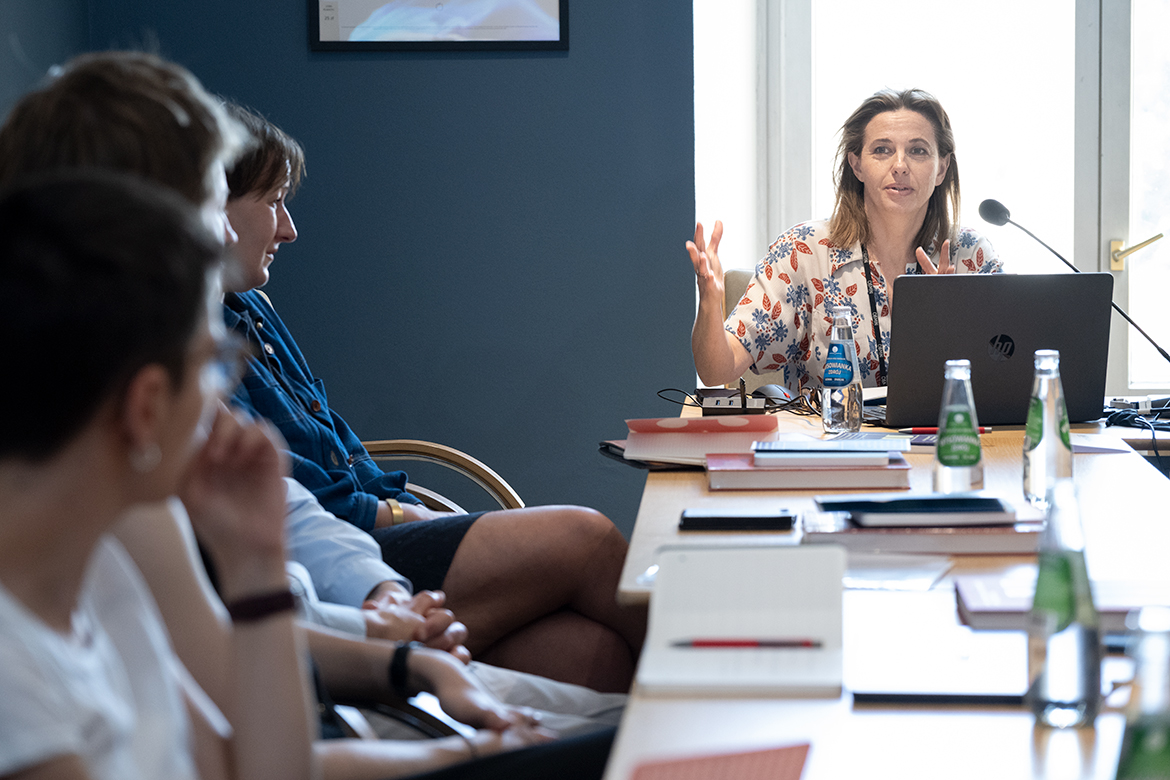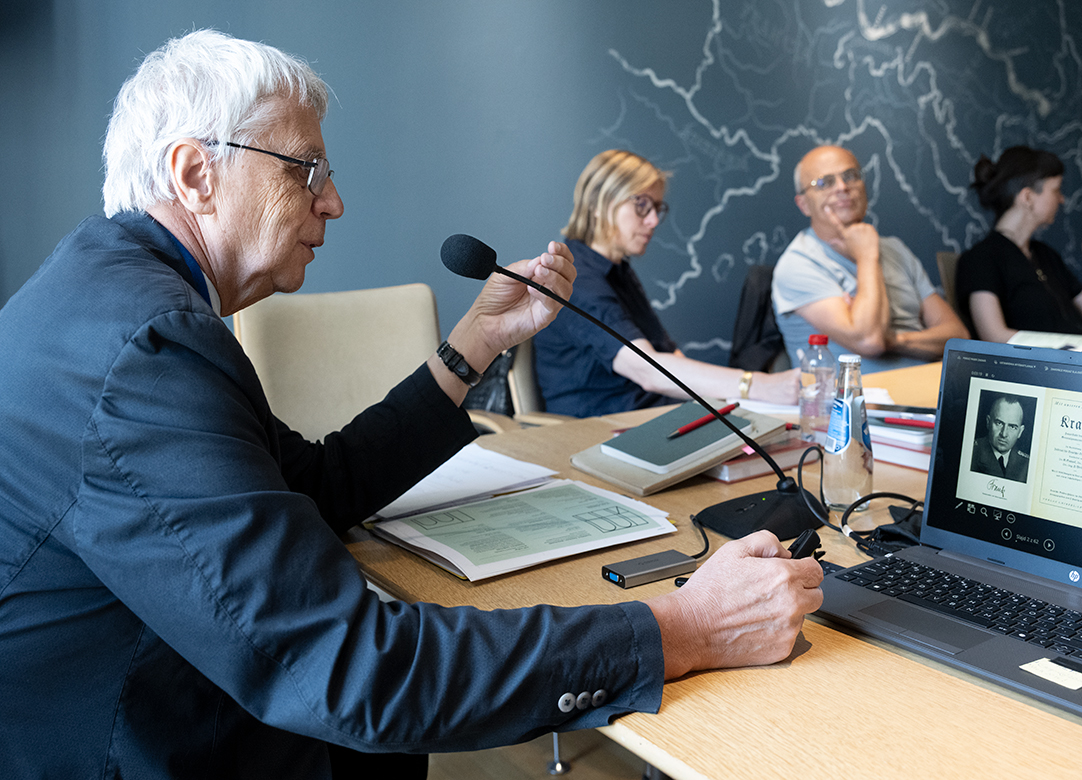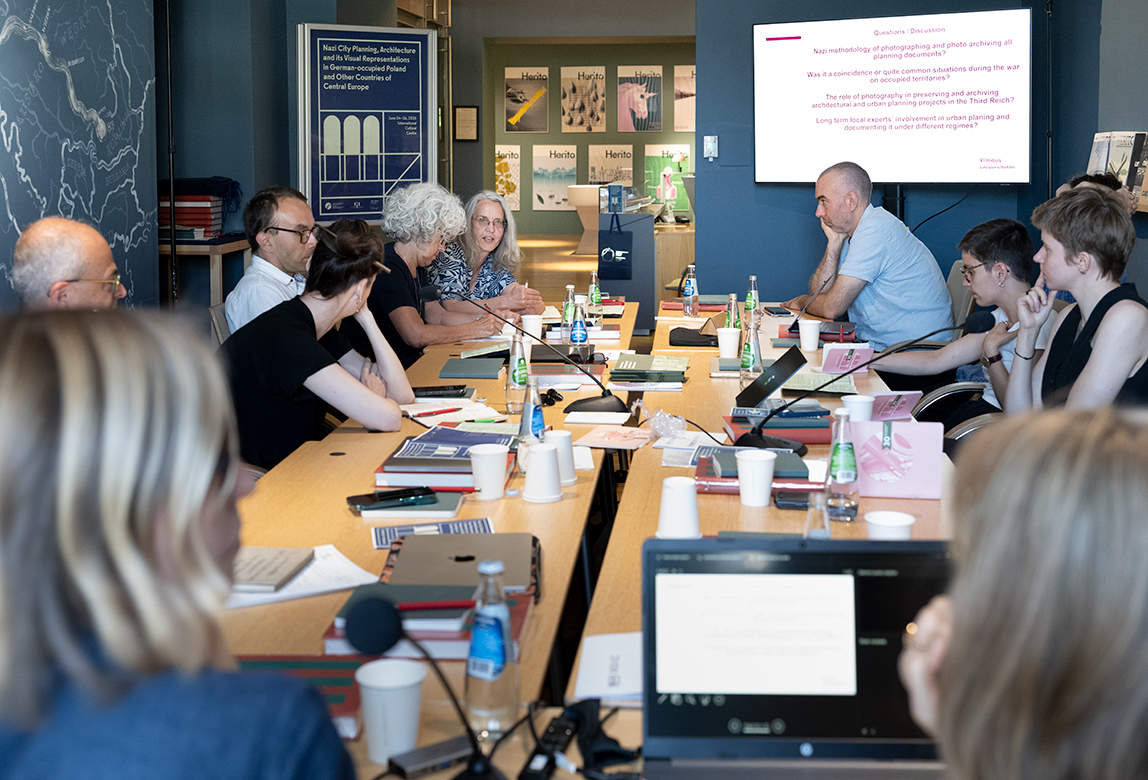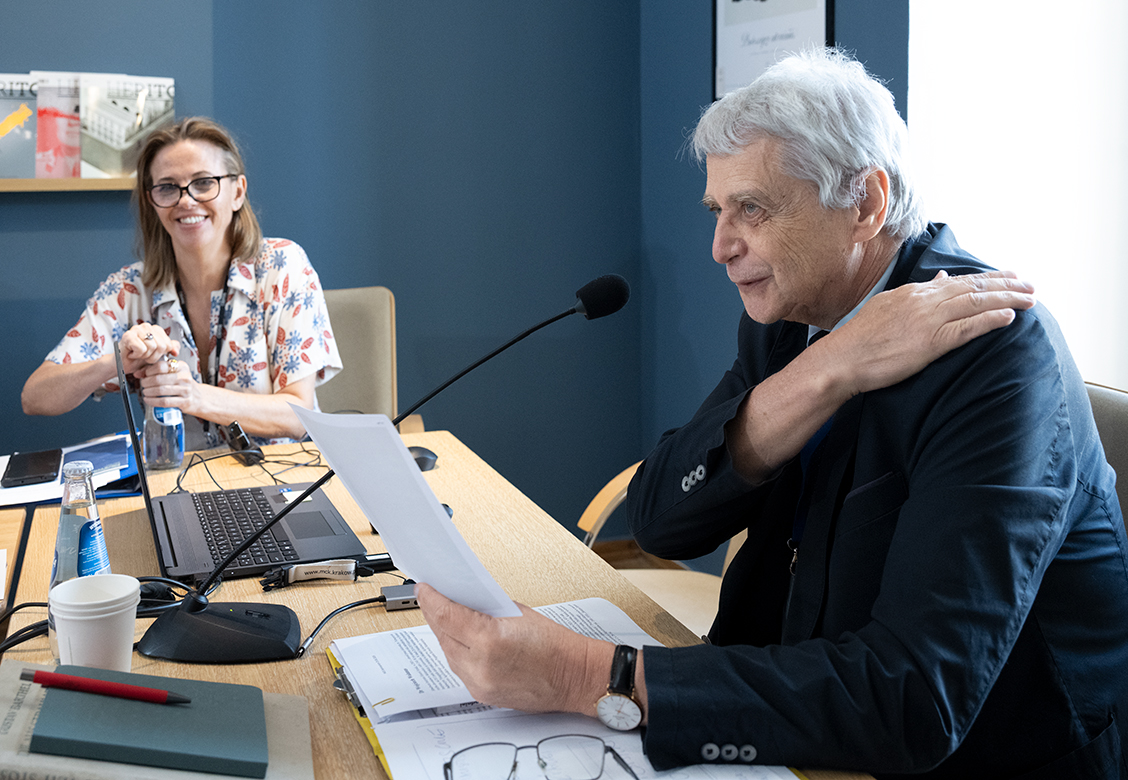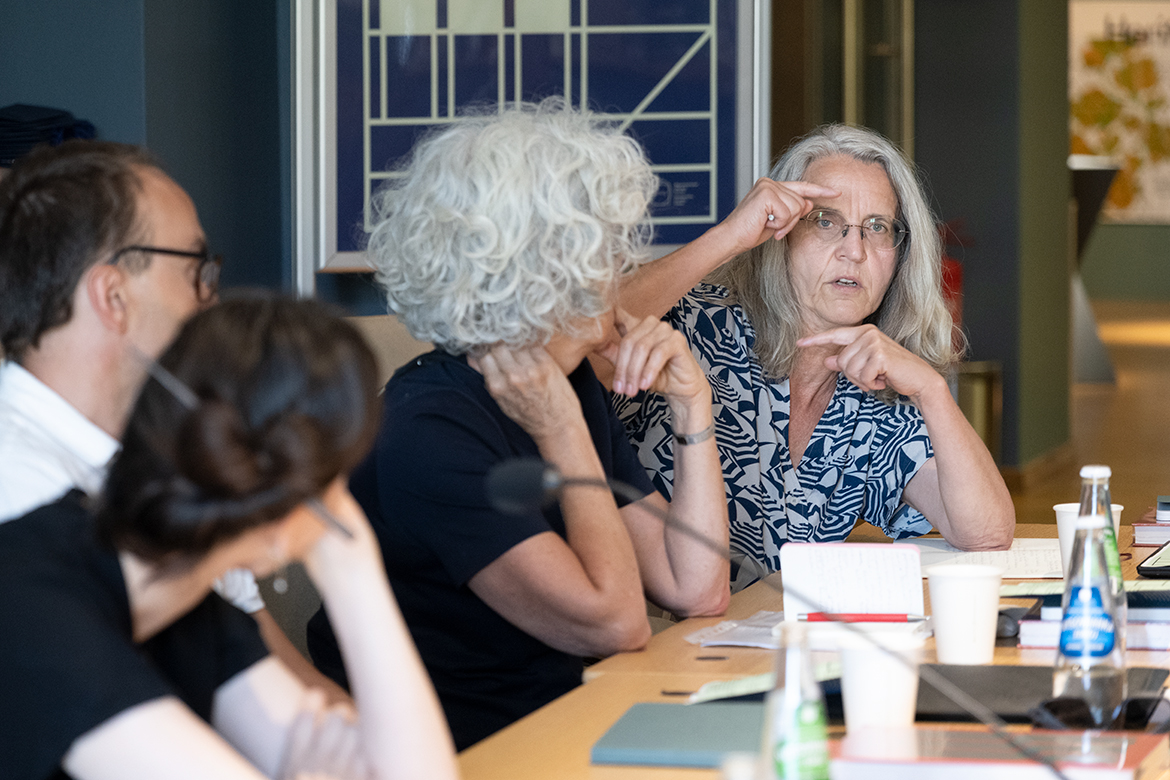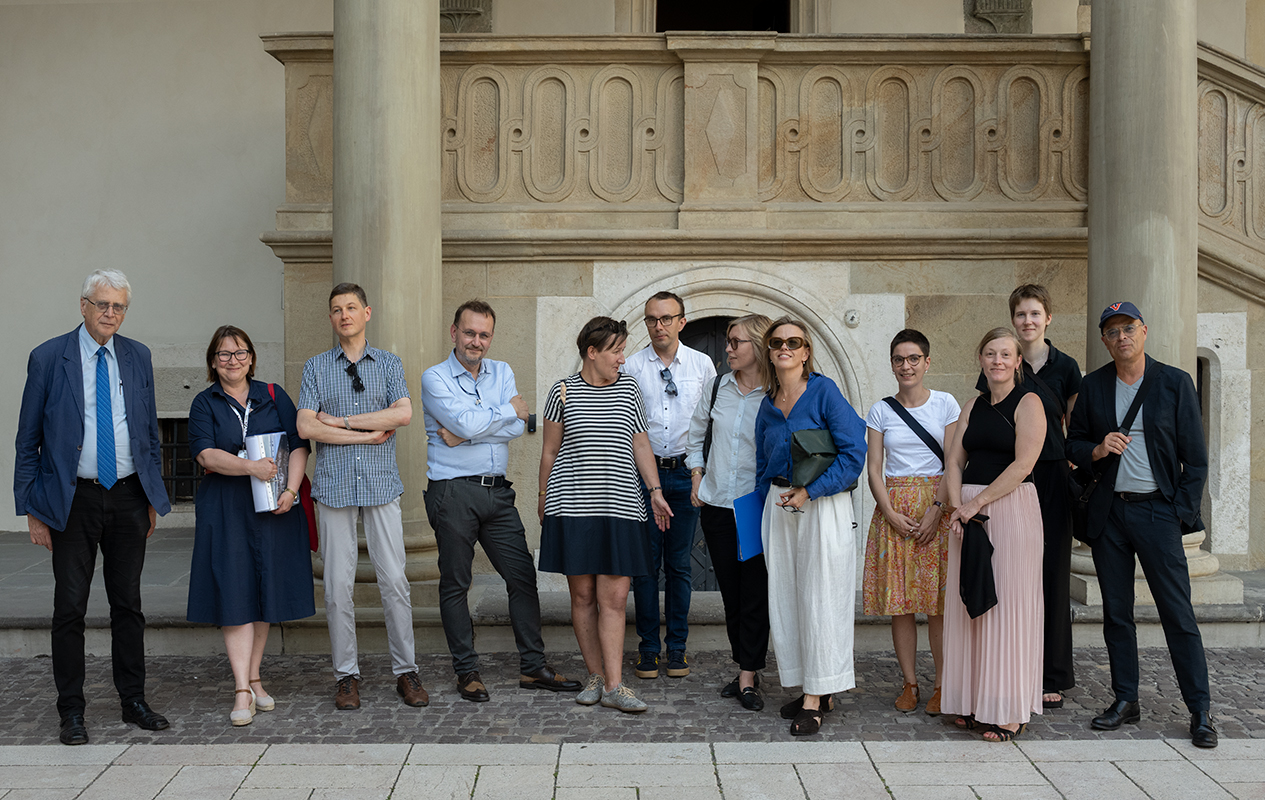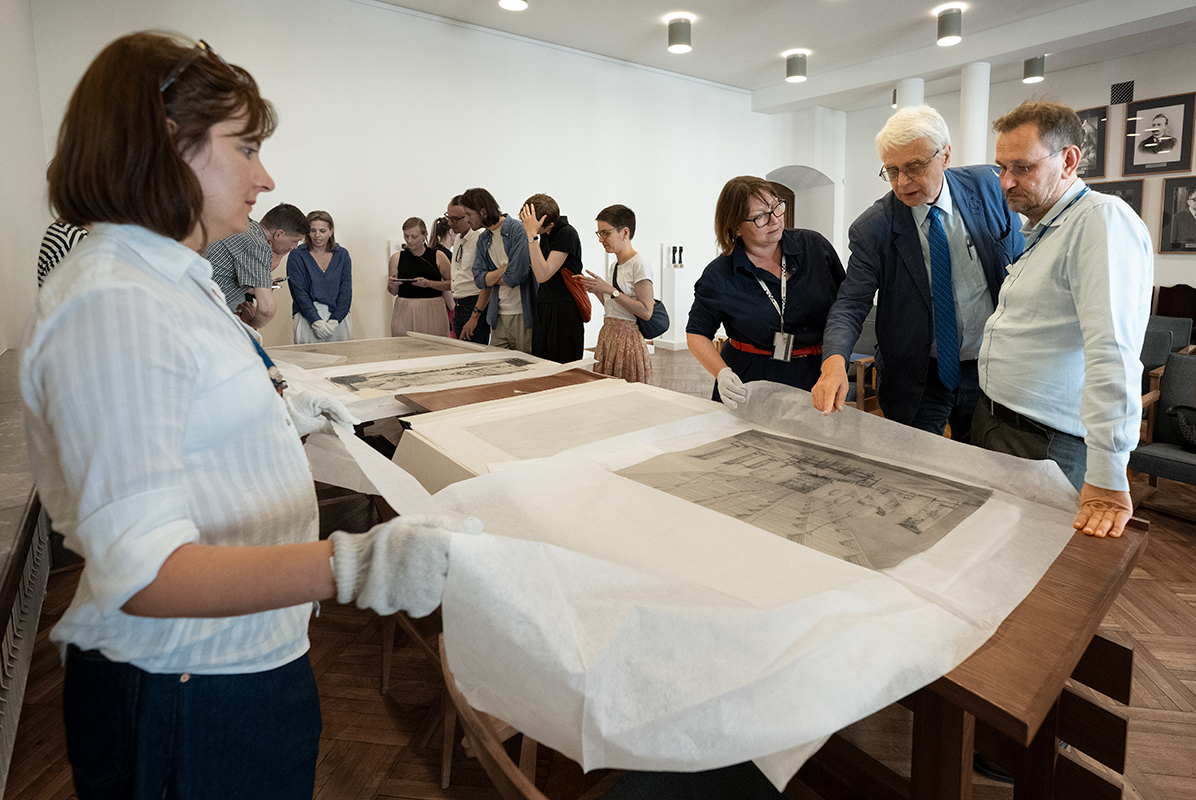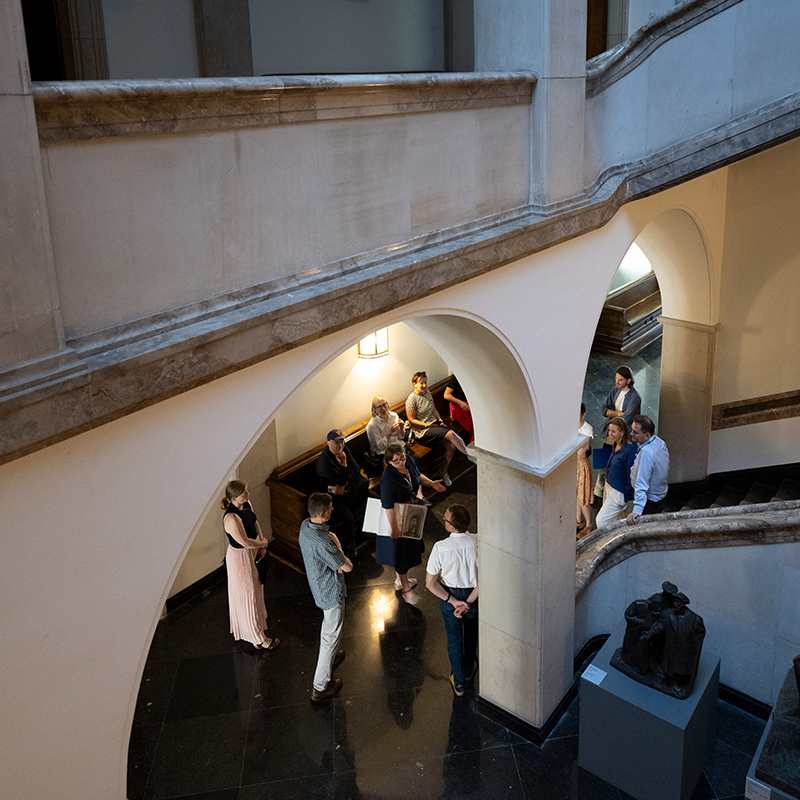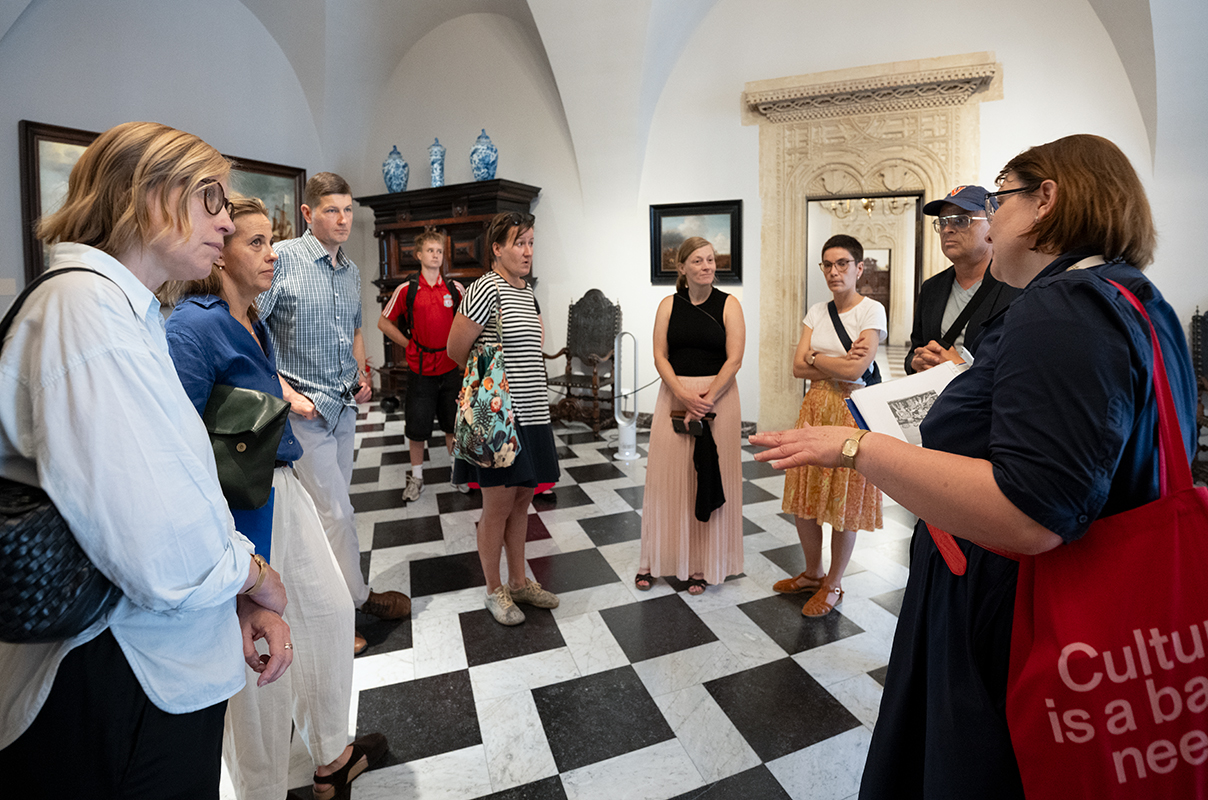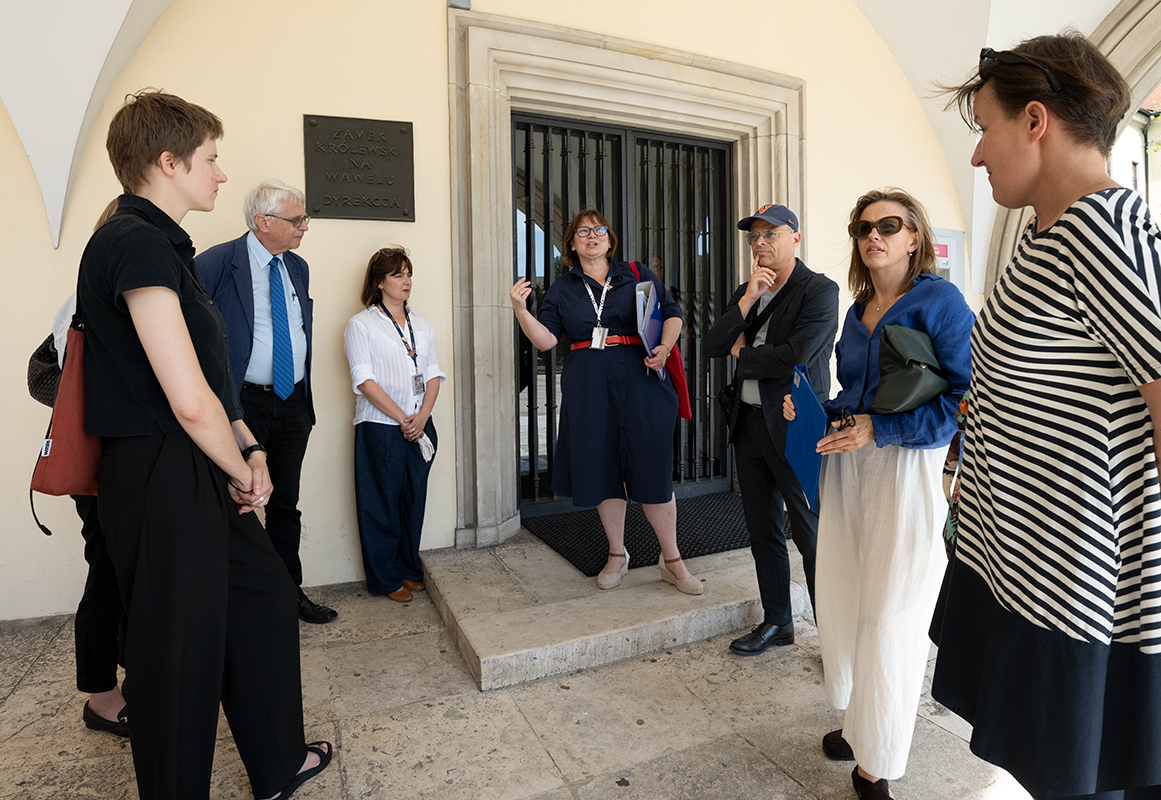
The workshop, curated by Dr Żanna Komar (MCK) and Dr Annika Wiennert (NIH), entitled ‘Nazi City Planning, Architecture and its Visual Representations in German-occupied Poland and Other Countries of Central Europe’, represents the next stage in research into the difficult legacy of the Third Reich — an attempt to understand how architecture and urban planning were used to shape a new reality in the occupied territories, and how we can today responsibly address the traces of violence inscribed in the built environment. Experts from several European countries will discuss at the ICC how photographs, maps and images created during the German occupation in the World War II supported and actively participated in the Germanisation of subjugated cities, and how such materials should be interpreted today.
The discussion will feature researchers from Austria, Lithuania, Germany, France and Poland, who will once again come together to address the challenging and extremely fascinating issue of this unwanted heritage. The aim of the meeting is to take a critical look at visual materials produced during the Nazi occupation, particularly those relating to architecture and urban planning.
Key topics of the seminar on Nazi urban planning and architecture at the MCK
Researchers will examine collections of visual material produced by Nazi officials. They will subject seemingly neutral examples of iconography to critical analysis and will also look at the role of local photographers and architects who participated in their creation. They will also discuss how the German occupiers exploited these individuals’ labour, skills and knowledge. The discussion will further address how to utilise the visual materials in question in academic research and museum exhibitions. A key element of the discussion will be a comparison of the legacy of the Third Reich across different countries.
This interdisciplinary workshop on visual media as sources for research into the German occupation is intended to encourage such research, reflection and the production of publications on the subject. This is not only an opportunity for dialogue and integration between academic and cultural circles in Poland, Germany and other countries, but also a chance to fill in the gaps in our knowledge, which, due to its controversial nature, remains a field that has not yet been fully explored.
Building new knowledge and reflecting on memory
The June event at the MCK will be the fourth instalment of a series of workshops on the urban heritage of the Third Reich in the territories it occupied during the World War II. For several years now, a network of Polish and German research institutions has been active, participating in meetings on architecture and urban planning in the territories of Europe occupied by the Third Reich.
The series was initiated by a group of researchers specialising in architecture and history; the first event took place in May 2024 in Turek, and its theme was ‘Sources (Un)Recognised. New Research on Urbanism and Architecture of the ‘Third Reich‘ in Occupied Poland’. The organisers were the Nordost-Institut Lüneburg, the University of Kalisz and the Magdalena Abakanowicz University of Fine Arts in Poznań (UAP). The second meeting took place in December 2024 in Poznań, where workshops were organised around an exhibition presented at the Zamek Culture Centre in Poznań entitled ‘Exhibiting Nazi Architecture’. The event was organised by the Nordost-Institut Lüneburg, NIH and UAP. The third instalment of the event took place in Lüneburg, under the title ‘Contact – Demarcation – Imaginations. Spatial Practices in the Occupied City under National Socialism’ (October 2025). It was co-organised by the Nordost-Institut Lüneburg and the Faculty of Architecture at Poznań University of Technology, with financial support from the Polish-German Foundation for Science (PNFN).
The ICC’s research into the legacy of the Third Reich
The architectural and urban legacy of the Third Reich on Polish soil has also been one of the International Cultural Centre’s areas of research for many years. As early as 1994, Professor Piotr Krakowski raised the question of whether one should engage with and write about Nazi art at all in a book published jointly by IRSA Publishing and the ICC Publishing House entitled ‘The Art of the Third Reich’. Research into Nazi visions of Kraków and its problematic legacy was conducted by Professor Jacek Purchla, who, amongst other things, wrote about Hubert Ritter – the man behind the idea of building a prestigious German government district in Dębniki. In 2018, the ICC organised a conference entitled ‘The Dissonant Heritage of the Third Reich in Poland’, during which German and Polish researchers discussed contemporary attitudes towards this unwanted legacy and its interpretation. The conference culminated in the publication of a book under the same title.
In 2022, the ICC Gallery hosted the exhibition ‘Unwanted capital. Architecture and urban planning in Krakow during the German occupation of 1939–1945’ (5 March – 12 June 2022), which sought to examine the experiment to which Kraków was subjected. For 1961 days, the city was the capital of the General Government, and its urban fabric was to undergo a series of changes to become a wholly German city.
The exhibition – accompanied by a comprehensive catalogue – was curated by Prof. Jacek Purchla, Dr Żanna Komar and Dr Monika Rydiger, provided an opportunity to reflect on contemporary attitudes towards the urban heritage left behind by the Third Reich, which has become an integral – though often invisible to residents – part of Kraków’s landscape.
Programme available for download
Produced with financial support from the Foundation for Polish-German Cooperation/
Realisiert mit finanzieller Unterstützung der Stiftung für Deutsch-Polnische Zusammenarbeit.