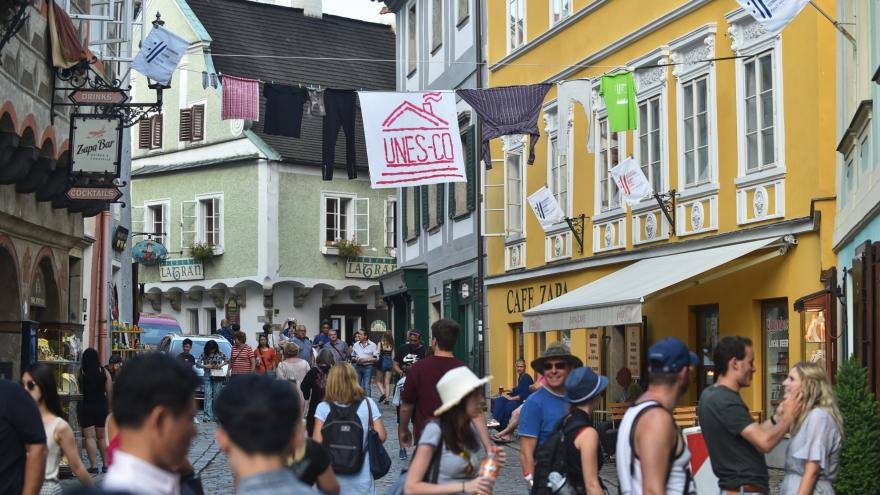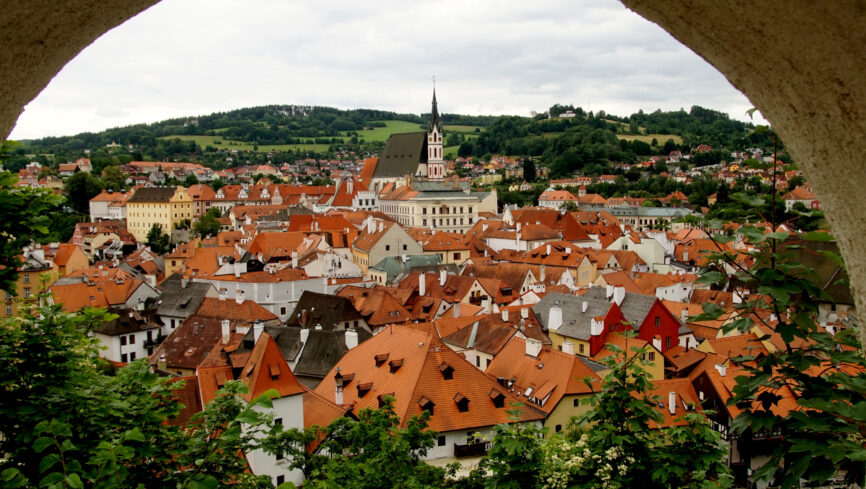
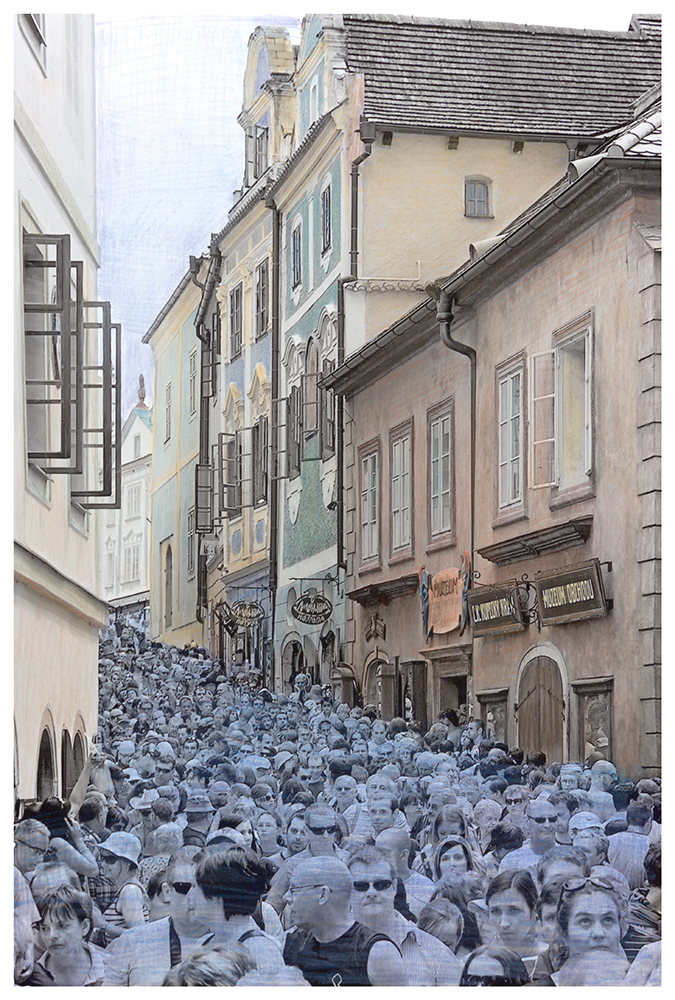
After entering Krumlov in 1992 on the UNESCO List, narrow streets stretching between medieval, low tenement houses, as well as the courtyards of abandoned monasteries, began to fill with people from all over the world. The historical heart of Krumlov still separated by bends of the river and historic gates, is currently inhabited by just over 200 people. It could be that, occupying 50 hectares of the historic region, Krumlov live in comfortable conditions. However, half a square kilometer, they share with almost a million tourists strolling each year under the windows of their homes. Grocery stores and small handicrafts factories have disappeared from the historic town, and in their place have grown wax figure shops, souvenir shops and cannabis products, and designer boutiques. Resurrected at the castle, led by the director bearing the official title of castellan, baroque theater performances pale in the light of the flashes of thousands of cameras and drown among the advertisements of souvenirs. Relatives visiting Krumlov people ask: “How can you live here? They would have to pay me for it”.
Publications
Publications
Inspired by these doubts, Kateřina Šedá founded the company “UNES-CO”, which has its headquarters in a museum dedicated to the former resident there, Egon Schiele. Her not-for-profit, but social and artistic effects project transforms the name of the United Nations Organization for Culture, Arts and Science into the question: “how much (yet) can you bear?” To make the Czechs and foreign tourists aware of the degree of gentrification and the scale of overtourism in Krumlov, the artist employed extras, who in tight spaces between crowds of visitors ostentatiously hung laundry, played football, washed cars and performed everyday activities, showing the lack of normal life in the UNESCO zone. Like Venice, Barcelona, Paris or Krakow, Krumlov is empty during the pandemic. What is its future like? Will it be flooded again with the masses of tourists after quarantine, or will it be reborn as a space teeming with life of the inhabitants? Unfortunately, the latter is probably too beautiful.
Publications
Publications
In 2019, the case of Cesky Krumlov was the subject of consideration of participants of the 10th edition of the international summer school V4 Heritage Academy organized by the ICC: Management of UNESCO World Heritage Cultural Sites in Visegrad Countries.