

What were the districts of Kraków that once existed as independent towns — Kazimierz, Podgórze and Nowa Huta? Which district of the city was considered a particularly fashionable address in the interwar period? Where can we find the proverbial grains of truth in Kraków’s legends — and what did, and what does, the life of the various communities of this multicultural city look like?
During thematic walks from the series On the Trail of Heritage, organised for primary and secondary school students, we head out into the city to encounter the heritage of Kraków — both its historic centre and its individual districts — expanding the knowledge familiar from the pages of school textbooks.
Almost every corner of Kraków abounds in traces of the past and possesses its own historically shaped identity. This applies both to the historic city centre — inscribed on the UNESCO World Heritage List in 1978 as one of the first twelve sites in the world — and to districts such as Podgórze, Nowa Huta, Krowodrza and Zwierzyniec.
For primary and secondary school students, we have developed twelve original walking routes around Kraków. Their themes are tailored to different needs and age groups, addressing a wide range of topics such as the classics of Kraków’s legends, the natural and cultural values of the Wolski Forest, the history of the Jewish community in Kraków, the Kraków Fortress, the history, art and architecture of Nowa Huta, and the presence of Ukrainians in the scientific and artistic life of the city.
Topics of educational walks for Primary School
The walk broadens the knowledge of the history and everyday life in the Krakow ghetto. Participants will learn about works of art and poetry created both during and after the war. Classes strengthen and emphasize the importance of values such as tolerance and social responsibility.
Route author: Gabriela Mączka
Duration: 90 minutes
During the walk, participants will have the opportunity to learn about the legends associated with St Mary’s Church and the royal pigeons. In addition, we will show the place where the treasure guarded by the Basilisk is hidden and where the Lajkonik arrives to the market every year. During the walk, we will also explain the significance of intangible heritage.
Duration: 90 minutes
Topics of educational walks for Grades IV–VIII and Secondary Schools
The classes focus on the history of Podgórze as an independent city and the process of its integration with Krakow. During the walk, we will look for the elements that make up the so-called ideal city. The classes introduce the styles in art and architecture, addressing concepts in the field of art history and urban planning. They encourage students to look for examples of art in their immediate surroundings, in their district or housing estate.
Route author: Maria Tarnawska
Duration: 90 minutes
A walk dedicated to the natural and cultural values of Wolski Forest, its history and the circumstances of its creation, as well as Wola Justowska and the Castle in Przegorzały. The classes will introduce participants to tourism-related terminology, to identifying trails, and paying attention to experiences and observations coming from the contact with a landscape different from the one encountered every day.
Route author: Maria Tarnawska
Duration: 180 minutes
The classes are dedicated to the everyday life of the Jewish community in Krakow to show its importance for the development of the city. The walking route will take participants through the rich spheres of religious, cultural, social, and scientific life of Kazimierz to show how diverse this district was before the outbreak of World War II. The classes teach the most important vocabulary related to this community and its history. Referring to the knowledge about the Holocaust already possessed by the participants, classes lead to the reflection on the value of tolerance.
Route author: Aleksandra Nowak
Duration: 90 minutes
Classes dedicated to the Krakow district of Kazimierz, which is an example of one of the few surviving urban complexes of the former Jewish city in the world. After the end of World War II, it changed from a completely ruined district into a vibrant place where trade, tourism and art thrive. During the walk, participants will see the most important monuments of Krakow’s Kazimierz, testimony to the extremely rich Jewish culture and art, which will be juxtaposed with another form of art, which is street art, i.e. murals and graffiti. They will learn about concepts related to Judaism and symbols related to Jewish culture.
Route author: Aleksandra Machaczka
Duration: 90 minutes
During the walk, participants will get to know the district of Grzegórzki. They will find out about the life of its 19th– and 20th-century inhabitants, about the things the district was famous for, as well as why the Vistula was its most important, key element. The classes will help them gain knowledge about the history and topography of Krakow, the structure and history of the district and the everyday life of its inhabitants, as well as about important historical figures. The aim of the walk is also to consider architecture in terms of its function, history, purpose, but also as architectural monuments represented by specific styles and architects, and their role in urban development.
Route author: Agata Klejzerowicz
Duration: 80 minutes
In the interwar period, Krakow’s architecture flourished. At that time, the district of Krowodrza became the city’s representative space. During the walk, participants will learn about its history, structure, and topography. They will be introduced to the typical features of modernism, the definitions, and technical vocabulary that will allow them to correctly describe architecture, as well as recognize the allegories hidden in the emblems of tenement houses.
Route author: Agata Klejzerowicz
Duration: 80 minutes
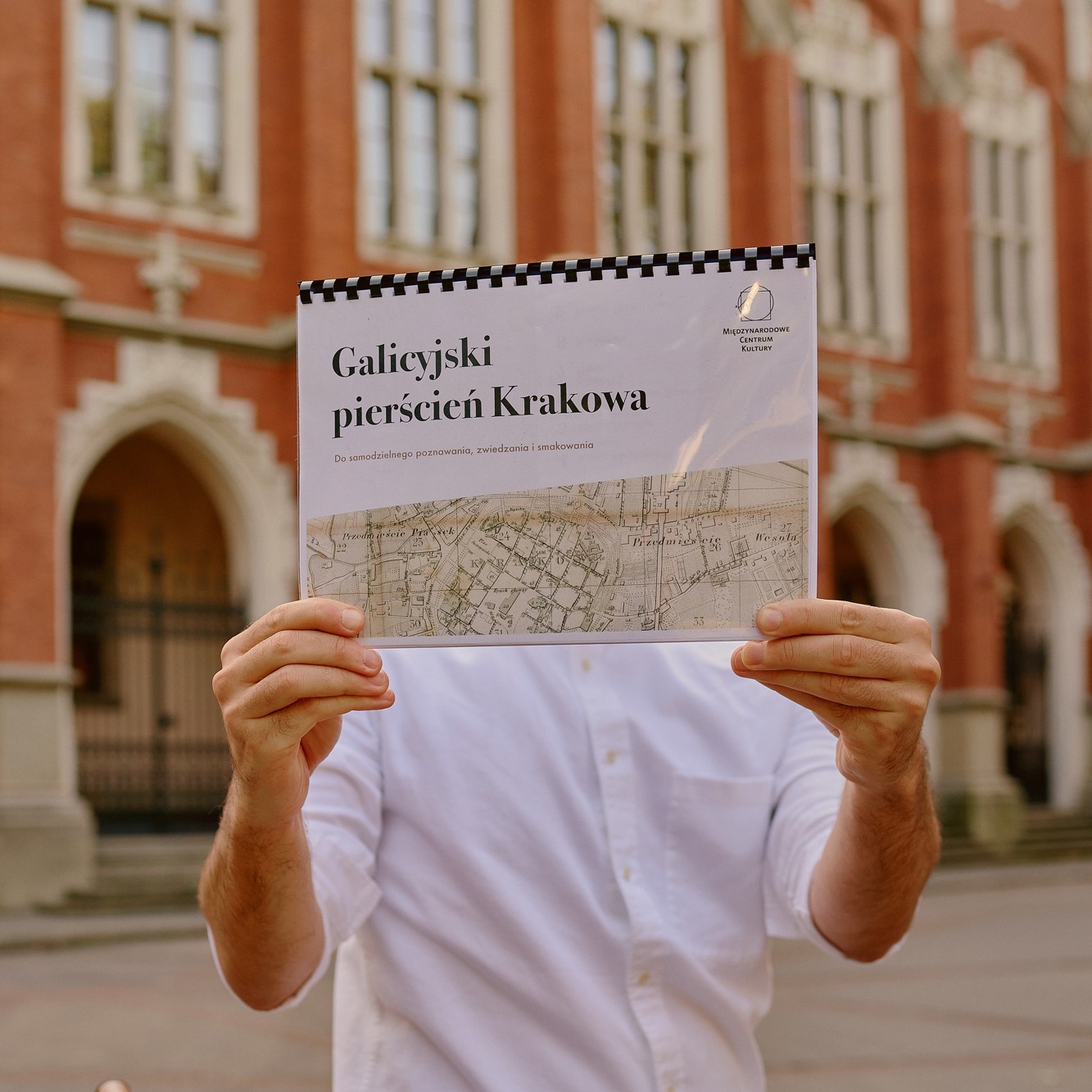
The walk allows you to get to know Galician buildings, monuments and important figures related to the moment in history when Krakow was under Austrian rule. We will explain why the Planty Park was created, talk about the location where rich manuscripts, cartographic collections and bookplates are stored, and reveal which confectioner invited artists to his cafe, and from where you could see the first electric illumination of the building in Krakow.
Duration: 90 minutes
The walking route addresses the presence of Ukrainians in the scientific and artistic life of Krakow. We refer to the times when, before the official founding of the city, Krakow was located on the trade route from Kiev to Prague. We will take a closer look at the archaeological reminders of contacts between Krakow and the Ruthenians. We shall talk about the fascination of Young Poland’s artists with our neighbour from the East and the “fashion for everything Ukrainian” in Polish culture of the nineteenth century.
Route author: Joanna Majewska
Duration: 90 minutes
The walking trail takes the participants on a walk around the North-East region of Krakow. Nowa Huta was supposed to become an ideal place to live and to work, a mixture of city and garden with many garden squares and parks. While listening to the story about the communist system in Poland, the participants will visit the most important places in Nowa Huta, get to know its architectural and natural heritage.
Duration: 90 minutes
The class is dedicated to the development of modern Krakow after the crisis of the mid-nineteenth century, which was symbolized by a great fire. The aim of the walk is primarily to make participants aware of how the appearance of the city changed during extreme catastrophic events. The buildings they see are only reconstructions, often complete or only internal (Franciscan Basilica, Dominican Basilica), where the walls are medieval, but the interior is from the 19th century. Classes encourage further research on architecture in the future and boost the will to expand knowledge.
Route author: Aleksandra Nowak
Duration: 90 minutes
Sign up
If you are interested, please reserve a walking tour by sending an email to warsztaty@mck.krakow.pl.
In your message, please include:
– the preferred date and time of the activity,
– the preferred topic (selected from the list above),
– the name and address of the school,
– the class and age of the students,
– the number of participants and supervisors,
– contact details of the group supervisor (name, surname, telephone number, email address).
For more information, please contact us by phone at +48 12 42 42 860 or by email at a.klejzerowicz@mck.krakow.pl (Agata Klejzerowicz).
Please note that photographs may be taken during events organised by the International Cultural Centre in Kraków for the Centre’s purposes (including documentation and information published on the ICC website and on its Facebook and Instagram profiles). If you do not consent to this, please inform us in advance. Photographs may include images of participants taking part in the event. If no written or verbal objection is communicated to an ICC staff member before the event begins, it will be understood as consent for the International Cultural Centre in Kraków to use the photographs referred to above.


Core curriculum
Core curriculum:
Grades VI-VIII: History-general: I. 1-4; II. 1-5; III. 1-4; detailed: XXIV. 1-3 / Polish – general: I. 3, 4, 7; II. 1, 2, 3, 4, 5; III. 1-5; IV. 1-2; detailed: grade VI: II. 2, 3; III. 1, 2; IV. 3, 7, 8; grades VII-VIII. II.2, 3; III. 1, 2; IV. 2, 3, 4, 6, 8 / Fine arts – general: 1-3; detailed: I. 1; III. 1, 2, 3, 6;
Secondary school: History – general: I. 1-2; II. 1-4; III. 1-3; Basic: I. 1-3; XXXV. 1-4; XXXVI. 2-4; XLIV. 1-2; Advanced: I.1-3; XXXV.1-5; XXXVI. 2-3; XLIV. 1, 2 / History of art: I. 1e, 2-8, 10; II. 3, 4, 13a; IV. 1-5; V. 3, 4, 5;
Core curriculum:
Grades IV-VIII: Nature – general: I. 1-3; 5-6; II. 1-3; 7; III. 1, 2, 6, 7; detailed: II. 3, 6, 8; VI. 1-8; VII. 1-9 / Geography – general: I. 2, 3, 4; II. 1-10; III. 1-9; detailed: I. 1, 4; II. 1, 4, 6, 8, 9; IX. 7, 12, 13, 14, 16; XII. 1, 2, 3, 7; XIII. 1-5;
Secondary school: Geography – basic: X. 4, 5; XI. 1, 5; XIII. 5, 7, 8, 9, 10; Advanced: VI. 1-2; XIV. 1-6; XV. 1, 4, 6, 7, 9; XIX. 3-4 / Art history: I. 1, 3, 4, 8, 10; II. 3, 8, 10, 11, 13, 18; IV. 1, 5; V. 3, 4, 5;
Core curriculum:
Grades IV-VIII: History: general: I. 1,4,5; II. 4.5; III. 1-4; detailed IV: I. 2; III. 1,4 .// Polish: general: I. 7; detailed IV-VI: III. 1 (1-4), IV. 7; detailed VII-VIII: III. 1 (6-7), IV. 8.// Geography: detailed: X.12.17 .// Civics: general: III. 6.7; detailed: VI. 5; IX. 1; Technics: general: IV. 1; Fine arts: general: 3; detailed: III. 1.6.8.
Secondary schools: History: general: I. 1-2, II. 1.4; // Art History: I. 1-E, 2-10, II. 1, 4, 8, 13-A, 18, III. 1-2, 5-6, 8, IV. 1, 5, 6-7; // Polish: general: I. 10-11; detailed: I. 2 (1,3,6); // Fine arts: general: I .; detailed: I. 1,3,6; // Civics: general: IV. 1.
Core curriculum:
Grades IV-VIII: History: general: I. 1,4,5; II. 4.5; III. 1-4; detailed IV: I. 2; II. 3; detailed V-VIII: XXX.1; XXXIII. 2.5; XXXVI. 13. // Polish language: general: I. 4.7; IV. 1-2; detailed IV-VI: III. 1 (1-4), IV. 7-8; detailed VII-VIII: III. 1 (6-7), IV. 8.// Ethics: general: I. 1-5; III. 1-2.// Geography: detailed: X. 6.17 .// Civics: general: I. 1; detailed: VII. 5; VIII. 1.5.
Secondary schools: Geography: VIII. 10-11; // History: general: I. 1-2, II. 1.4; detailed: XLIII. 2; XLIV. 2; XLVIII. 3; XLIX. 1-3; LI. 1; // Art History: I. 1-F, 2-10, II. 1, 4, 7-8, 12, 16, 18, III. 1-2, 5-6, 8, IV. 1, 5, 6-8.// Polish: general: I. 10-11; // Civics: general: III. 1-4; IV. 1-2; detailed: I. 3.6; II. 3.
Core curriculum:
Grades IV-VIII: History: general: I. 1,4,5; II. 4.5; III. 1-4; detailed IV: I. 2; II. 3; detailed V-VIII: XXX.1; XXXIII. 2.5; XXXVI. 13.// Polish: general: I. 4.7; IV. 1-2; detailed IV-VI: III. 1 (1-4), IV. 7-8; detailed VII-VIII: III. 1 (6-7), IV. 8.// Ethics: general: I. 1-5; III. 1-2.// Geography: detailed: X. 6.17 .// Civics: general: I. 1; detailed: VII. 5; VIII. 1.5.
Secondary schools: Geography: VIII. 10-11; History: general: I. 1-2, II. 1.4; detailed: XLIII. 2; XLIV. 2; XLVIII. 3; XLIX. 1-3; LI. 1; Polish: general: I. 10-11; Civics: general: III. 1-4; IV. 1-2; detailed: I. 3.6; II. History of Art: I. 1-F, 2-10, II. 1, 4, 7-8, 12, 16, 18, III. 1-2, 5-6, 8, IV. 1, 5, 6-8.
Core curriculum:
Grades IV-VIII: history: general: I. 1,2,4,5; II. 1,2,4,5; detailed grade IV: I. 2; II. 1.3; III. 2-4; detailed grades V-VIII: XI. 3; XXXVII. 1, 2; // Polish: general: I. 4,5,7; IV. 1; detailed grades IV-VI: I. 3; IV. 8; detailed grades VII and VIII: I. 2: 3; IV. 2,3,5; // geography: general: I. 1-8; II. 2, 8-10; III. 1-9; detailed: II. 2,3,7,9; IX.10; X.3; XII. 1,2,7; XIII. 2.5; // art: general: 3.
Secondary schools: history: general: I.1-2; II.4; detailed: basic: I. 1,3; LV.3; LVI. 1.2; advanced: LVI. 1.// Polish: general: I. 1-3.7, 10.11; II.2; // geography: basic: general: I. 3; VIII. 13; IX. 1.3, XII. 1; // art: general: I, II; detailed: I. 1,3,4,6; II. 2.4.
Core curriculum:
Grades IV-VIII: History: general: I. 1,4,5; II. 2, 4, 5; grade IV: I., II., V. 4; grades V-VIII: IV. 2; // Polish: grades IV-VI: I. 8; grades VII – VIII: I. 4, 10-13; I. 2. 3); // art: general: I, II; detailed: I. 1,3,4,6; II. 2.4.
Secondary schools: history: general: I.1-2; II. 2; VIII. 3, XIII. 2; detailed: VII. 2; // Polish language: basic: I. 7; I. 1. 5); II. 1.1); II. 3.5); // General fine arts: I-II .; detailed: I-V, II.4; // biology: detailed: X.4; // geography: basic: detailed: I. 1.
Core Curriculum:
Grades I-III: general: II. 2-4; III. 1-9; IV. 1-3, 6-12; detailed: I. 1-2, 5-6; III. 1-2; IV. 2-3;
Grades IV-VI: History: general: I. 1,4,5; II. 2, 4, 5; grade IV: I., II., V. 4; grades V-VIII: IV. 2; // Polish: grades IV-VI: I. 8; grades VII – VIII: I. 4, 10-13; I. 2. 3); // art: general: I, II; detailed: I. 1,3,4,6; II. 2.4.
Core curriculum:
Grades VI-VIII: History-general: I. 1-4; II. 1-5; III. 1-4; detailed: XXIV. 1-3 / Polish – general: I. 3, 4, 7; II. 1, 2, 3, 4, 5; III. 1-5; IV. 1-2; detailed: grade VI: II. 2, 3; III. 1, 2; IV. 3, 7, 8; grades VII-VIII. II.2, 3; III. 1, 2; IV. 2, 3, 4, 6, 8 / Fine arts – general: 1-3; detailed: I. 1; III. 1, 2, 3, 6;
Secondary school: History – general: I. 1-2; II. 1-4; III. 1-3; Basic: I. 1-3; XXXV. 1-4; XXXVI. 2-4; XLIV. 1-2; Advanced: I.1-3; XXXV.1-5; XXXVI. 2-3; XLIV. 1, 2 / History of art: I. 1e, 2-8, 10; II. 3, 4, 13a; IV. 1-5; V. 3, 4, 5;
Core curriculum:
Grades VI-VIII: History-general: I. 1-4; II. 1-5; III. 1-4; detailed: XXIV. 1-3 / Polish – general: I. 3, 4, 7; II. 1, 2, 3, 4, 5; III. 1-5; IV. 1-2; detailed: grade VI: II. 2, 3; III. 1, 2; IV. 3, 7, 8; grades VII-VIII. II.2, 3; III. 1, 2; IV. 2, 3, 4, 6, 8 / Fine arts – general: 1-3; detailed: I. 1; III. 1, 2, 3, 6;
Secondary school: History – general: I. 1-2; II. 1-4; III. 1-3; Basic: I. 1-3; XXXV. 1-4; XXXVI. 2-4; XLIV. 1-2; Advanced: I.1-3; XXXV.1-5; XXXVI. 2-3; XLIV. 1, 2 / History of art: I. 1e, 2-8, 10; II. 3, 4, 13a; IV. 1-5; V. 3, 4, 5;
Core curriculum:
Klasy IV-VIII: History – general: I. 1,2,3,4,5; II. 4,5; III. 1-4; detailed: IV: I. 2; II. 3; IV.17; detailed, V-VIII: XXXVII.2; XXXVIII. 1 XXXIX. 1,2,4,8.// Język polski: ogólne: I. 4,7; IV. 1-2; szczegółowe IV-VI: III. 1(1-4), IV. 7-8; szczegółowe VII-VIII: III. 1(6-8), IV. 8.// Etyka: ogólne: I. 1-5; III. 1-2.// Geografia: szczegółowe: X. 12,17.// WOS: ogólne: I. 1; szczegółowe: VI.6; VII.1,5; XI.1,5.
Szkoły ponadpodstawowe: Geografia: VIII. 8,11; XI. 1,2, XV.1,5,6,10,13; Historia: ogólne: I. 1-2, II. 1,4; szczegółowe: LI. 1; LIV. 1,2; LV. 3,7; LVII. 1,3,4,7; LI. 1; Polish language: general: I. 1,10-11; Civics: general: III. 1-5; detailed: I. 4; III.2,5; History of Art – generail: I-IV; detailed: I.1 (g,h), 2, 3,4,5,8; III. 1,4; IV. 5,
 Print
Print