
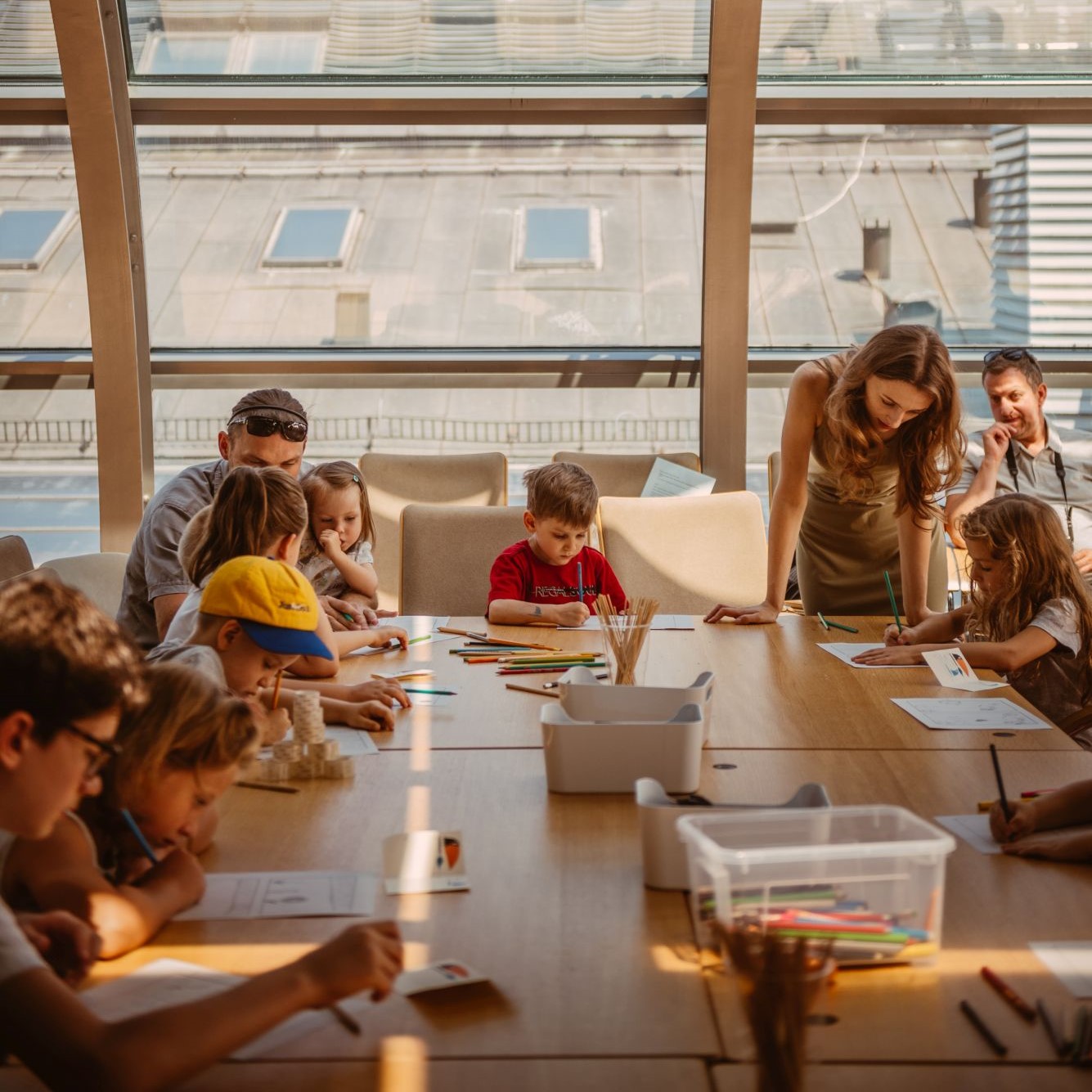
Heritage surrounds us on every side. The ability to draw on it is a hidden power capable of moving mountains. During the lessons we organise for primary and secondary school groups, we show how this can be done — and how knowledge of heritage can become an invaluable and practical skill.
In common understanding, heritage is often equated with monuments — yet this is only one side of the story. Since its inception, the International Cultural Centre has approached the concept of heritage through multifaceted and critical reflection, revealing its diverse manifestations in the cultures of different countries, as well as its influence on the attitudes of individuals and societies.
At the International Cultural Centre, we are convinced that a deeper awareness of heritage as a resource of evolving values, beliefs, knowledge and traditions is a key competence, regardless of one’s future professional path. Knowledge of and sensitivity to heritage foster cultural expression and communication skills, encourage initiative, and stimulate entrepreneurship. It is an investment that brings individual benefits while also contributing to the development of a society that cares for its immediate surroundings.
For primary and secondary school students, we have prepared eleven inspiring lesson topics exploring the broadly understood field of cultural heritage. These sessions complement the core curriculum at successive stages of education, expanding students’ general knowledge of culture and heritage while also developing so-called soft skills.
Lesson topics
Heritage from scratch (primary school, and secondary school)
Classes relate to basic concepts related to heritage. Their task is to make participants aware of what heritage is, how to protect it and what threatens it. Classes teach the basics, distinction between tangible and intangible heritage and introduce the list of Polish monuments inscribed on the UNESCO list.
Kraków — A City of Heritage
Why is Kraków the city it is today? Which king was the first to be crowned at Wawel? In what year was the Jagiellonian University founded? And how did it happen that the capital was moved to Warsaw? During this lesson, students will have the opportunity to explore, in their imagination, one of the oldest cities in Poland and discover such places as the Main Market Square, St Mary’s Basilica, Wawel Castle and the famous Royal Route. The session is conducted in an engaging and interactive manner, encouraging participants to actively explore the more than thousand-year history of the city.
Ukraine – History and Culture (primary school and secondary school)
The classes are designed to prepare Polish students culturally to welcome Ukrainian men and women who seek refuge in Poland from war. During the classes, the educator will test the students’ previous knowledge of Ukraine, as well as the presence of stereotypes about this country in their minds. Students will have the opportunity to ask questions and learn basic information about Ukrainian culture and language, but also about the causes of war and refugees today.
The goal of the class is not to prepare children psychologically for the current situation, but to help them better understand people from Ukraine – while educators are aware of the psychological recommendations for talking to children about war. War and its reporting is only the context of the class, not the main topic.
Non-material heritage (primary school – older classes and secondary school)
Classes about non-material heritage. At the beginning of the meeting we will try to define cultural heritage. We will clarify what cultural non-material heritage list is and what kind of objects are included there, on the basis of specific examples. We will give examples of non-material cultural heritage: artisanry, language, vernacular, rites, events, such as toy making in Żywiec and Sucha Beskidzka, wild-beehive finding, bear-leading, Dunaj floating, and Krakow lace making. We will aso discover what European regional cultural heritage web is and what is its purpose.
City as heritage (primary school – older classes and secondary school)
During the classes our educators will explain how a city can become a heritage – taking as an example selected Polish cities. They will talk about multiculturalism, material and non-material aspects of heritage. Together with the participants they will answer such questions as: what is the value of heritage for the city and its citizens, how it can be threatened and what we can do to protect it.
Multicultural Krakow (primary school – older classes, and secondary school)
Classes will be devoted to multiculturalism and how to define it. We will tell you about historical events that over the centuries have had a special impact on Krakow’s multiculturalism. During the classes we will talk about the diversity of Krakow’s heritage, present-day multiculturalsm, benefits, threats and challenges that are connected with it.
Fun&folk – customs and traditions (primary school – older classes and secondary school)
Classes about folklore and folk culture as elements of our cultural heritage. We will talk about vernaculars, beliefs, dance, couisine, artisanry, architecture and art. The educator will describe the most characteristic dishes from different regions, e.g. a Krakow pretzel, the so-called “haluszki” and “pyry z gzikiem”. The participants will get to know the people important for folk culture, such as Oskar Kolberg and Antonina Konopczanka. Together we will reflect on whether folklore can be shameful and what can be done to remember about and popularise folk traditions.
Heritage on the web (primary school – older classes, and secondary school)
Classes easily explain the possibilities of using the cultural heritage available on the web. Educators will explain the rules for using materials shared under Creative Commons licenses, as well as show where they can be found. They will also present websites on which interesting exhibitions and performances can be viewed.
Heritage in the forest (primary school)
The classes deal with natural heritage as one of the possible forms of heritage passed on to us by our ancestors. They will explain why taking care of our natural environment is an important part of our patriotism. During the classes such themes would be touched upon as: the protection of nature in Poland, what constitutes a forest, what ecological balance is. We will give the participants some tips about how a person should behave in a forest.
Sign up
Each in-person heritage lesson lasts approximately 120 minutes. Sessions are held from Monday to Friday, between 11:00 and 16:00. We accept groups of up to 25 participants. The fee is PLN 10 per person.
If you are interested, please reserve a lesson by sending us an email. In your message, please include:
– the topic of the session (selected from the list or your own proposal),
– the preferred date and time of the lesson,
– the age and number of participants,
– the language in which the lesson should be conducted,
– the name of the kindergarten or school,
– contact details of the teacher and/or group supervisor (name, surname, telephone number, email address).


Online lessons last between 45 and 60 minutes. Sessions are held in groups of up to 30 participants via the Zoom platform — either with the whole class gathered in front of one screen or with each student joining from their own computer. Once the date and time of the lesson have been confirmed by email, we will send a meeting link along with further technical information. Online lessons are offered free of charge.
If you are interested, please reserve a lesson by sending us an email. In your message, please include:
– the topic of the session (selected from the list or your own proposal),
– the preferred date and time of the lesson,
– the age and number of participants,
– the language in which the lesson should be conducted,
– the name of the kindergarten or school,
– contact details of the teacher and/or group supervisor (name, surname, telephone number, email address).
Core curriculum
Core curriculum:
Primary school – grades 0–III: II. 1–3, IV. 1–3, 6, 10–11 / I. Polish language education: 1–3 / III. Social education: 1–2 / V. Art education: 1, 3 / VII. Information technology education: 3–5
Primary school – grades IV–VIII: Polish language: II. 1–4, III. 1–2, IV. 1–9 / History: II. 1–3 / Art: I. 1, 6, III. 1–8 / Civics: VI. 5–6, VIII. 1, 4–5 / Geography: X. 5, 17
Secondary schools (basic level): Polish language: I. 2, II. 1–4, III. 1–2 / Civics: I. 6, VII. 7 / Geography: I. 3, VIII. 15, XV. 13
Core curriculum:
Primary school – grades 0–III: II. 5, III. 1–3, IV. 1–3, 6, 10–11 / I. Polish language education: 1–3 / III. Social education: 1–2 / IV. Natural science education: 1–3 / V. Art education: 1, 3 / VII. Information technology education: 3–5 / XI. Language education: 1
Primary school – grades IV–VIII: Polish language: II. 1–4, III. 1–2, IV. 1–9 / History: I. 1–2, II. 1–3 / Art: III. 1–8 / Civics: VI. 5–6, VII. 1, 5, VIII. 1, 4–5 / Nature: VII. 9 / Geography: II. 6–9, III. 1–6, X. 17, XI. 7, XIII. 1–5
Secondary schools (basic level): Polish language: I. 2, II. 1–4, III. 1–2 / Art: I. 3, II. 1–2, 4 / Civics: I. 3, 6, IV. 4, VII. 7 / Geography: VIII. 6, XV. 13
Core curriculum:
Primary school – grades VI–VIII: Polish language: II. 1–4, III. 1–2, IV. 1–9 / Civics: VII. 5, VIII. 4–5 / Geography: II. 5, 9, III. 1–6, VII. 14 / Art: III. 1–5
Secondary schools (basic level): Polish language: I
Core curriculum:
Primary school – grades 0–III: III. 1–3, IV. 1–3, 6, 8–11 / I. Polish language education: 1–3 / III. Social education: 1–3 / IV. Natural science education: 1–3 / VII. Information technology education: 3–5
Primary school – grades IV–VIII: Polish language: II. 1–4, III. 1–2, IV. 1–9 / Nature: I. 5–6, VI. 1, 8, VII. 4, 8–9 / Biology: II. 7, VII. 1, 9, VIII. 3–5 / Geography: II. 6–9, IX. 12–14, 16, XII. 2
Secondary schools (basic level): Polish language: I. 2, II. 1–4, III. 1–2 / Geography: XIII. 10, XIV. 6, 11, X. 17 / Biology: XI. 2–3, 7, 9 / Chemistry: XXII. 2–3
Core curriculum:
Primary school – grades VI–VIII: Polish language: II. 1–4, III. 1–2, IV. 1–9 / Civics: VI. 5–6 / Geography: II. 5, 9, III. 1–6, VII. 14, X. 17
Secondary schools (basic level): Polish language: I. 2, II. 1–4, III. 1–2 / Art: I. 3 / Civics: I. 6, IV. 4 / Geography: XIII. 7, XV. 13
Core curriculum:
Primary school – grades 0–III: III. 1–3, IV. 1–3, 6, 10–11 / I. Polish language education: 1–3 / III. Social education: 1–3 / V. Art education: 1, 3 / VII. Information technology education: 3–5
Primary school – grades IV–VIII: Polish language: II. 1–4, III. 1–2, IV. 1–9 / History: II. 1–3, XI. 6, XII. 2, XVI. 5, XXX. 4 / Art: III. 1–8 / Civics: VI. 5–6 / Geography: III. 1–6, X. 17, XI.
Secondary schools (basic level): History: XII. 5, XIII. 2, XXI. 1–2, XXVIII. 1–2, XXXI. 6, XXXVI. 2, XXXIX. 6, XLIV. 1–2 / Polish language: I. 2, II. 1–4, III. 1–2 / Art: II. 1–2, 4 / Geography: XV. 13
Core curriculum:
Primary school – grades VI–VIII: Polish language: II. 1–4, III. 1–2, IV. 1–9 / History: II. 1–3, XI. 6, XII. 2, XVI. 5, XXX. 4 / Civics: VI. 5–6, VIII. 1, 4–5 / Geography: III. 1–6, X. 6, 17, XI. 7
Secondary schools (basic level): History: XII. 5, XIII. 2, XXI. 1–2, XXVIII. 1–2, XXXI. 6, XXXVI. 2, XXXIX. 6, XLIV. 1–2, XLIX. 5 / Polish language: I. 2, II. 1–4, III. 1–2 / Art: II. 1–2, 4 / Civics: I. 6, IV. 4 / Geography: VIII. 9–11, XV. 13
Core curriculum:
Primary school – grades VI–VIII: Polish language: II. 1–4, III. 1–2, IV. 1–9 / Civics: VII. 5, VIII. 4–5 / Geography: II. 5, 9, III. 1–6, VII. 14 / Art: III. 1–5
Secondary schools (basic level): Polish language: I. 2, II. 1–4, III. 1–2 / Art: I. 3, II. 1–2, 4 / Civics: I. 3, 6, IV. 4, VII. 7 / Geography: VIII. 6, XV. 13
Core curriculum:
Primary school – grades VI–VIII: Information technology: II. 4, III. 1–2 / Polish language: II. 1–4, III. 1–2, IV. 1–9 / History: II. 1–3
Secondary schools (basic level): Polish language: I. 2, II. 1–4, III. 1–2, IV. 1, 9, 11 / Art: I. 3, II. 1–2, 4, III. 1, 6 / Information technology: IV. 2–3, 6
Core curriculum:
Primary school – grades 0–III: III. 1–3, IV. 1–3, 6, 10–11 / I. Polish language education: 1–3 / III. Social education: 1–3 / V. Art education: 1, 3 / VII. Information technology education: 3–5
Primary school – grades IV–VIII: Polish language: II. 1–4, III. 1–2, IV. 1–9 / History: II. 1–3, XI. 6, XII. 2, XVI. 5, XXX. 4 / Art: III. 1–8 / Civics: VI. 5–6 / Geography: III. 1–6, X. 17, XI.
Secondary schools (basic level): History: XII. 5, XIII. 2, XXI. 1–2, XXVIII. 1–2, XXXI. 6, XXXVI. 2, XXXIX. 6, XLIV. 1–2 / Polish language: I. 2, II. 1–4, III. 1–2 / Art: II. 1–2, 4 / Geography: XV. 13
 Print
Print