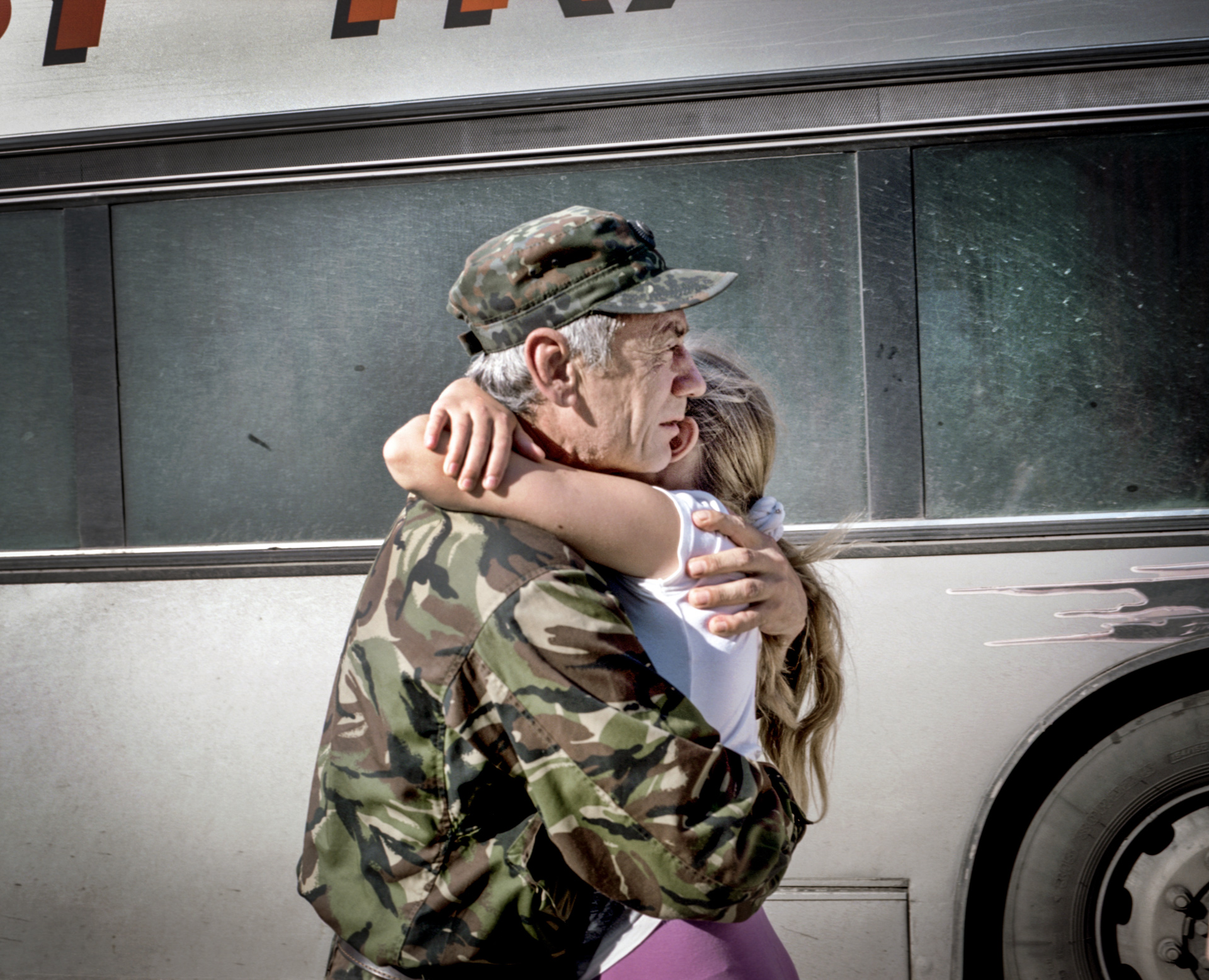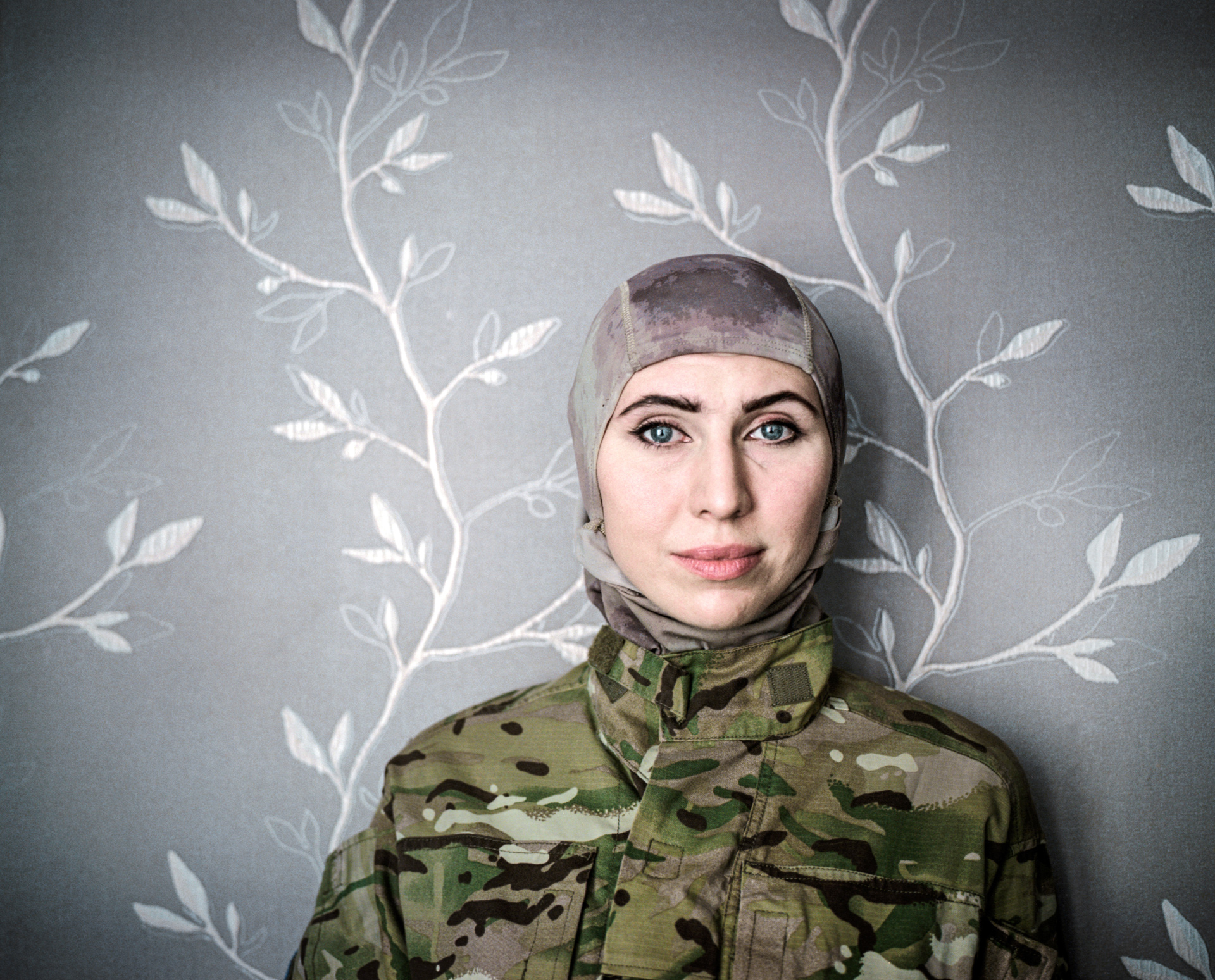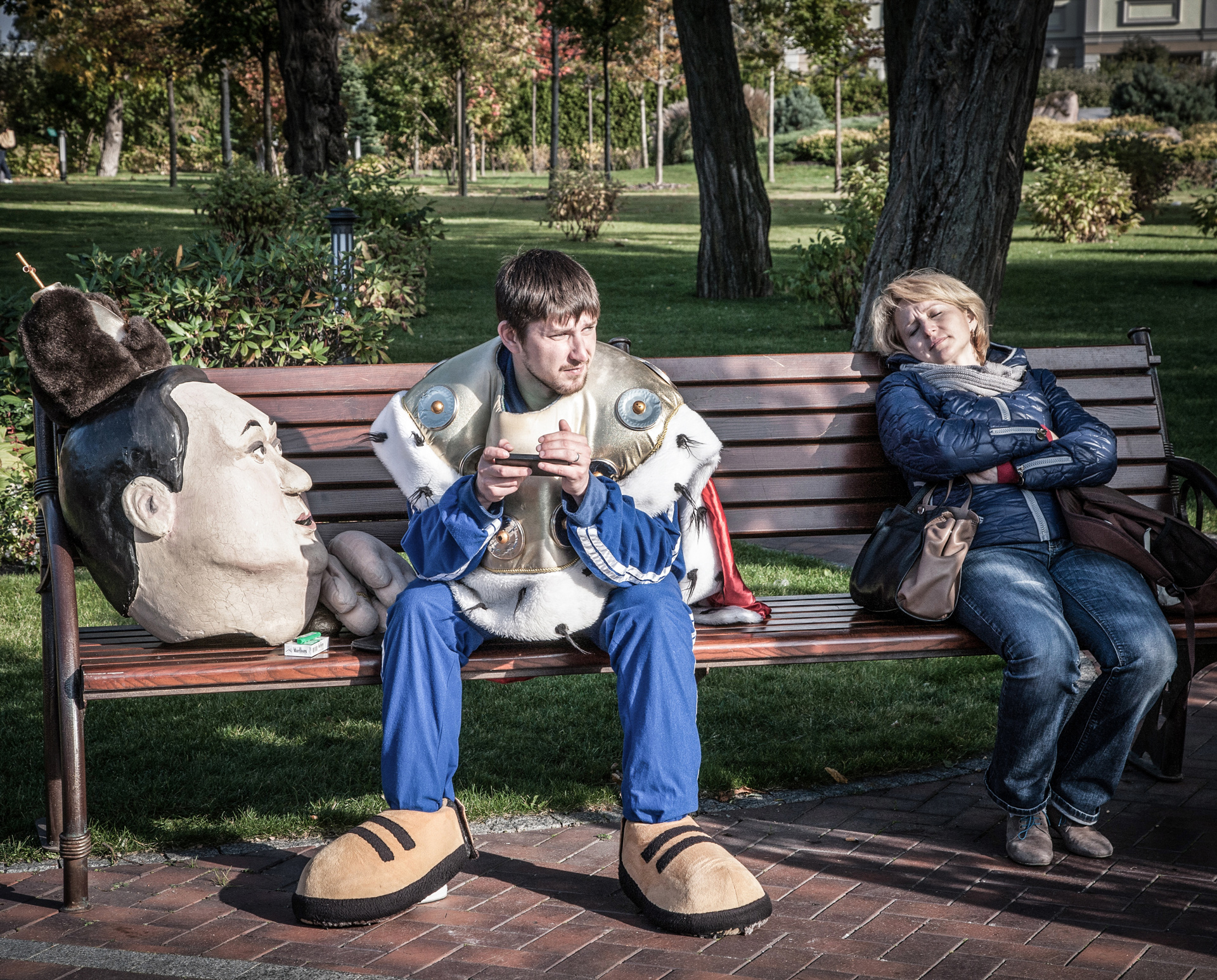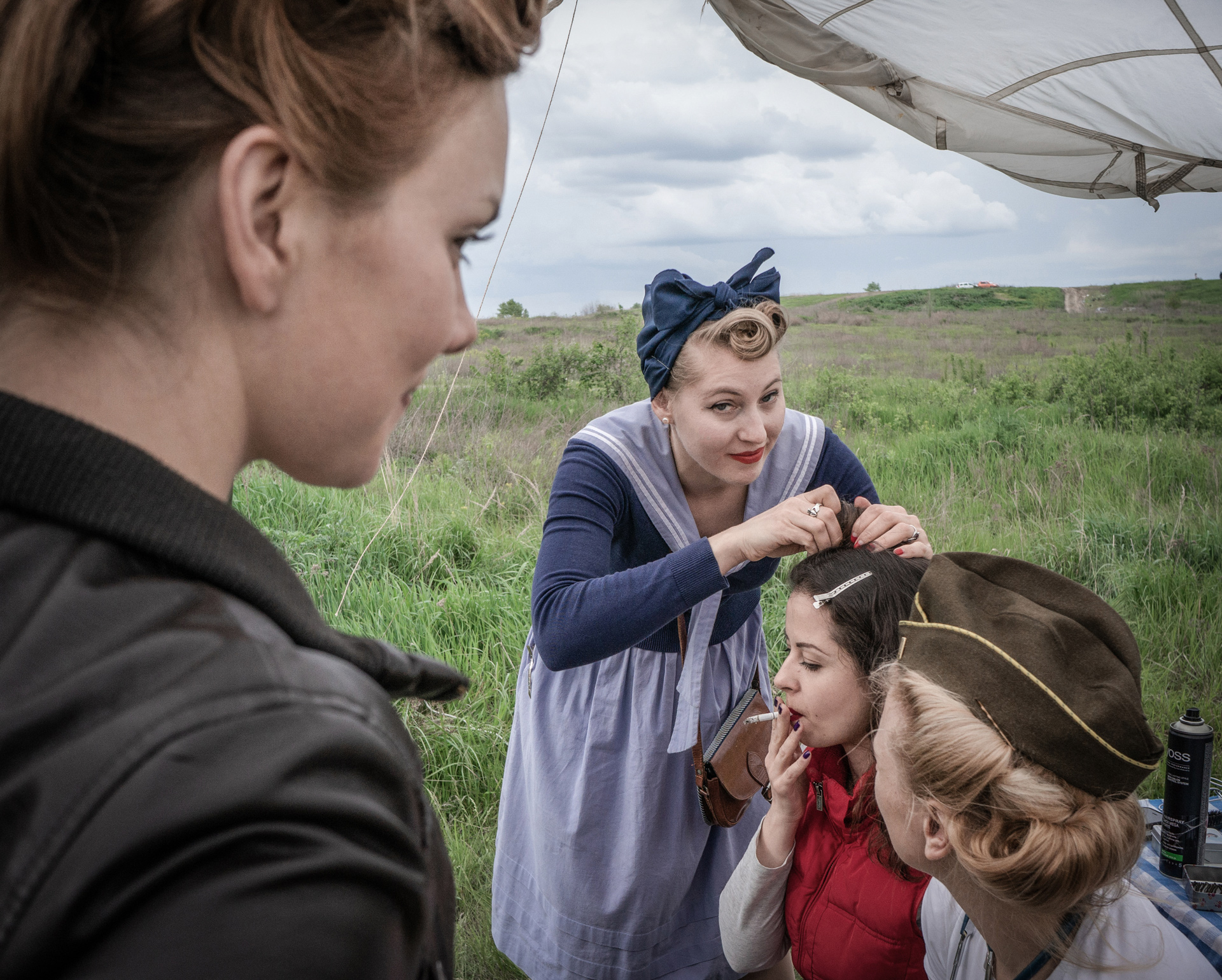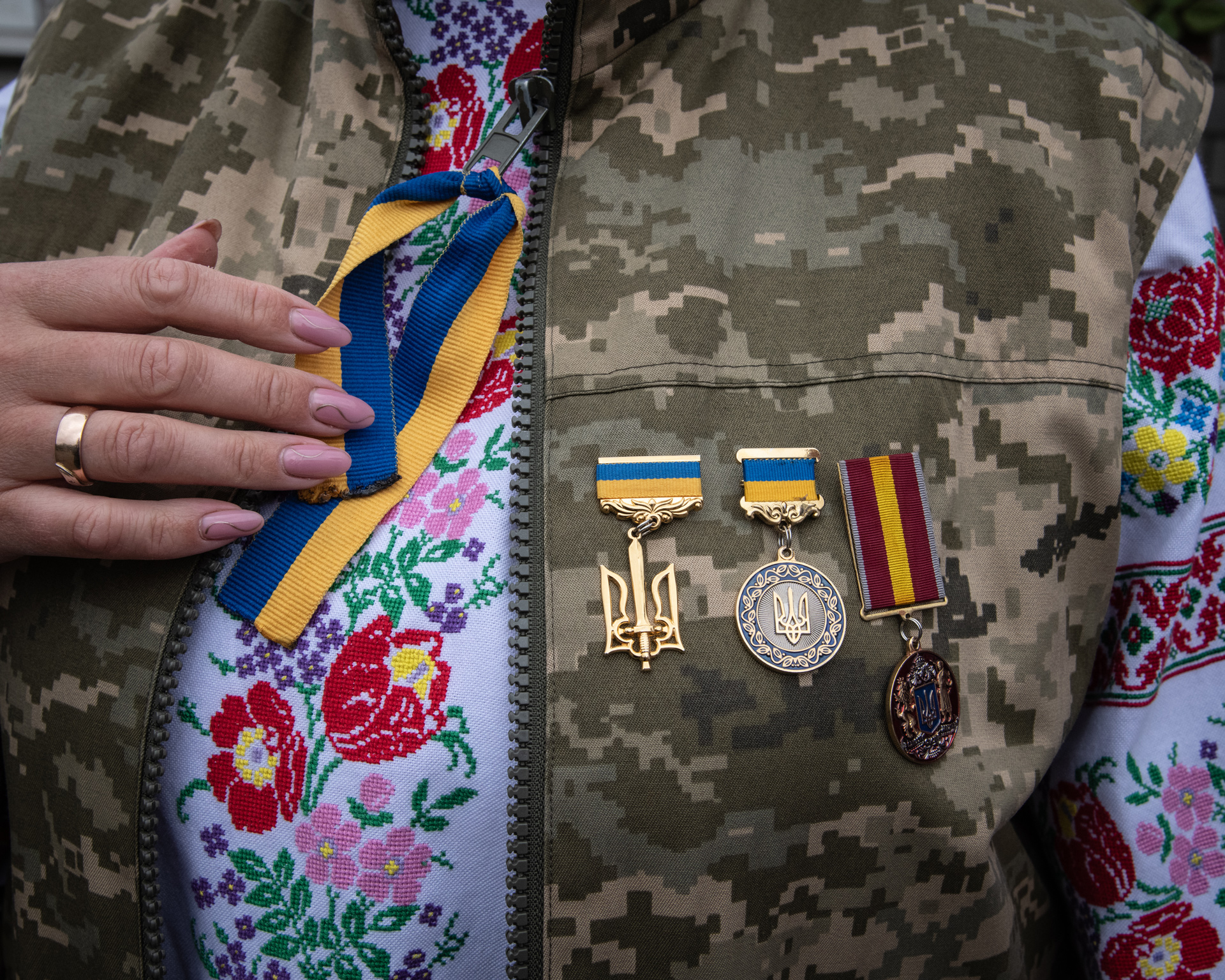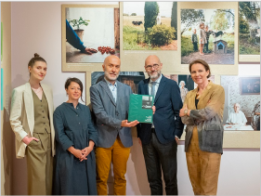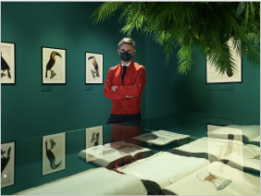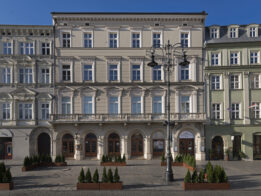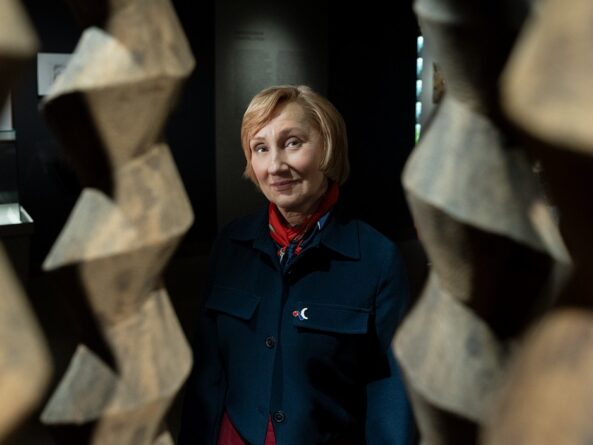
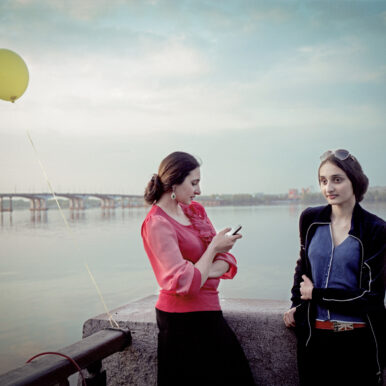
This exhibition presented 90 photographs by Justyna Mielnikiewicz, documenting everyday life in Ukraine from 2014 to 2019, as well as the first months following Russia’s full-scale invasion in 2022. The photographer went behind the scenes of events familiar from newspaper headlines, bringing the stories of ordinary soldiers and their families into focus, as well as those of civilians who had to deal with the consequences of war. These individual accounts of what happened were transcribed by Mielnikiewicz, forming as important a part of the exhibition as the photographs themselves.
This was an exhibition that was devoid of battle scenes and injured soldiers. The documentary photographs shown at the ICC were not seeking to cause a sensation. Rather, they were the expression of Mielnikiewicz’s exceptional sensitivity, reflecting the responsibility she feels for the stories that were entrusted to her. All the photographs and the accompanying descriptions were precisely dated, and the locations were pinpointed on a map of Ukraine. Her close-ups enabled viewers to feel deeply involved in the plights of the people portrayed.
Mielnikiewicz has been documenting life in regions beset by conflict for many years, particularly within the former Soviet Union. Her first professional foray into Ukraine was in 2008 in Crimea, where she photographed both pro-Russian Cossacks and pro-Ukrainian Tatars. Since 2014, she has realised several small projects, and in 2019 she published the photobook Ukraine Runs Through It. In that publication, she explored the Maidan Uprising and the war which began in 2014, but she chiefly focused on the day-to-day realities of a country in the throes of armed conflict.
Her photographs from 2022 documented the first consequences of Russian aggression, providing a natural continuation of her attempts to grapple with Ukraine’s past and present. The exhibition served as a complement to the project Ukraine: A Different Angle on Neighbourhood, hosted at the ICC from 17 September to 16 January 2022. This project analysed Ukrainian myths and stereotypes concerning Polish-Ukrainian relations. The presentation of Mielnikiewicz’s works, which are distinguished by their humanistic ethos, was also a gesture of solidarity with Ukrainians caught up in the turmoil of war.



Koncepcja programowa MCK
Agata Wąsowska-Pawlik, Łukasz Galusek
Kuratorka
Monika Rydiger
Aranżacja plastyczna
Patrycja Ochman-Tarka, Paulina Ochman
Produkcja wystawy
Karolina Wójcik
Konsultacja merytoryczna i językowa
Żanna Komar
Współpraca
Joanna Biegacz, Jan Burnatowski, Ewa Czarnecka, Marzena Daszewska, Magdalena Grabias, Joanna Hojda-Pepaś, Oliwia Kaczmarzewska, Dorota Korohoda, Dorota Kosiec, Paulina Małochleb, Weronika Mucha, Paulina Orłowska-Bańdo, Łukasz Pieróg, Angelika Radoń, Paulina Roszak-Niemirska, Agnieszka Sachar, Anna Sawłowicz, Klaudia Słupek, Anna Śliwa
Organizator:
Międzynarodowe Centrum Kultury
Przy wsparciu finansowym:
Ministerstwo Kultury i Dziedzictwa Kulturalnego
Patroni medialni wystawy:
TVP Kultura
Conteporary Lynx
New Eastern Europe
wysokiobcasy.pl
Stali patroni medialni:
TVP3 Kraków
Radio Kraków
Radio Kraków Kultura
Kraków Culture
Herito
 Print
Print