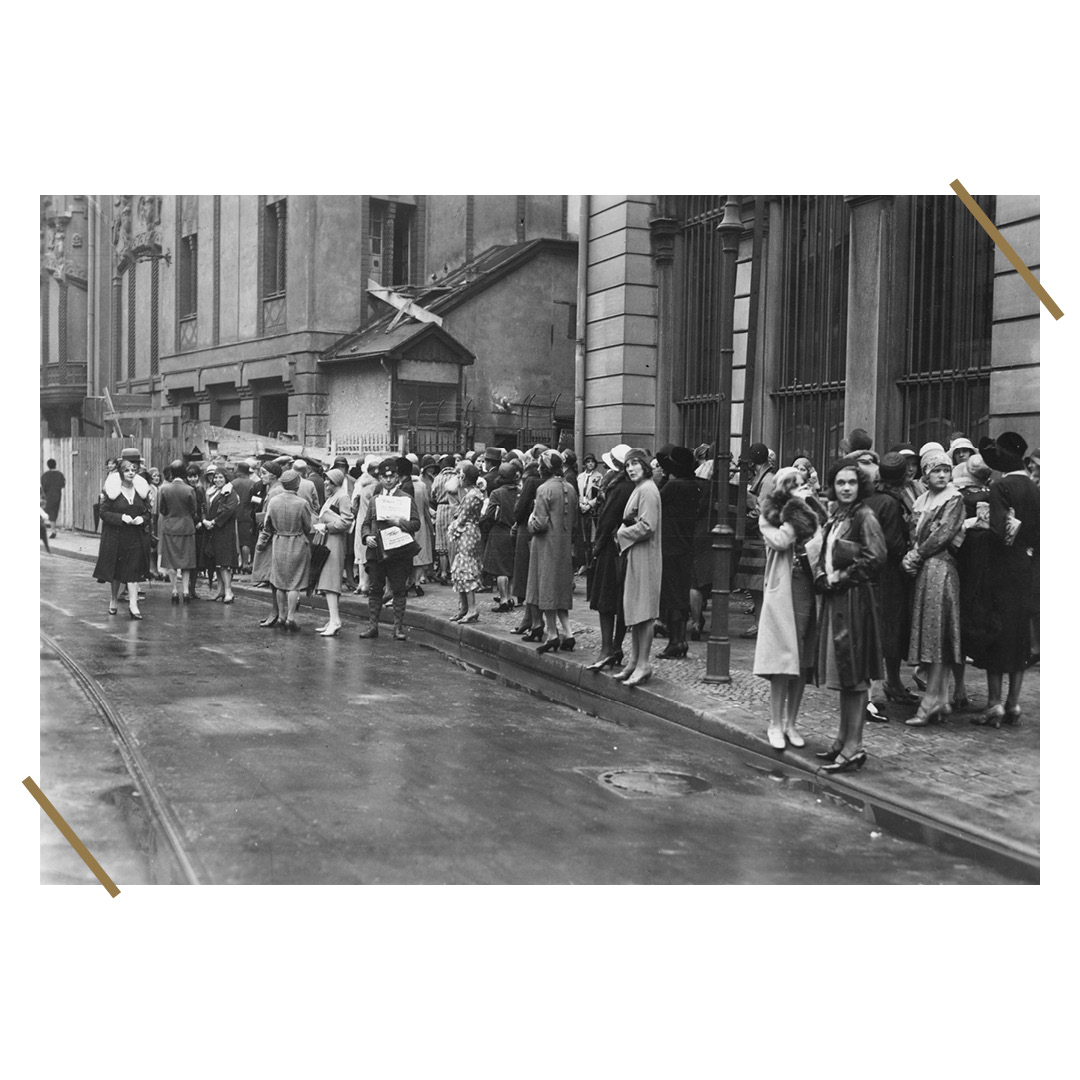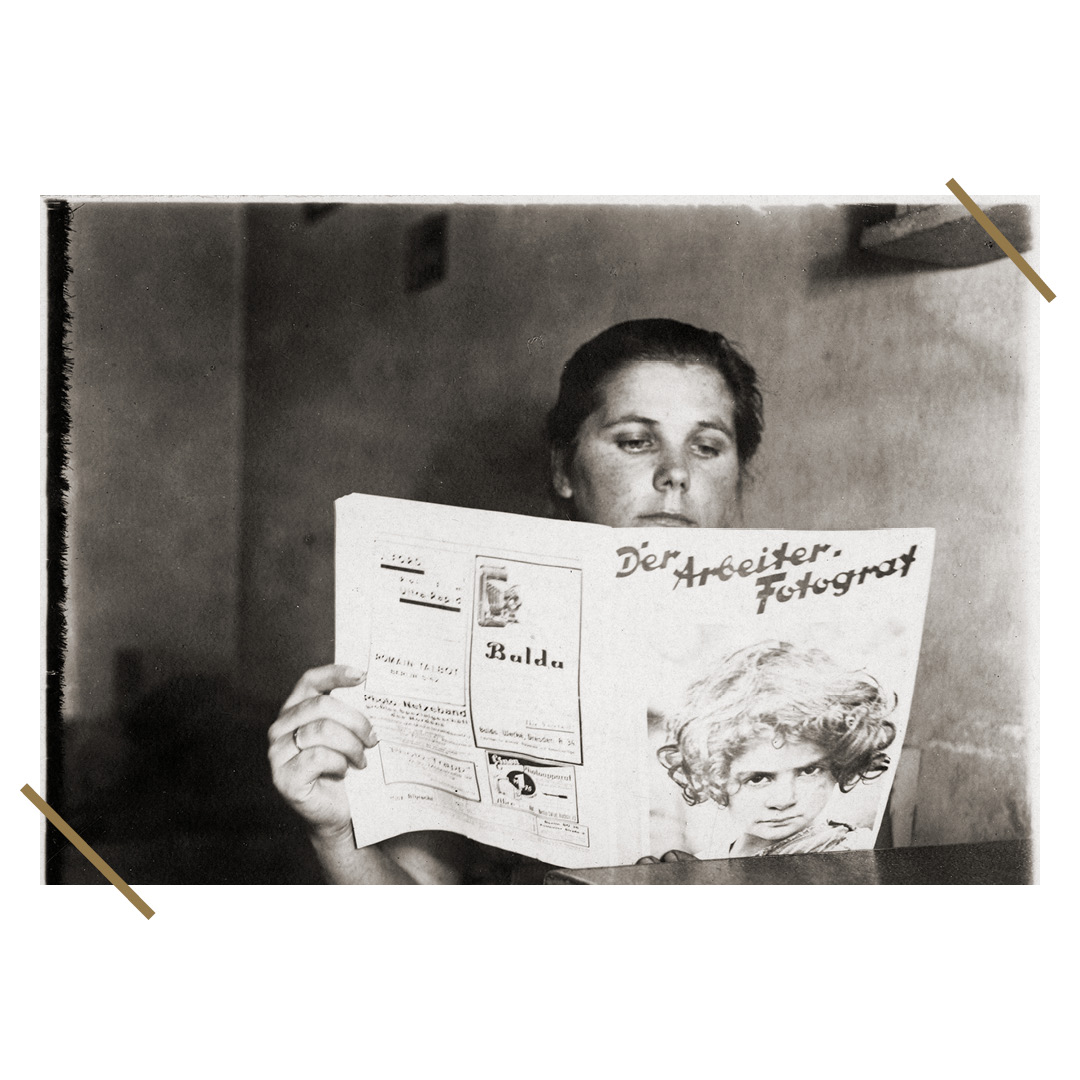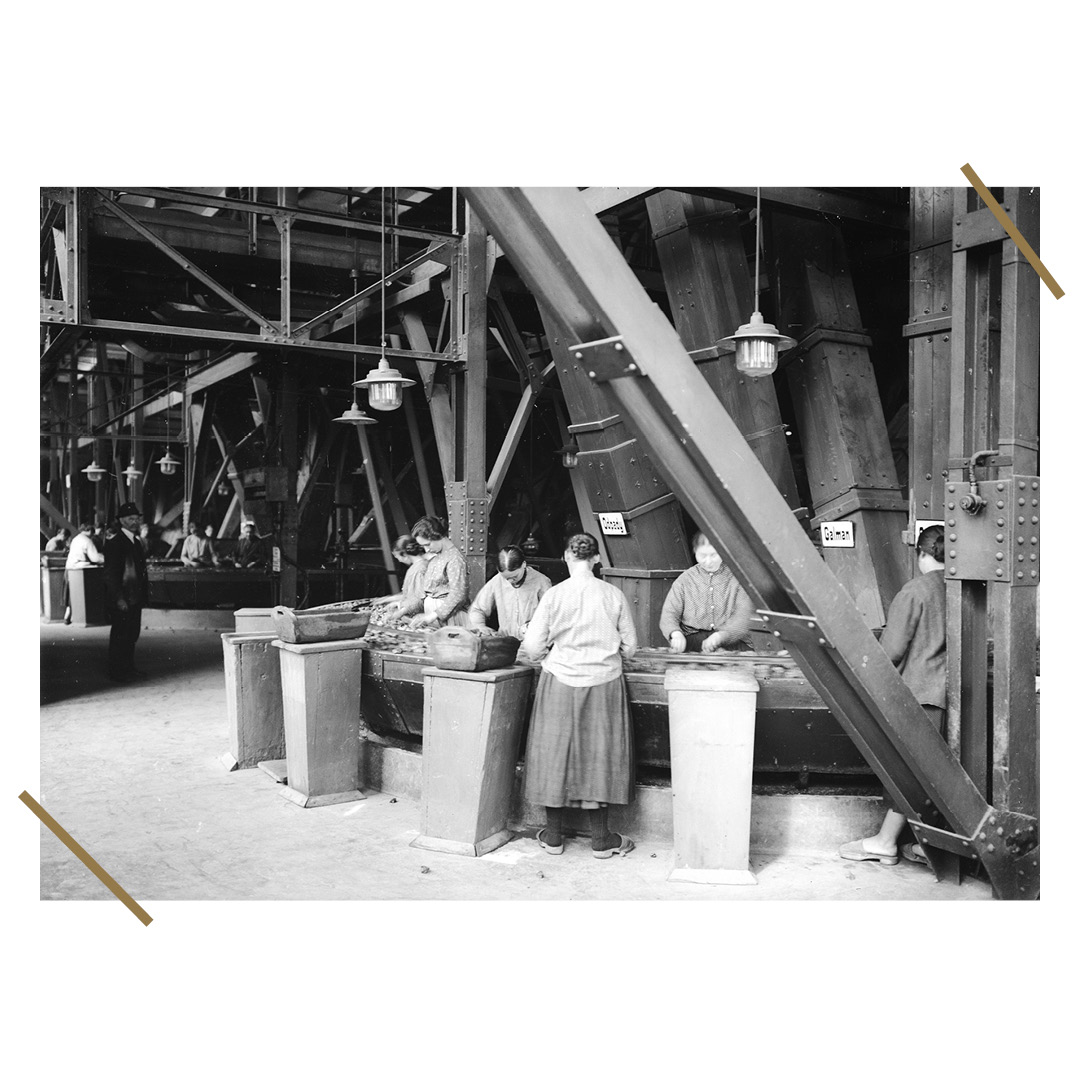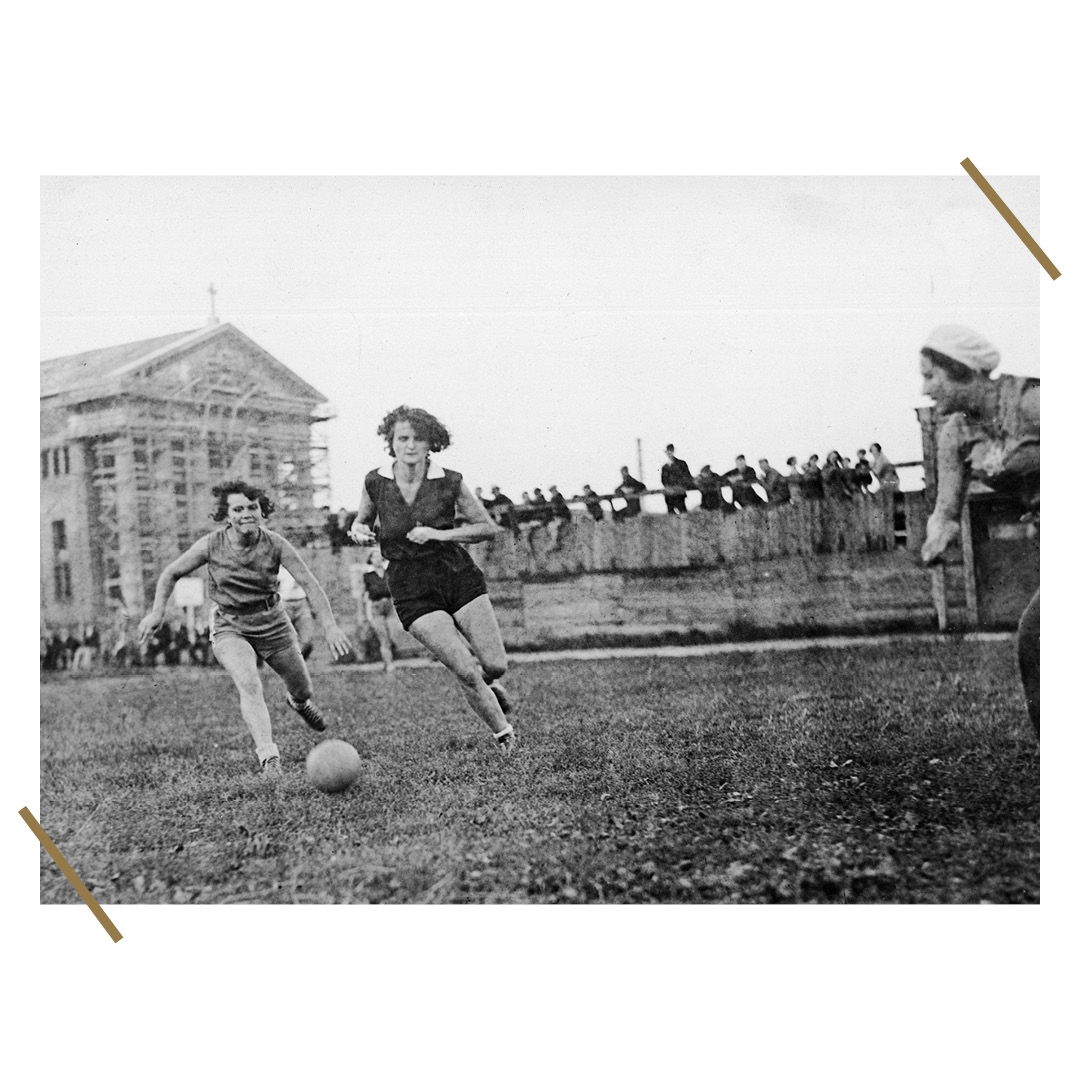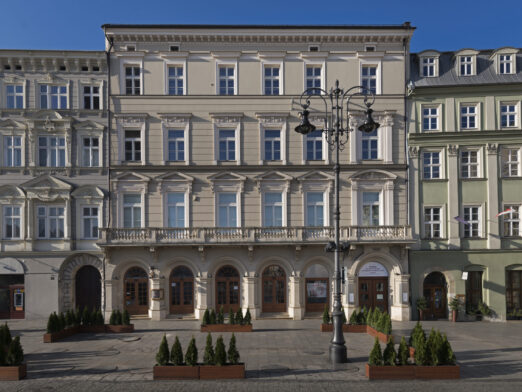
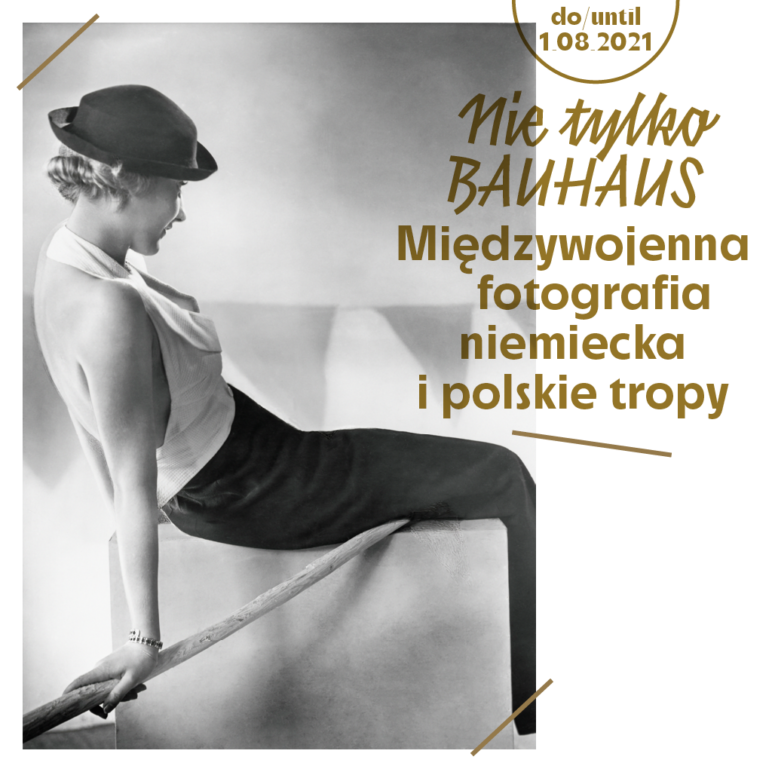
The exhibition provided a survey of the most important trends in German photography of the Weimar Republic (1919–1933), juxtaposed with examples of Polish interwar photography that are analogous, yet marked by different developmental dynamics. The showcasing of artistic, experimental, reportage, documentary, advertising, and fashion photography also provided a pretext for presenting the cultural context of the inter-war period in Central Europe: from the ‘golden’ 1920s and the urgent desire for normality to the growing tensions of the 1930s that brought Adolf Hitler to power in Germany.
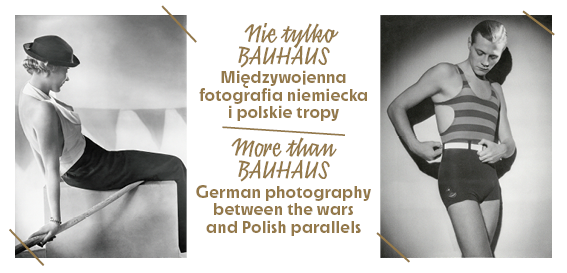
The exhibition presented a selection of the works shown in Photography in the Weimar Republic (2019–2020) at the LVR-Landes Museum in Bonn, expanded to include Polish parallels. Inspired by Aby Warburg’s Bilderatlas Mnemosyne, the German curators defined fourteen leading thematic areas to show the most important events, social motifs and, above all, aesthetic tendencies, and visual phenomena of the time. Nine of them: revolution and the birth of the republic, dance, portraiture, fashion and photography, labour, New Vision, sports, glamour and misery, and the concluding section were shown at the ICC Gallery.
The historical framework of the German section covered the years from 1919 to 1933, from the Weimar Republic, which was born in the ruins of the German Empire, to the dark conclusion, which encompassed the harbingers of another global conflict. The selected works made it possible to show subjects important to avant-garde artists of the era, in which photography was more than just a new method of image creation, becoming a modern, truly mass means of artistic expression, communication, and documentation. The demands of the so-called New Objectivity, which encouraged the ‘purity’ of visual language, overlapped with the complex context of the times, in which changing working conditions, economic crisis, mass unemployment and poverty were quickly reflected in photography. The medium that was supposed to serve objectivity quickly became a tool for forming public and propagandistic manipulation.
Polish examples included works produced in the later period, up to 1939. Entering into dialogue with the German ones, they invited comparisons, exposing differences and similarities related to the political and social experience of those years.
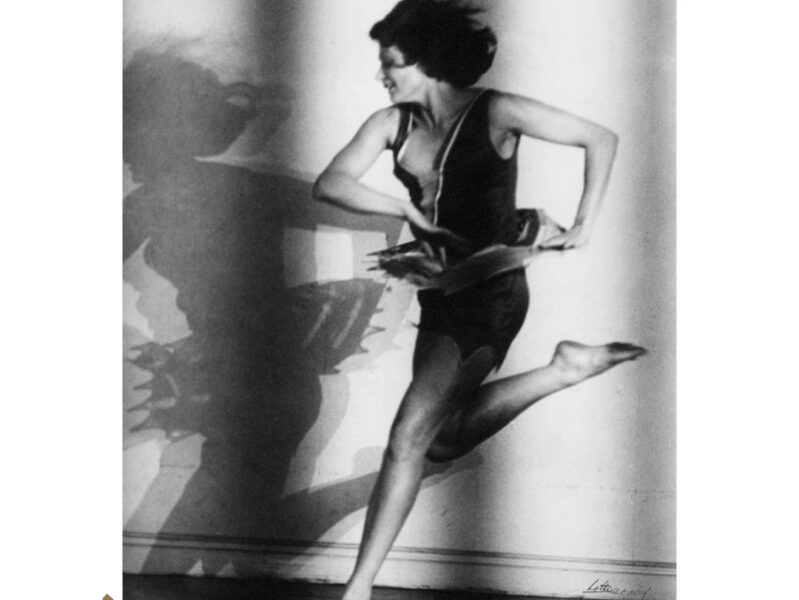
The exhibition featured more than 300 classic prints, as well as books and magazines. Visitors could admire the works of such artists as the master of press photography Martin Munkácsi, August Sander, known for his outstanding sociological portraits, the leading representative of the New Objectivity Albert Renger-Patzsch, Yva (Else Neuländer-Simon), famous for her fashion photography, Karl Blossfeld, known for his precise photographs of plants, the father of photojournalism Alfred Eisenstaedt, and the photographer Lotte Jacobi, who hailed from Poznań. Rounding out the selection were names that might have been a discovery for Polish audiences, such as Kurt Kranz, who was associated with the Bauhaus, or Hans Bresler, who represented the workers’ photography trend.
Polish photography was represented by such masters as Aleksander Krzywobłocki, who specialized in surrealist photography, the avant-garde Janusz Maria Brzeski, the Leica camera enthusiast Zofia Chomętowska, acclaimed portrait photographer Benedykt Jerzy Dorys, the doyen of Polish pictorialism Jan Bułhak, and the outstanding photojournalist and chronicler of the Second Polish Republic Henryk Poddębski
The exhibition, prepared in cooperation with the Landschaftsverband Rheinland (LVR) in Bonn, marked the thirtieth anniversary of the ICC and coincided with the thirtieth anniversary of the ratification of the Oder-Neisse border treaty, which closed an extremely complex issue in twentieth-century relations between Poland and united Germany.
More than Bauhaus was the ICC and LVR’s third collaborative project. Previously, thanks to our cooperation with the Bonn institution, we were able to present to Polish audiences the exhibitions Hunting down Modernism: Prohibited Arts in the Third Reich (2011–2012) and Max Ernst: An Ornithologist’s Dreams (2016). German art has been presented at the ICC in, among others, the exhibitions George Grosz: The Berlin Years (1992), Otto Dix: The Early Years (1993), as well as Bauhaus Twenty-21: An Ongoing Legacy (2009), organised in conjunction with the ninetieth anniversary of the famous design school. All these projects are closely connected with the ICC’s programme of promoting the culture of Central European countries, which include Germany.
The project also fitted into our series of photography exhibitions, which included Made in Hungary: Hungarian Photographers, 1919–1956 (2000), Andreas Feininger: New York in the Forties (2010), Istanbul: Two Worlds, One City(2018), Photobloc: Central Europe in Photobooks (2019–2020), Homing: Włodzimierz Puchalski (2022), and Lithuania: Two Centuries of Photography (2023).

International Cultural Centre in Krakow
LVR – LandesMuseum (Bonn)
Deutsche Fotothek (Drezno)
Stiftung F.C. Gundlach (Hamburg)
ICC programme policy: Agata Wąsowska-Pawlik, Łukasz Galusek
Exhibition design: Paweł Żelichowski
Exhibition coordinators: Dorota Kosiec, Anna Śliwa
Honorary patrons: Dr Michael Groß, Konsul generalny Republiki Federalnej Niemiec
Cooperation: Joanna Biegacz, Ewa Czarnecka, Monika Czepielewska-Wóycicka, Marzena Daszewska, Joanna Hojda-Pepaś, Dorota Korohoda, Łukasz Kozak, Angelika Madura, Anna Sawłowicz
Exhibition visual identity design: Kuba Sowiński
Graphic design DTP of the accompanying publication: Wojtek Kwiecień-Janikowski
Translation: Sylwia Miłkowska (z języka niemieckiego)
Editor and proofreader: Paulina Roszak-Niemirska
 Print
Print