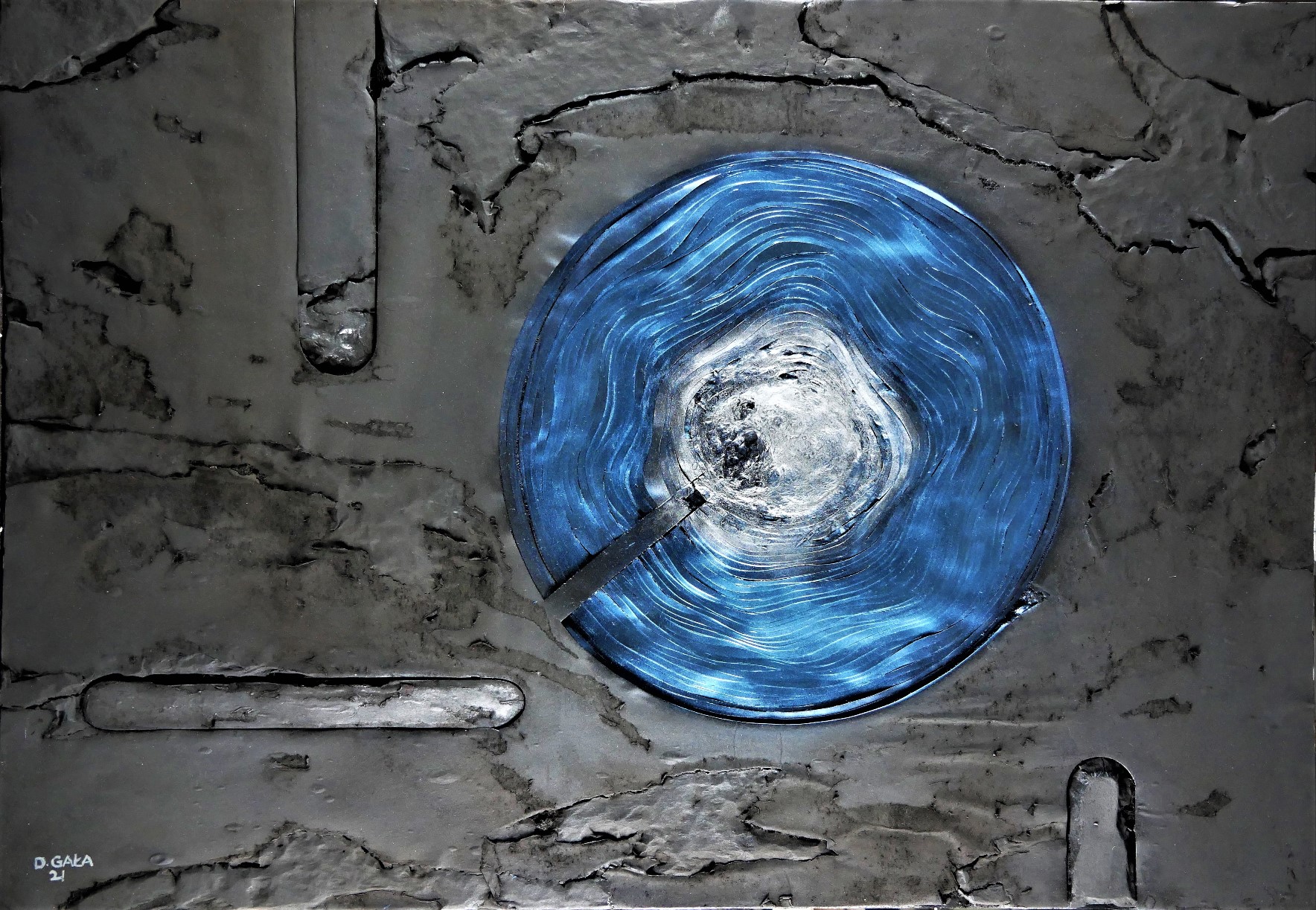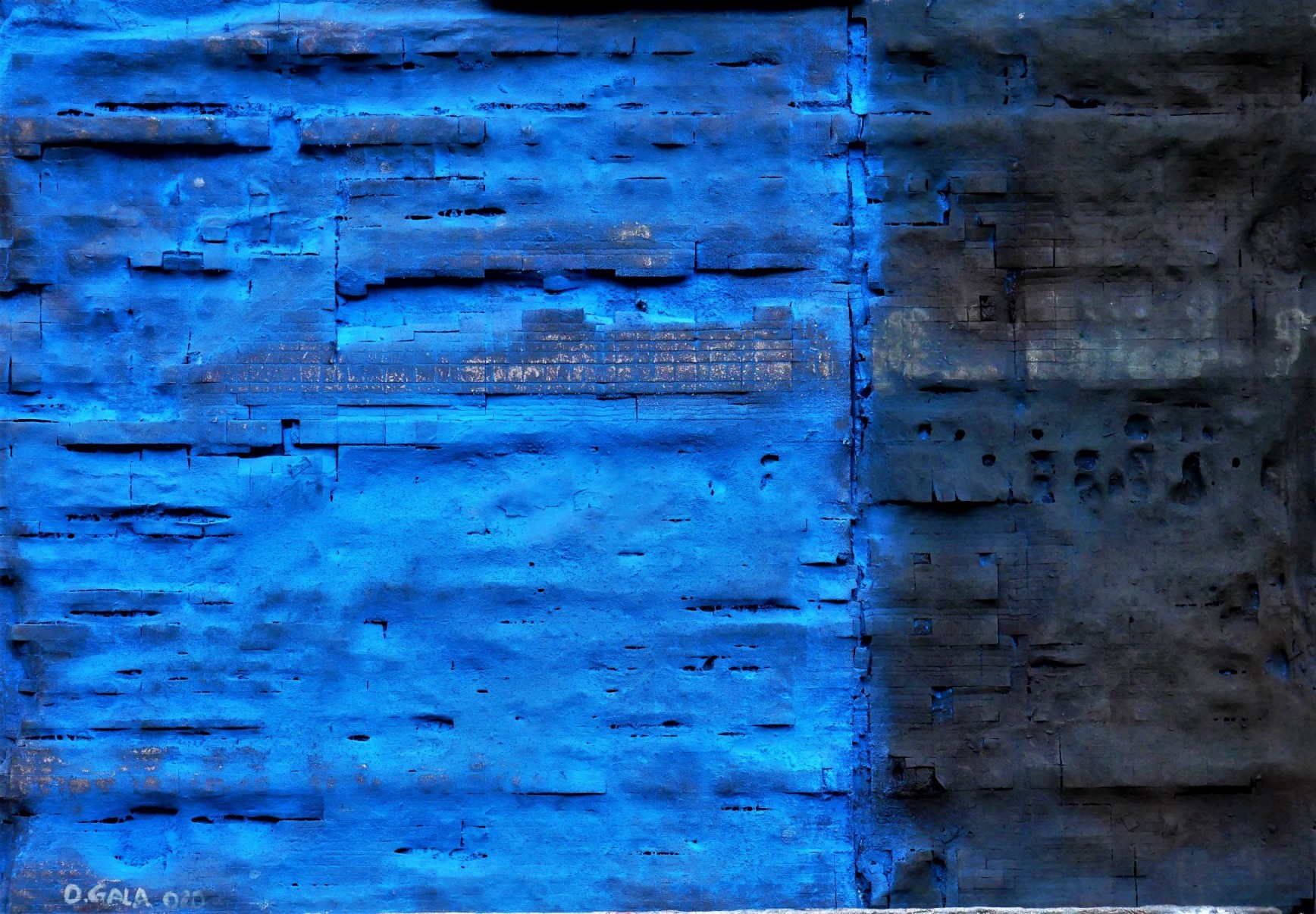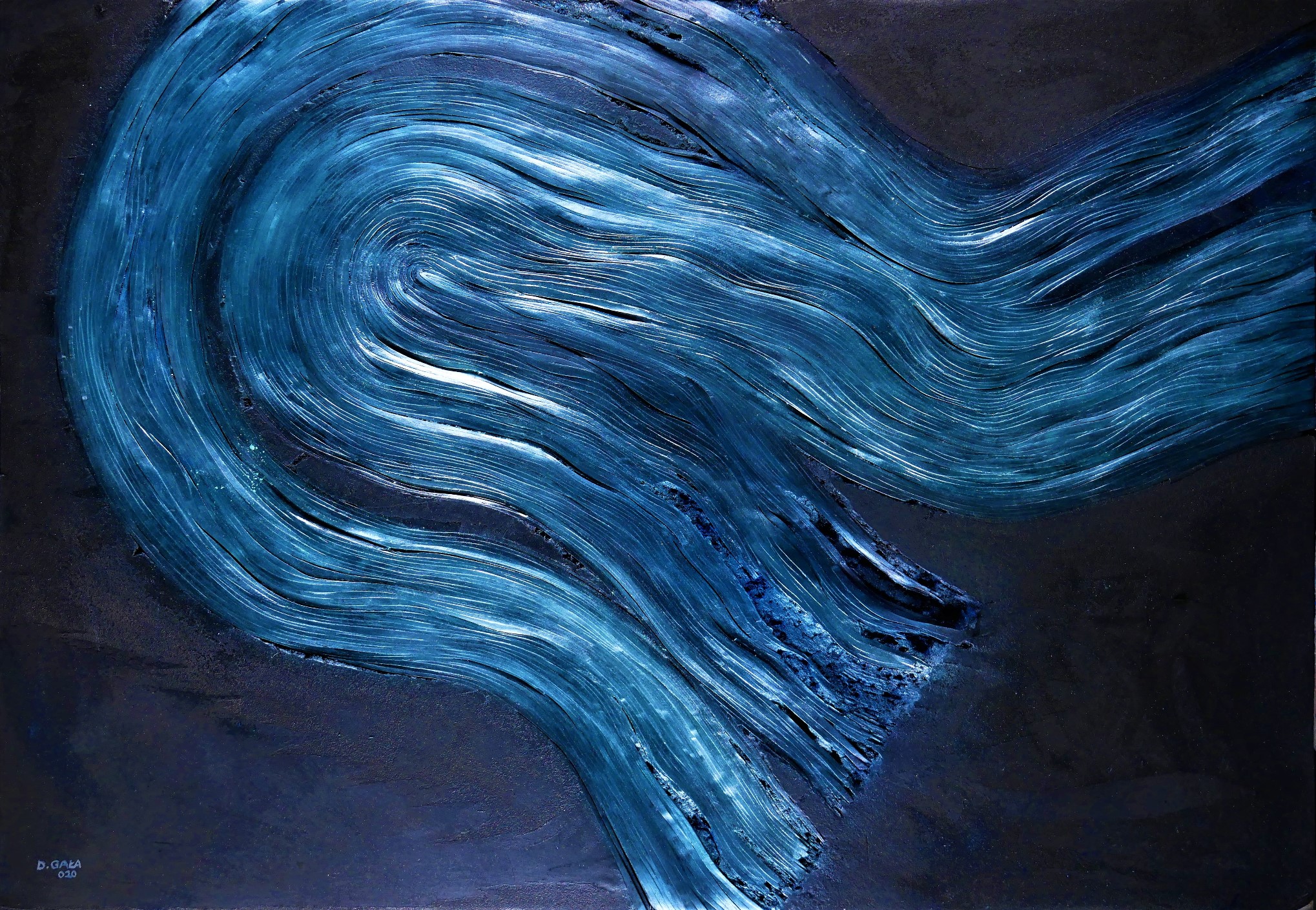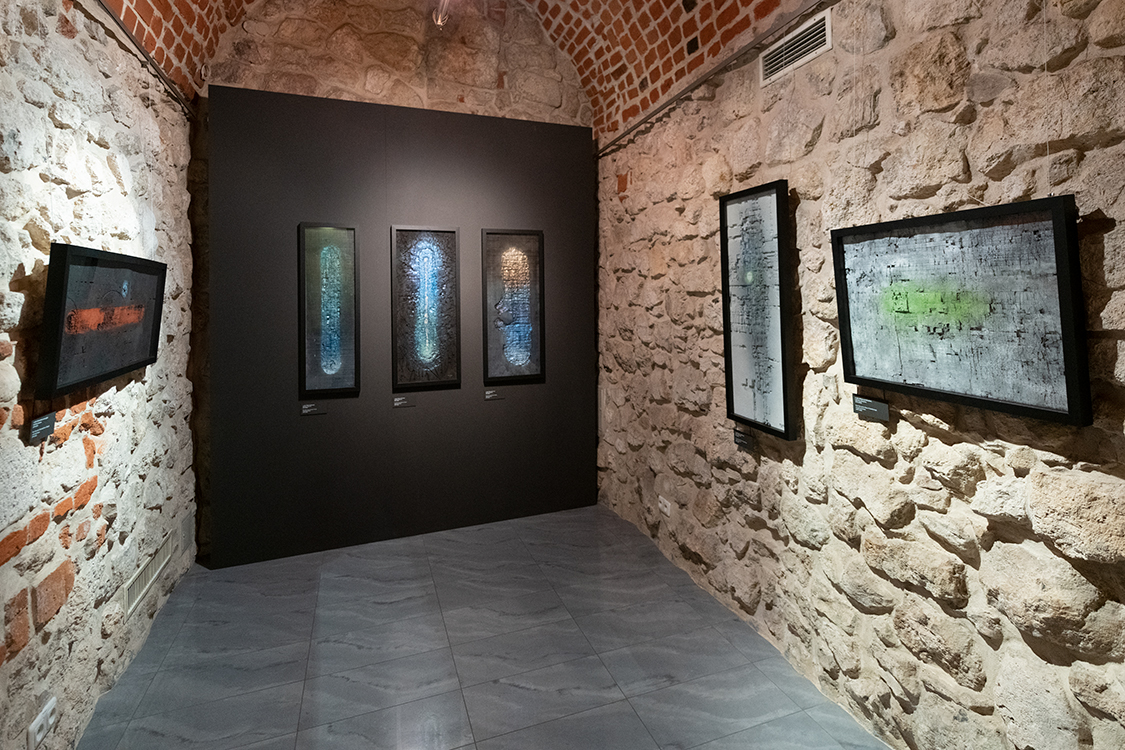
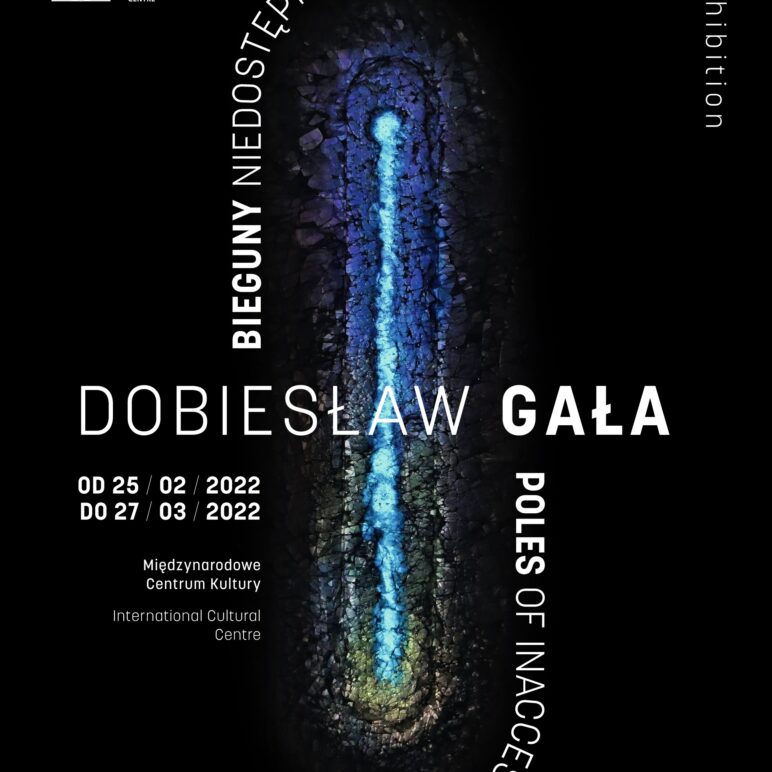
The inspiration for the relief compositions came from the experience of time, an attempt to illustrate the fleetingness of memory and the search for metaphysical space. The works show the process of eradication of all kinds of acts of presence, events, and actions on the material and spiritual level. The series “Poles of Inaccessibility” is an attempt to illustrate the most inaccessible places on earth, where mysterious interference phenomena and traces of events occur, the consequence of which are changes in the structure of matter.
“Poles of inaccessibility” is a game of making present, of being in a space-time loop. The works visualise an impulse to search for one’s own identity and the need to name oneself. The compositions are a subtle combination of drawing, painting, and relief, realised on plates, nets, and papers structured by chemical and thermal processes, which lends them a three-dimensional effect.
Dobiesław Gała, born in 1975 in Ostrowiec Świętokrzyski. Artist, sculptor, Doctor of Art, assistant professor at the Academy of Fine Arts in Krakow. A graduate of the Faculty of Sculpture at the Academy of Fine Arts in Krakow, and currently its vice-dean. In 2000 he obtained a diploma in the studio of Professor Marian Konieczny. He was awarded a scholarship from the Academy of Fine Arts in Nuremberg, where he worked under the guidance of the famous Tim Scott. Scholarship holder of the Minister of Culture and National Heritage of the Republic of Poland. Laureate and winner of the Grand Prix of the X Triennial of Polish Contemporary Drawing and many other prestigious awards. He has presented his works at over 70 individual and collective exhibitions.
The direct inspiration for the series came from the infamous Area 51 – a U.S. military base used for testing new technological solutions.
The works presented in the medieval cellars of the ICC visualised remote territories where unexplained phenomena and incidents have occurred, or where experiments are conducted with devastating effects on local flora and fauna. In this context, the exhibition also served as a commentary on the toxic impact of human activity — how, through experimentation in distant corners of the planet, we deform the natural world.
The exhibition featured new works by the artist, presented to the public in this form for the very first time.

ICC programme concept
Agata Wąsowska-Pawlik, Łukasz Galusek
Curator
Barbara Woźniak
Exhibition design
Magdalena Paleczna
Coordination and Organisation
Karolina Wójcik
Edited, proofread and translated by
Dorota Żywczak
Cooperation
Ewa Czarnecka, Monika Frenkiel, Dorota Korohoda, Paulina Małochleb, Łukasz Pieróg, Angelika Radoń, Anna Sawłowicz
Organiser
MCK
Partner
ASP Kraków
The exhibition is financed by
MKiDN