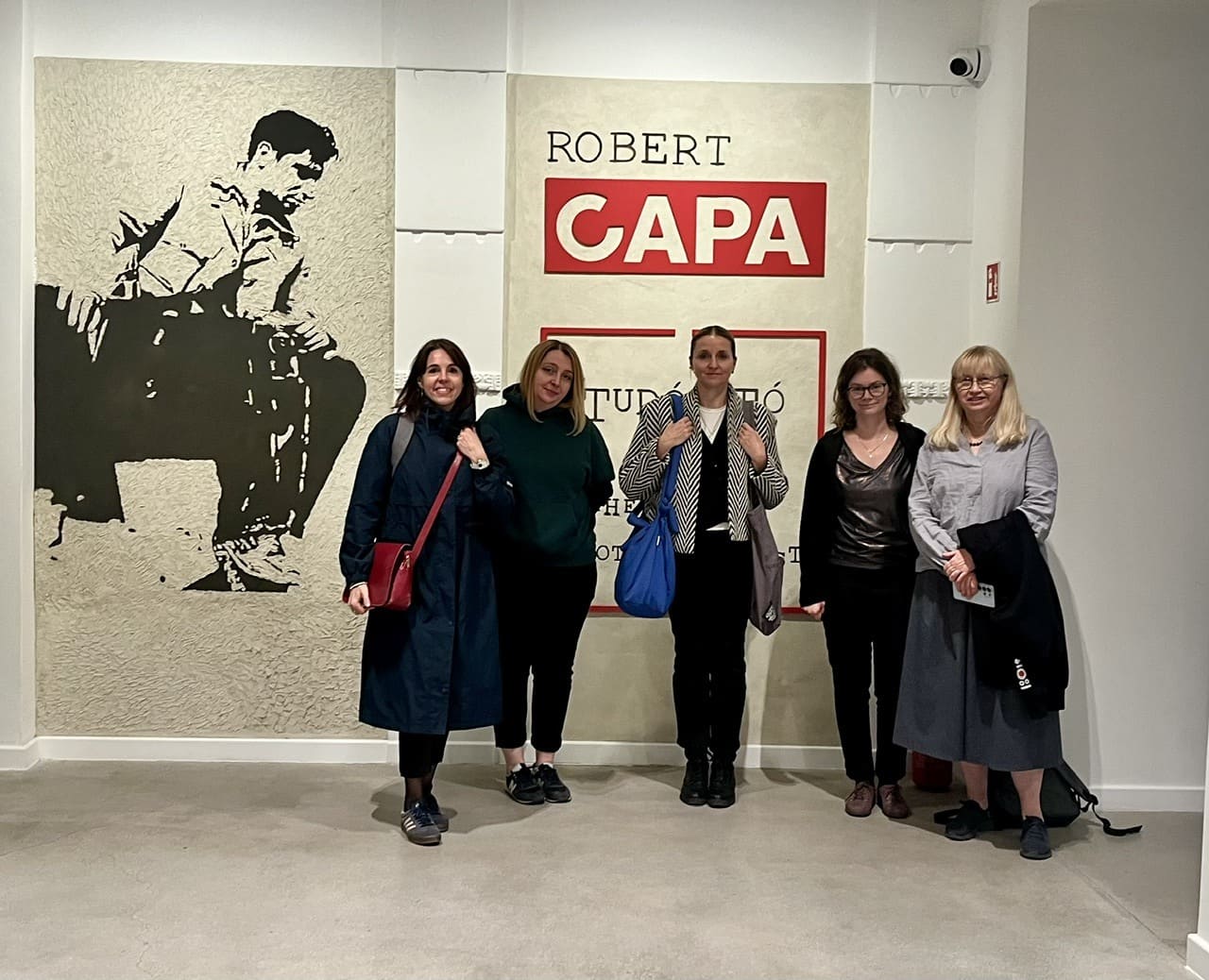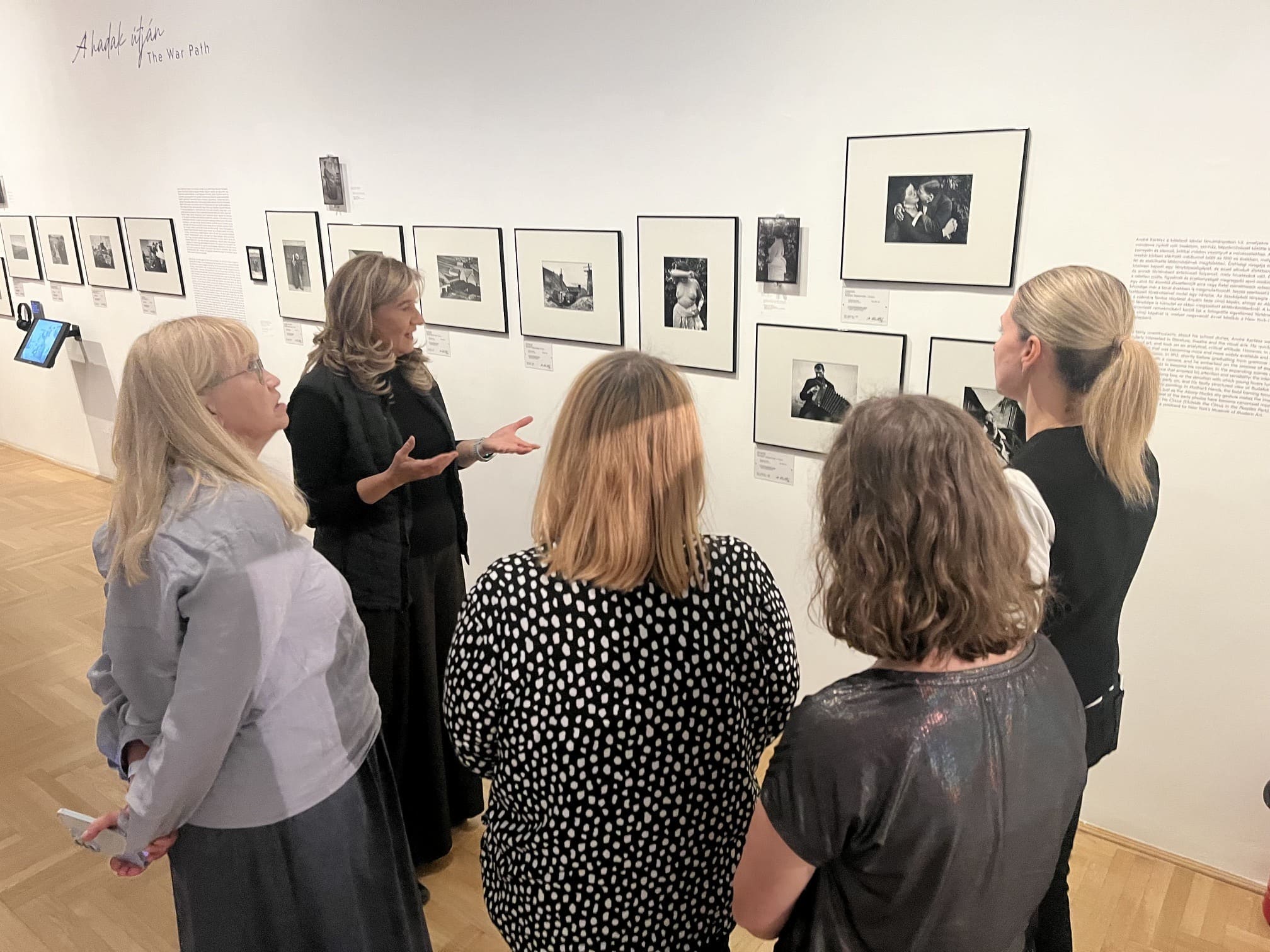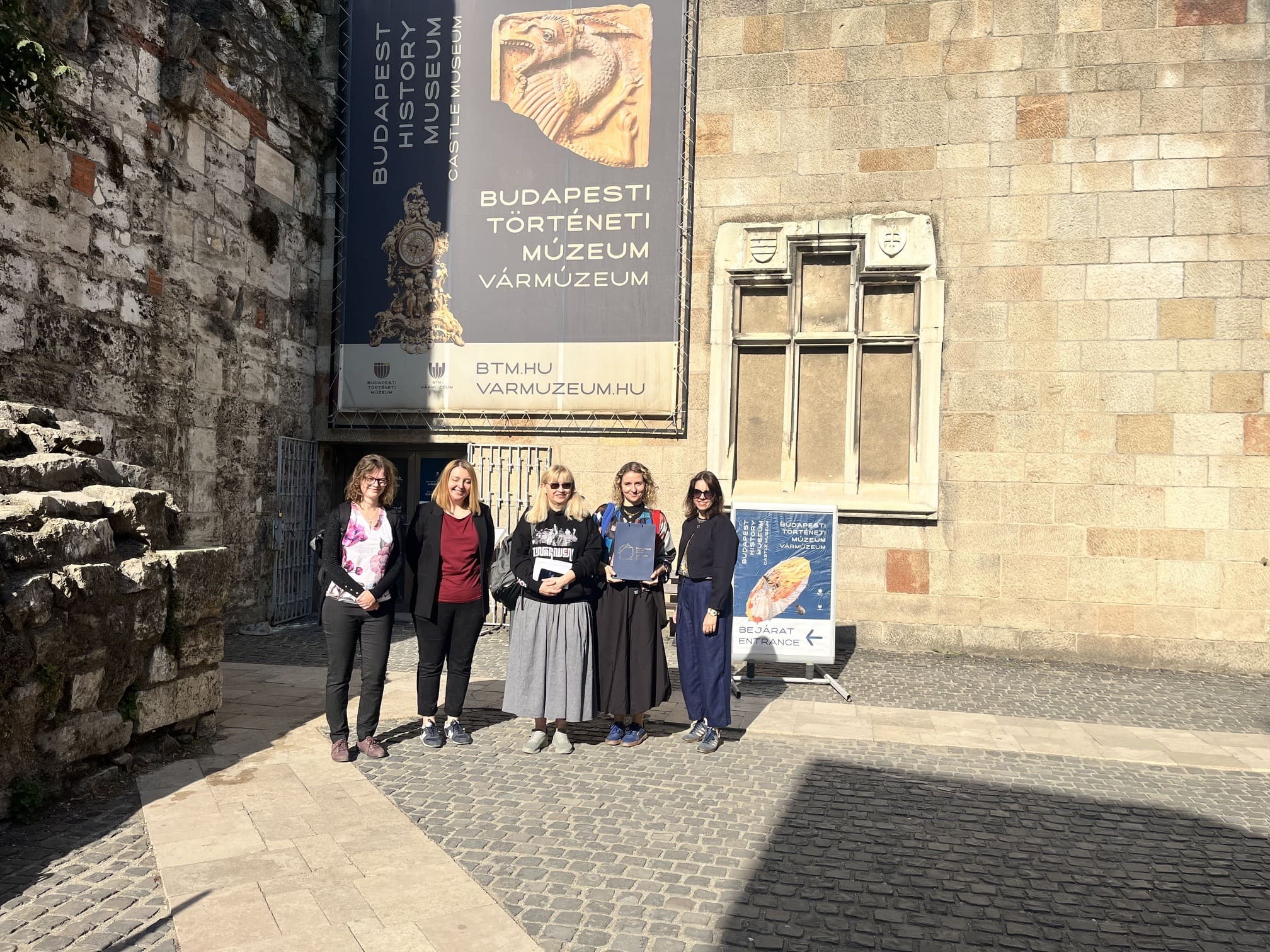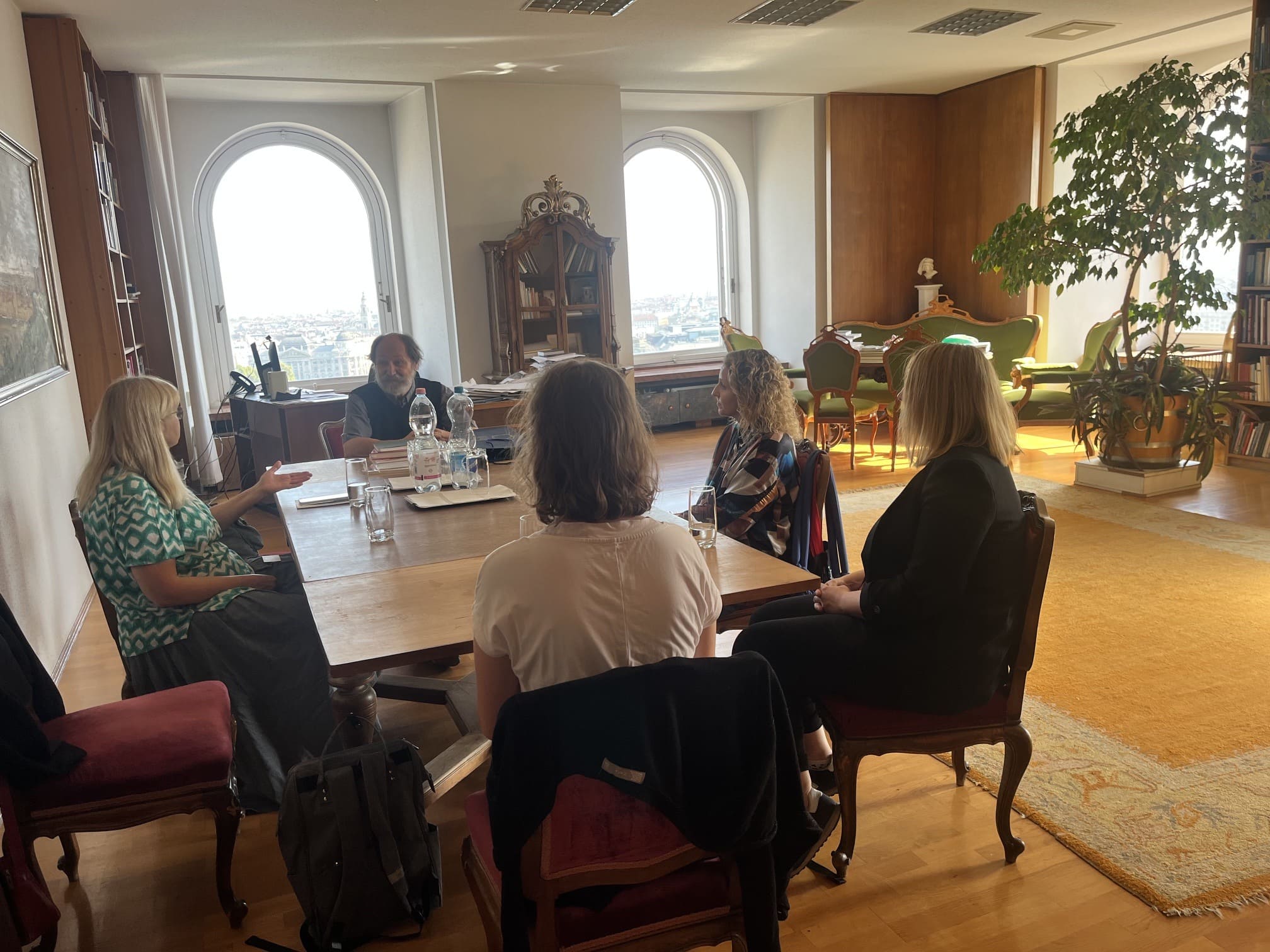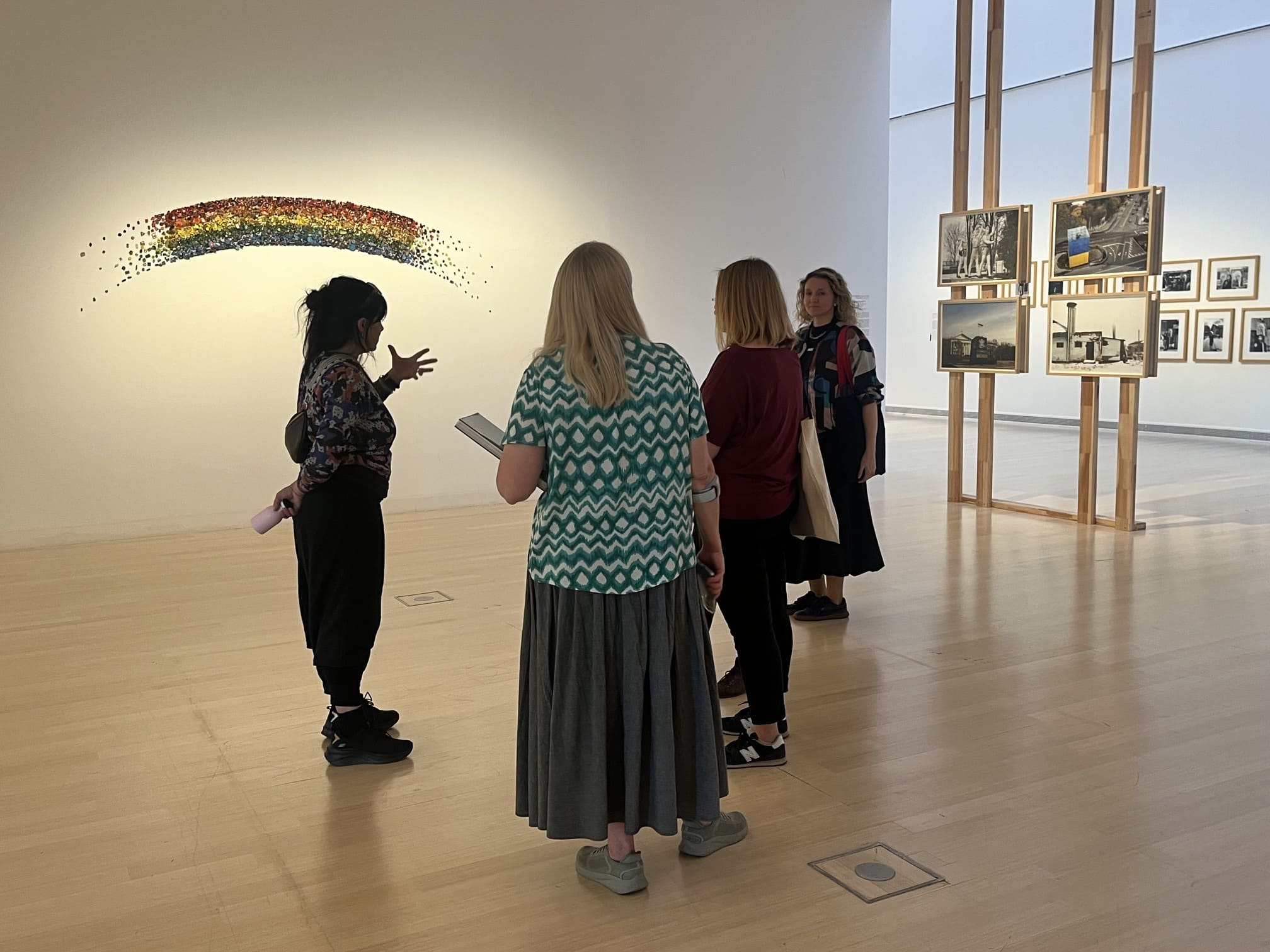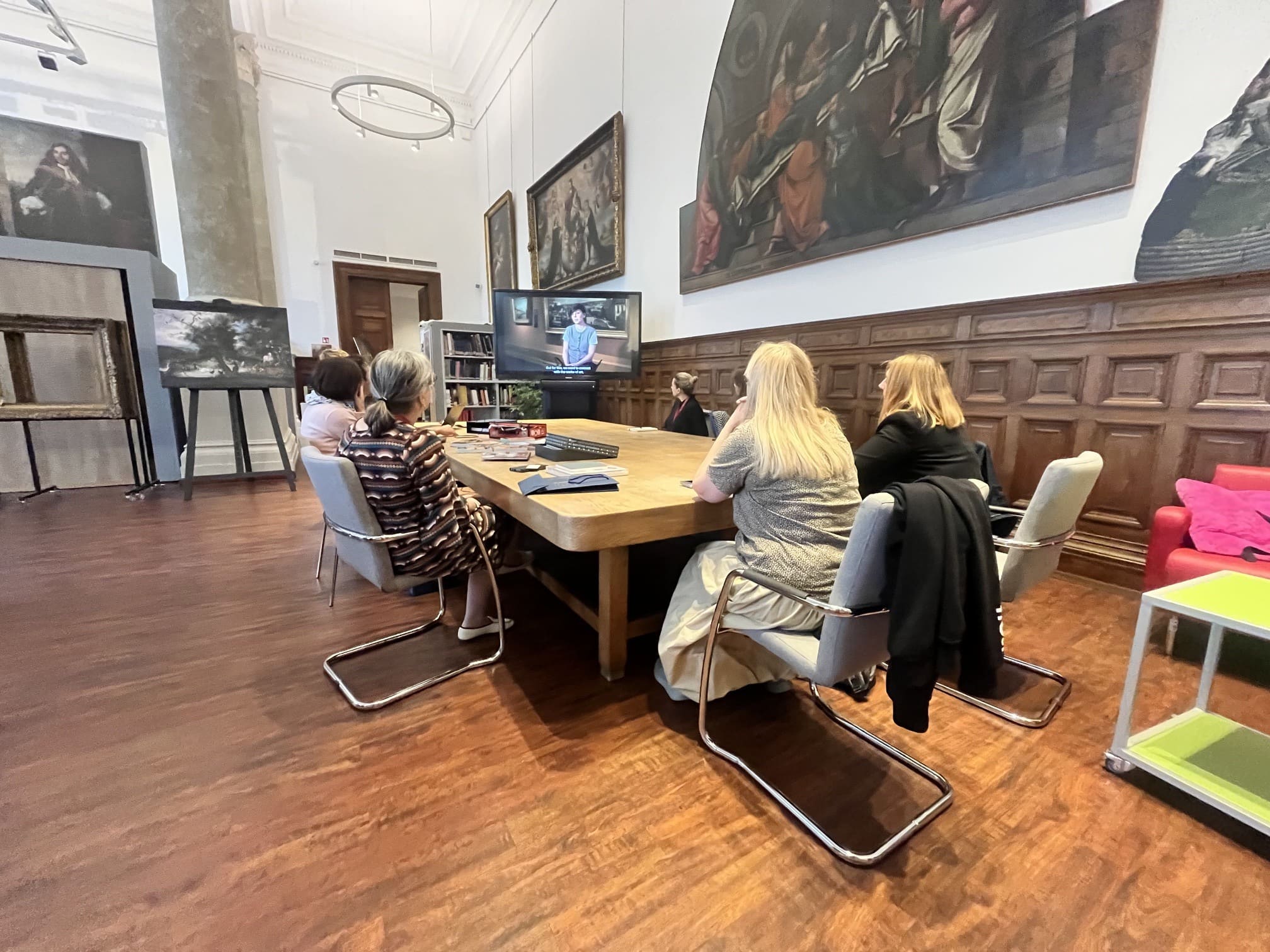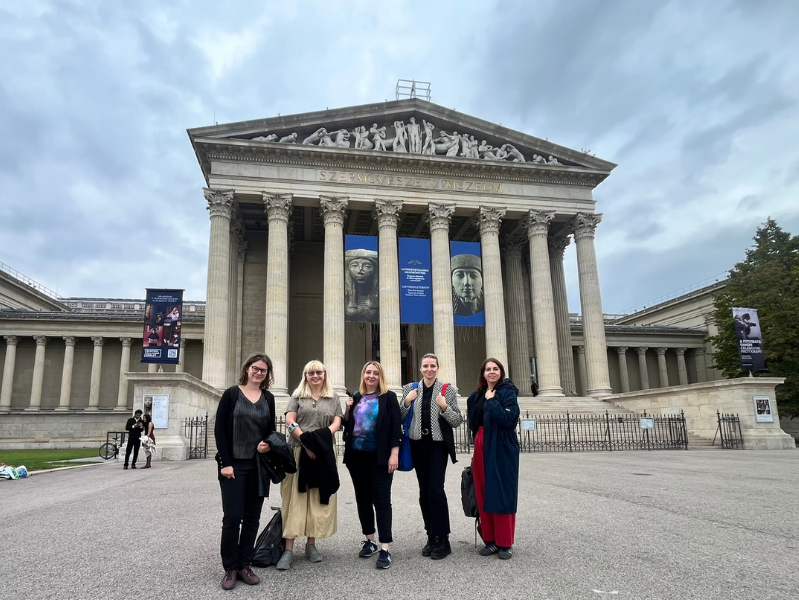
In Budapest, the ICC team met with representatives of museums and exhibition institutions in the Hungarian capital. They had the opportunity to visit the Museum of Ethnography, the Robert Capa Contemporary Photography Center, the Budapest History Museum, the Ludwig Museum – Museum of Contemporary Art and the Museum of Fine Arts. The ICC representatives also toured the National Museum Conservation and Storage Centre (OMRRK), an institution that provides the technological infrastructure for storing the collections of the Museum of Ethnography, the Museum of Fine Arts, and the Hungarian National Gallery.
Representatives from our institution spoke with museum directors, communications and education teams, curators, as well as staff responsible for the conservation and storage of artifacts and museum collections. They also visited the libraries affiliated with these institutions, viewed their collections and familiarized themselves with how they operate. Representatives of the ICC also attended the opening of the “Metamorphosis” exhibition at the Robert Capa Contemporary Photography Center, during which Polish artist Emilia Martin also presented her work. Dr. Zsolt Sári from the Hungarian Ministry of Social Relations and Culture also attended the event and welcomed the ICC team during the opening.
The study visits provided an opportunity to discuss innovative solutions in communication and the development of educational programs for the public, improving accessibility in museums and galleries, expert activities, exhibition production, and the use of modern technologies in preparing programs for audiences. During meetings with representatives of Hungarian institutions, our team also discussed best practices in culture and its role in building resilience and strength in today’s world.
The meetings in Budapest were part of the activities carried out by the ICC as part of the FEnIKS program, which aims to renovate and modernize our headquarters. Participating in study visits allows the ICC team to learn about proven solutions used by Polish and European cultural institutions, as well as to draw inspiration that will help develop new concepts for the ICC’s modernized space and programming.
The FEnIKS project involves not only modernizing the infrastructure but also enhancing staff competencies and developing a program that meets the contemporary needs of the audience. The experience gained during the visit to Budapest will be utilized in further work on creating a modern, accessible, and open space at the International Cultural Centre in Kraków.
More information about the FEnIKS program