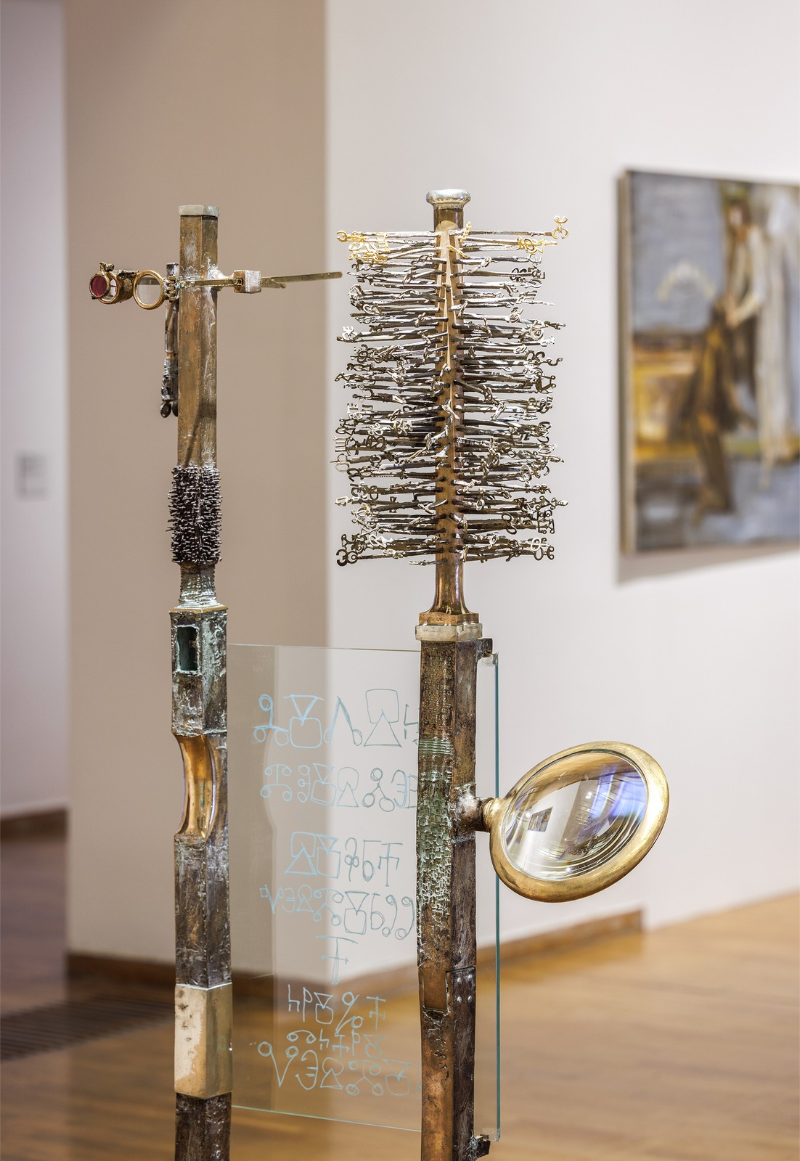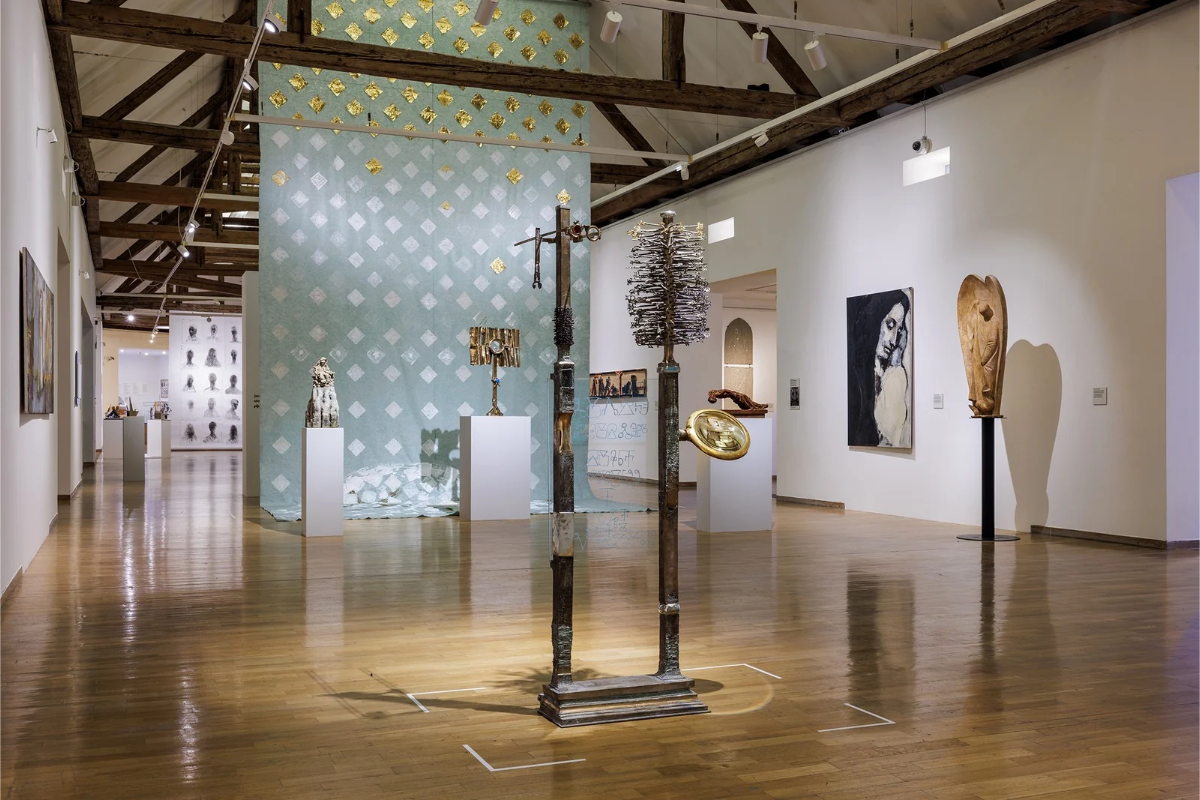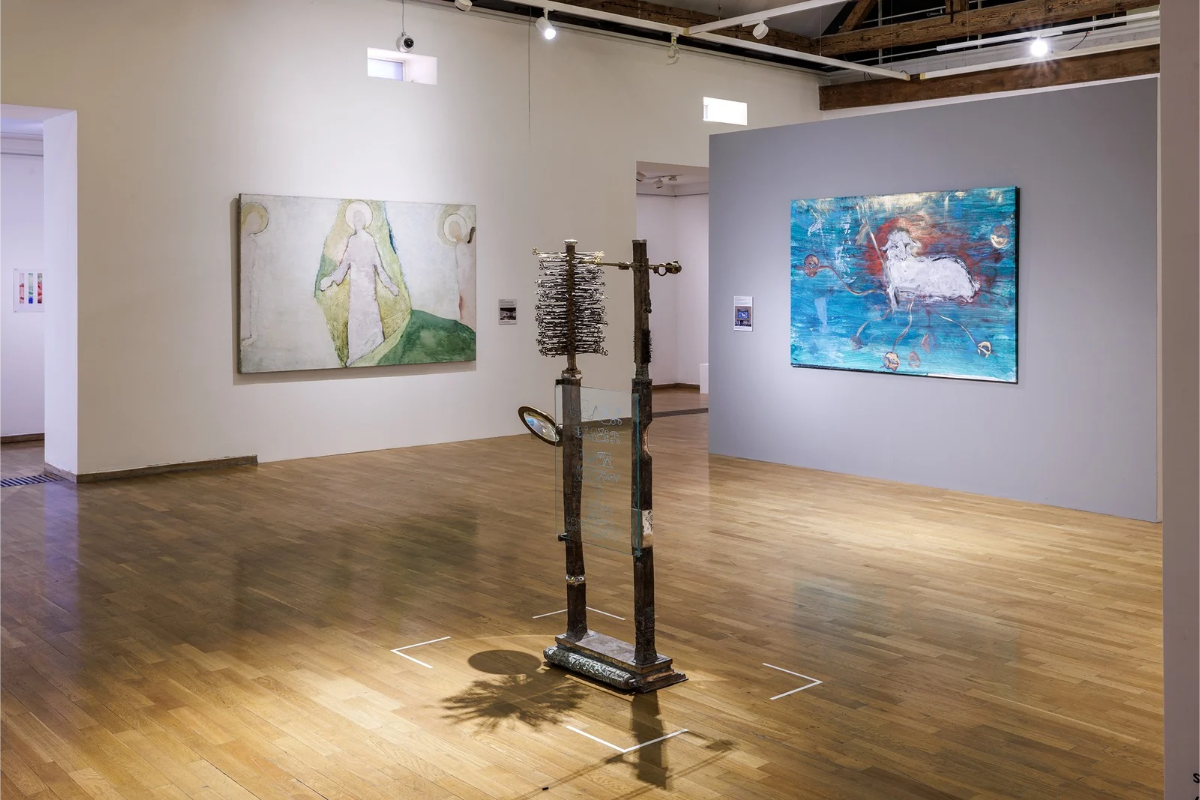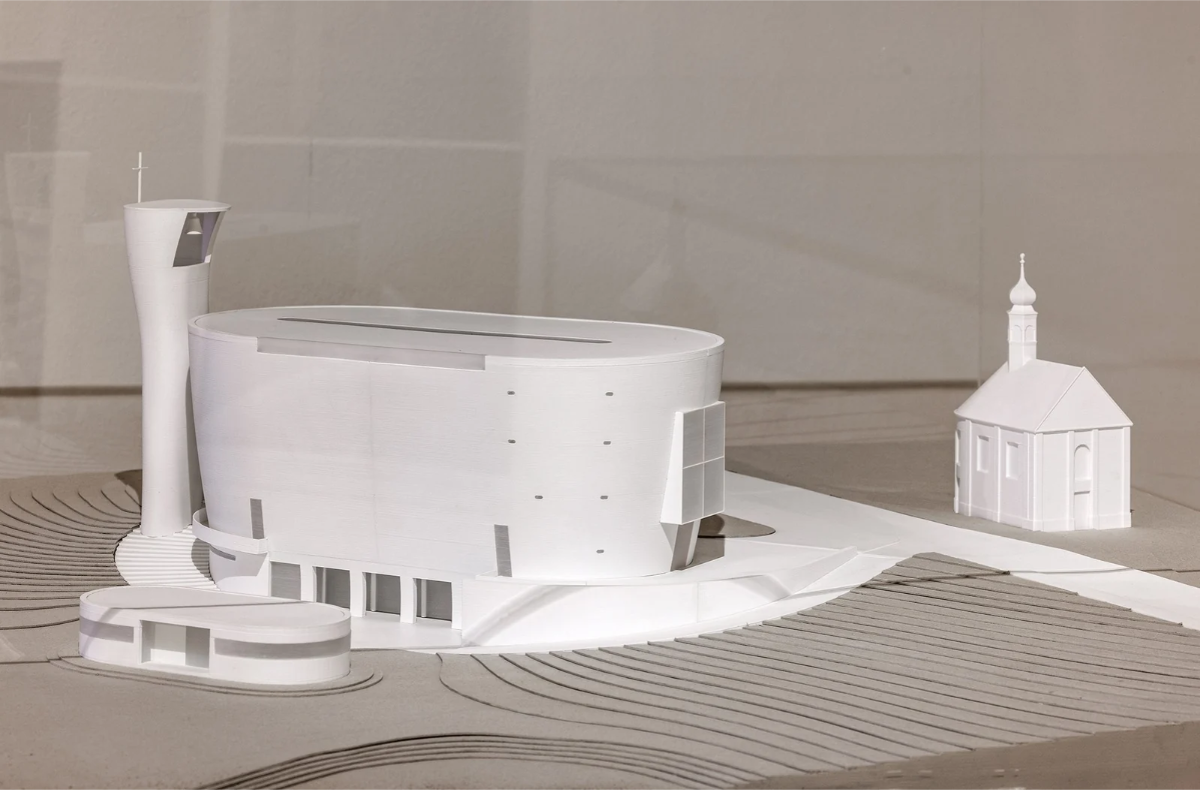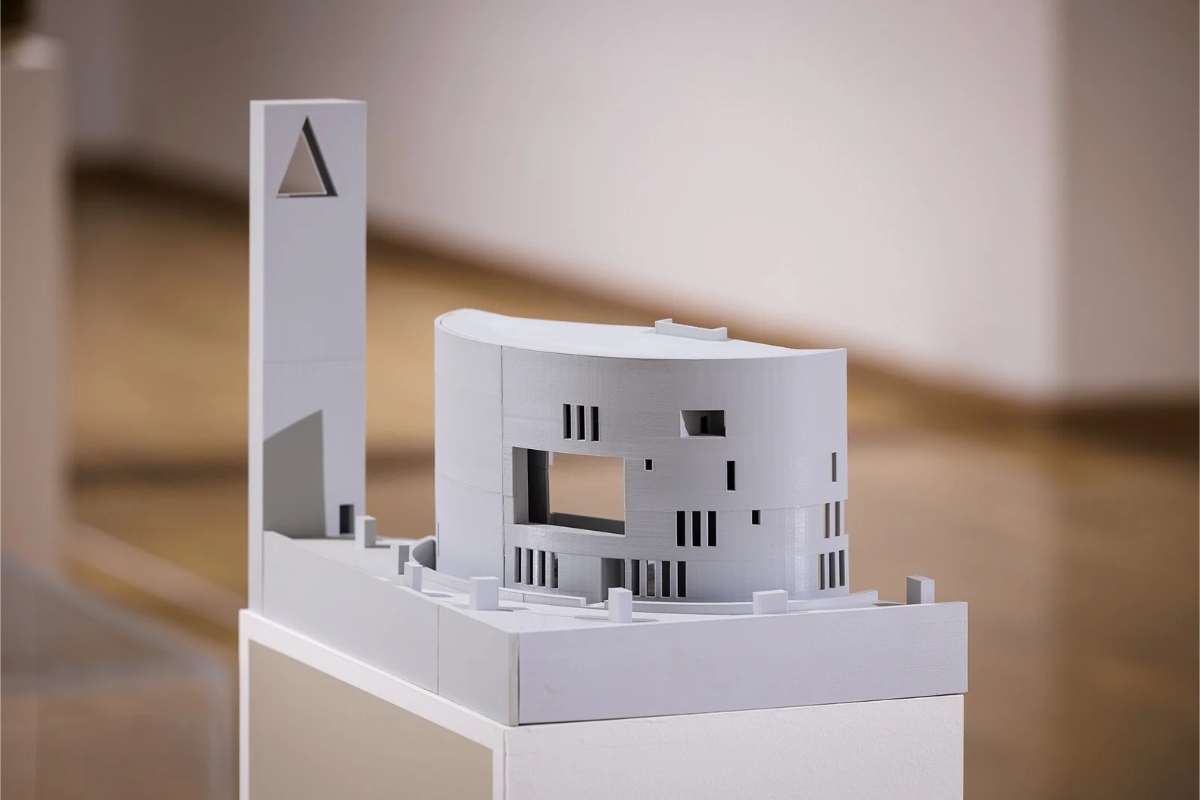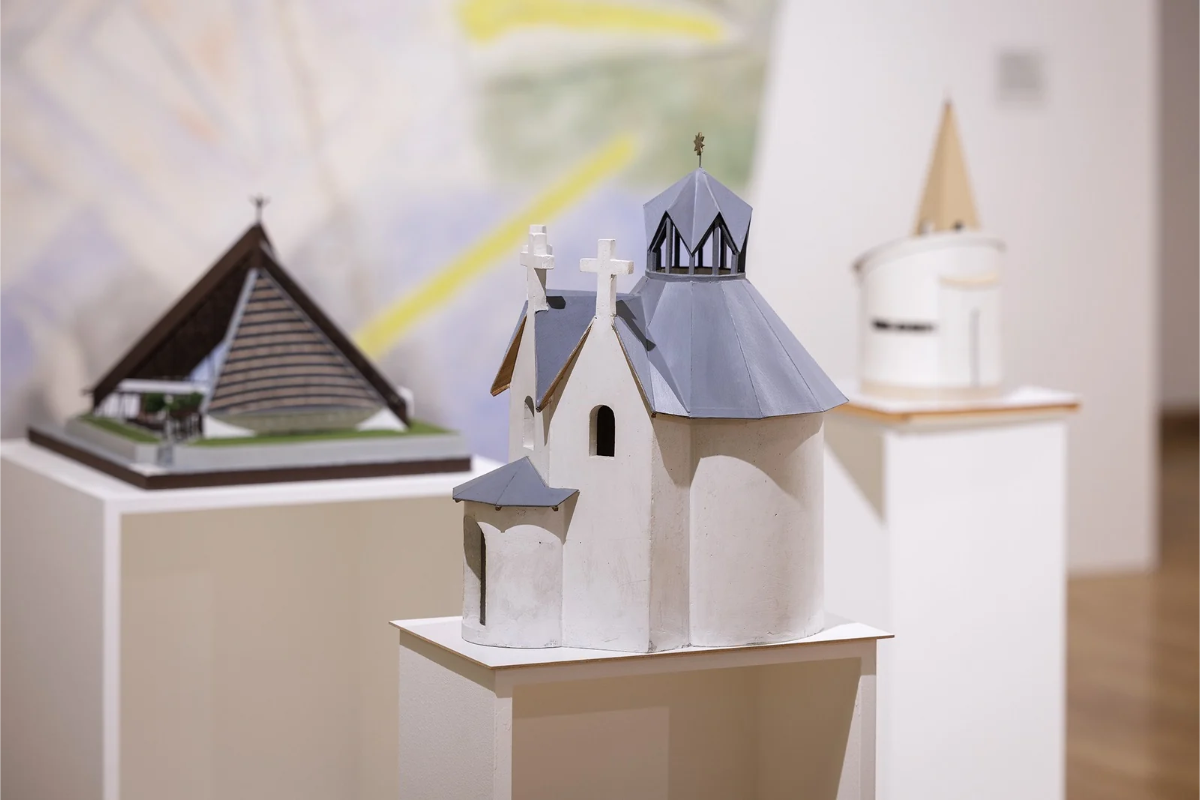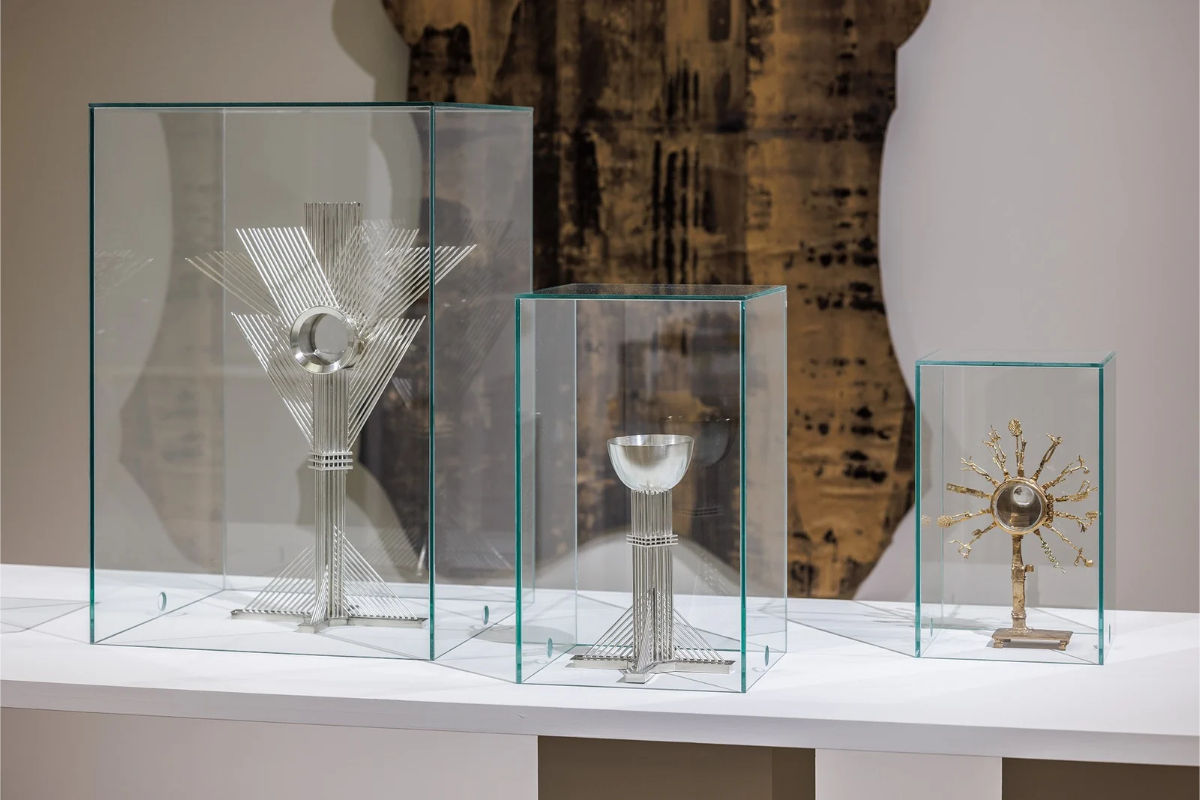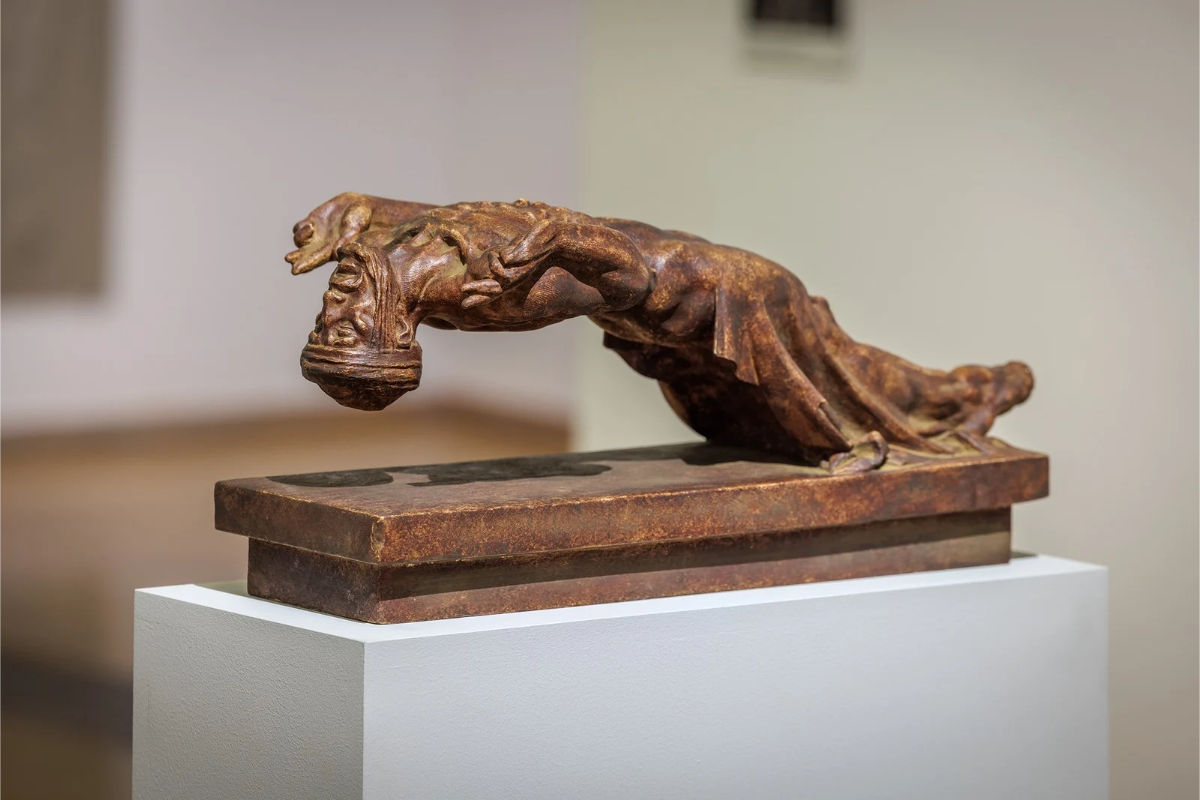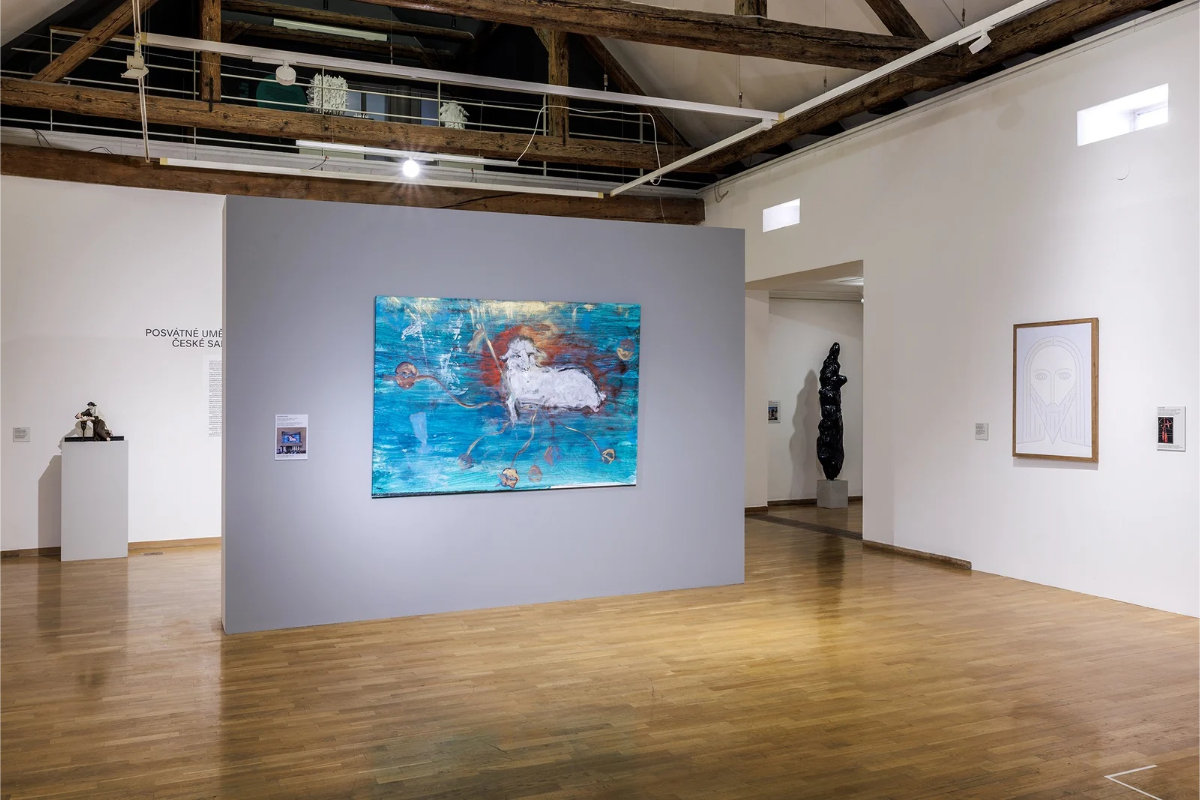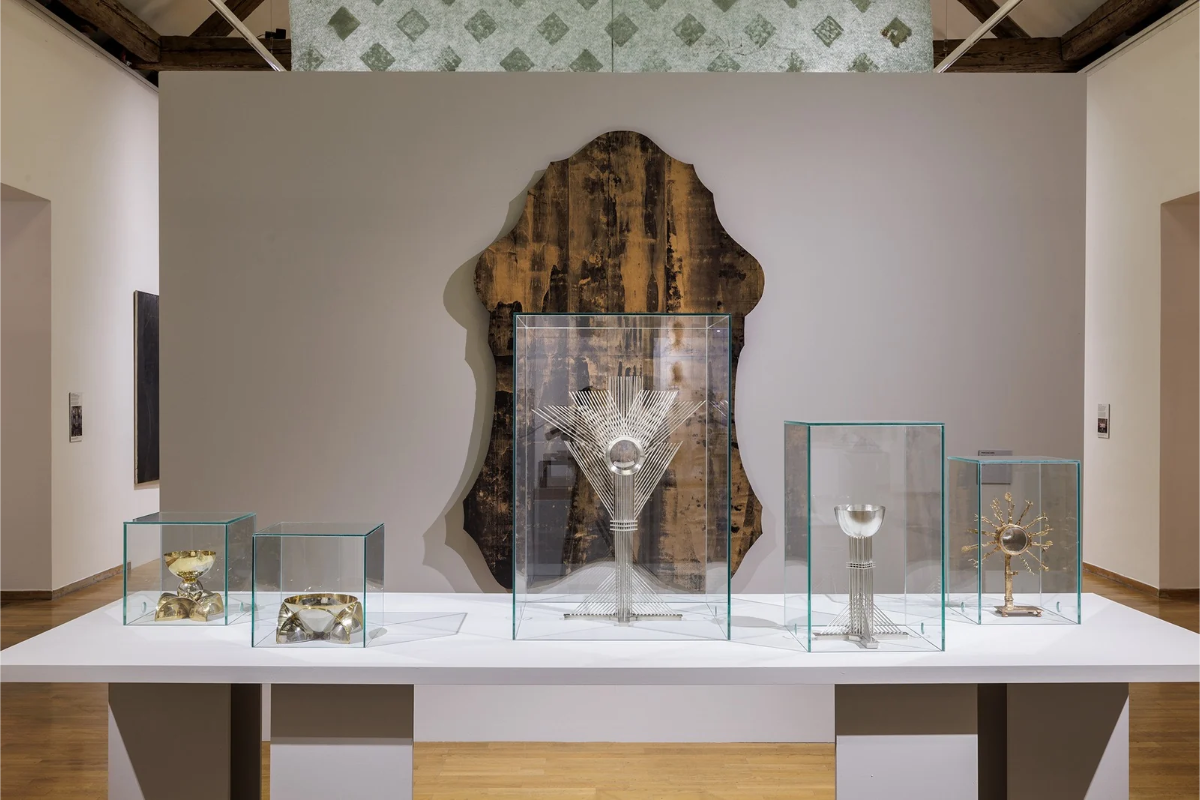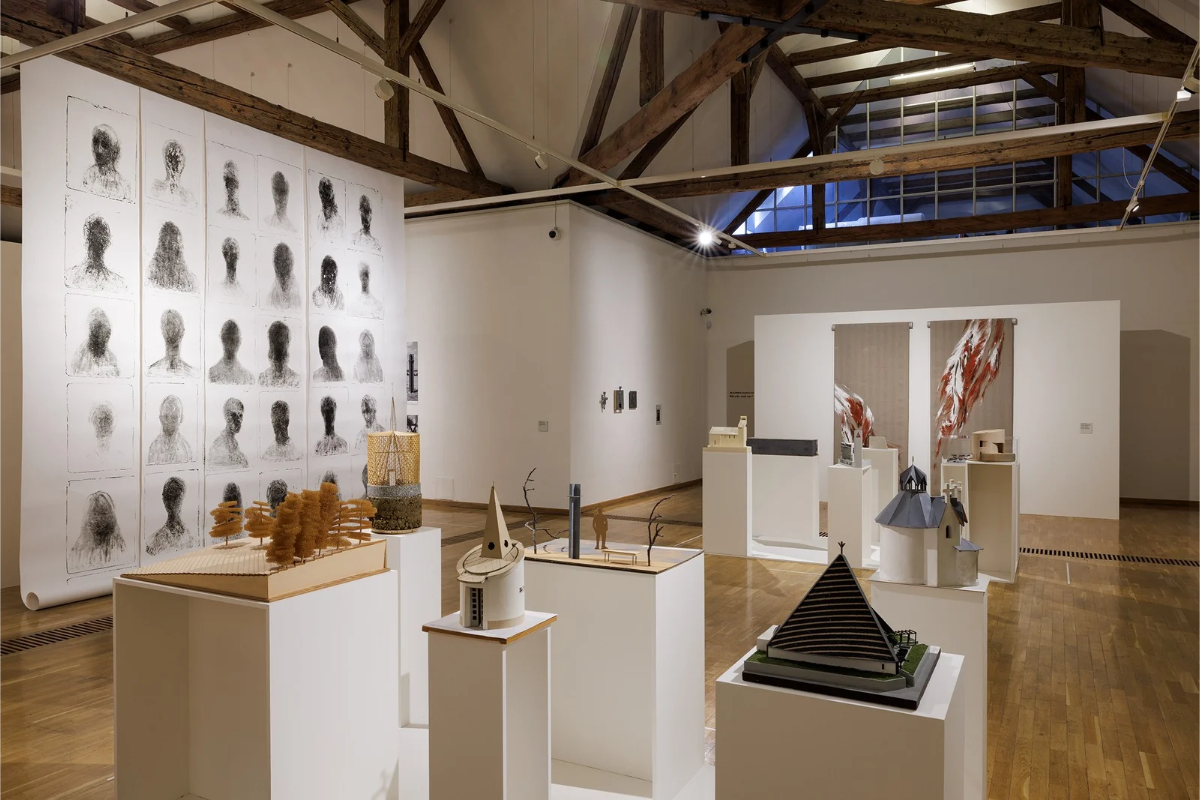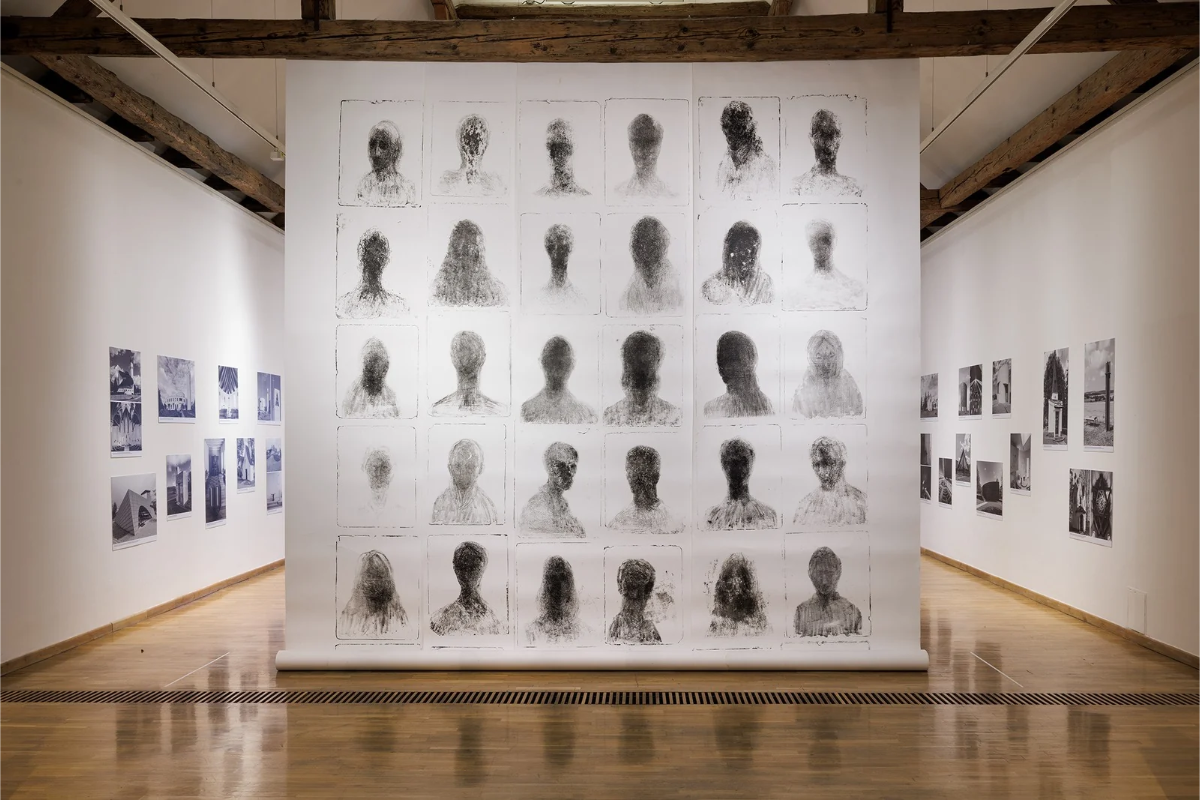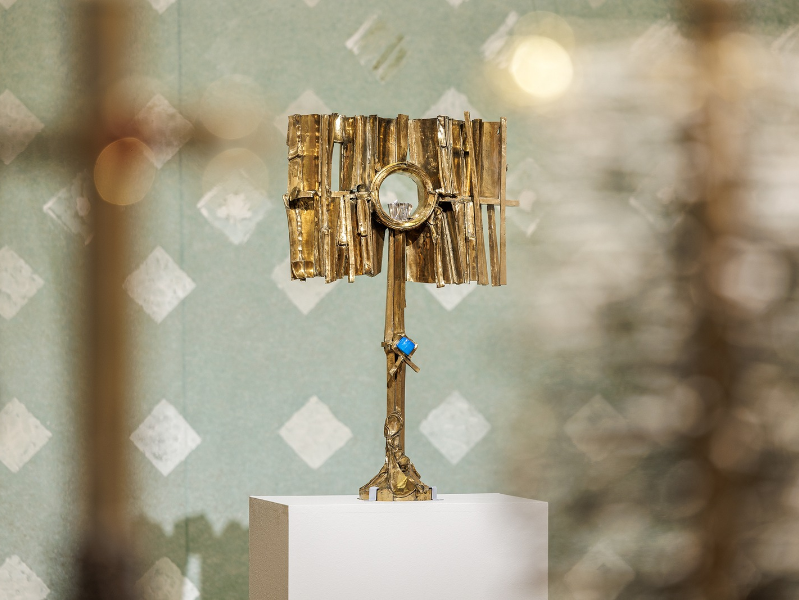
The exhibition “Sacred Art in Times of Commerce. Czech Sacral Art 1990–2026[Posvátné umění v době komerce / české sakrální umění 1990–2026] at the Olomouc Museum of Art can be viewed until 14 March 2027. Thanks to the curators’ careful selection, it offers an artistic and historical perspective on numerous works in the fields of sacred architecture, painting, sculpture and applied art. Together with its accompanying publication, the exhibition serves as a continuation – both thematically and chronologically – of the project “Sacred Art in Unholy Times / Czech Sacred Art 1948–1989”, which was presented in 2022 at the Olomouc Museum of Art.
The exhibition offers an insight into a collection of architectural models, plans and studies in painting and sculpture, which is diverse in terms of both artistic style and perspective. From various points of view, these works highlight values that fundamentally transcend the commercial framework of contemporary society.
Freedom of religion and freedom in art after 1989
The political changes following 1989 not only restored freedom of religion but also presented Christian churches with new tasks and challenges to which they had to respond. Many parishes and congregations began to realise their long-delayed aspirations to have their own premises for holding services, whether this involved the construction of a new church or chapel, or the renovation of existing liturgical spaces.
Particularly in the 1990s, these projects were carried out by active creators who acted as pioneers even in the face of repression and obstacles from the communist regime, such as the architects Tomáš Černoušek, Viktor Dohnal and Jan Soukup, and the visual artists Ludvík Kolek, Karel Rechlík, Karel Stádník and others. Gradually, however, they were joined by other artists who systematically addressed the issue of liturgical space and continue to do so. Among them are the architects Marek Jan Štěpán, Norbert Schmidt, Josef Pleskot and Zdeněk Fránek, and the artists Jan Jemelka, Otmar Oliva, Petr Štěpán, Pavel Šlegl, Jan Exnar and others.
Rapidly developing urban environments began to respond to the new spiritual and social needs of their inhabitants by building churches as centres of the local community. Remarkable works of art in many parishes also arose from the need to renovate liturgical spaces in accordance with the provisions of the Second Vatican Council.
The restoration of historic religious buildings and new designs for wayside shrines
The exhibition also examines a phenomenon linked to the rich tradition of smaller historic religious buildings in the countryside, in the form of what were, at the time, innovative designs for wayside shrines, chapels and Stations of the Cross. The exhibition also addresses the topic of religious orders and communities, to whom properties were returned after 1989 as part of the restitution process. Many of these historic buildings were neglected and in a state of disrepair. They required costly restoration. The exhibition shows how civic initiatives, often supported by former German residents, contributed to the restoration of religious heritage destroyed during the communist era (e.g. Neratov, Zlaté Hory, Moravský Beroun, etc.).
Like the 2022 exhibition, the current exhibition at the Olomouc Museum of Art is also dedicated to religious buildings belonging to faiths other than Catholicism. These include, for example, the congregations of the Evangelical Church of the Czech Brethren, where Miroslav Rada, Barbora and Jiří Veselí and Vít Cimbura left their artistic mark. During the period in question, the Church of the Czech Brethren was particularly active in the field of architecture, collaborating with leading Czech architects and visual artists such as Zdeněk Fránek, Václav Cigler and Karel Malich. The achievements of other churches operating in the Czech Republic have also been documented.
The exhibition is accompanied by a publication of the same title. It contains essays by leading experts in the fields of theology, history and art history, and presents around one hundred selected projects through extensive photographic documentation.
More information about the FEnIKS program at the ICC.
Website and more information about the Olomouc Museum of Art and its exhibitions