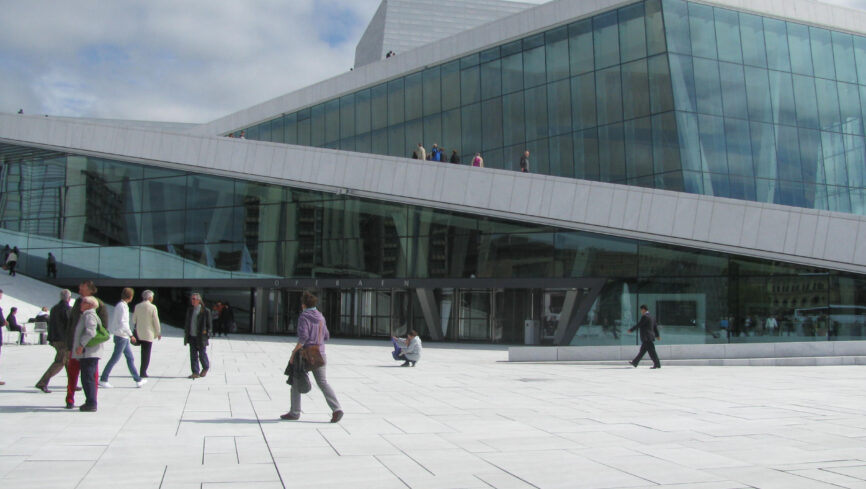
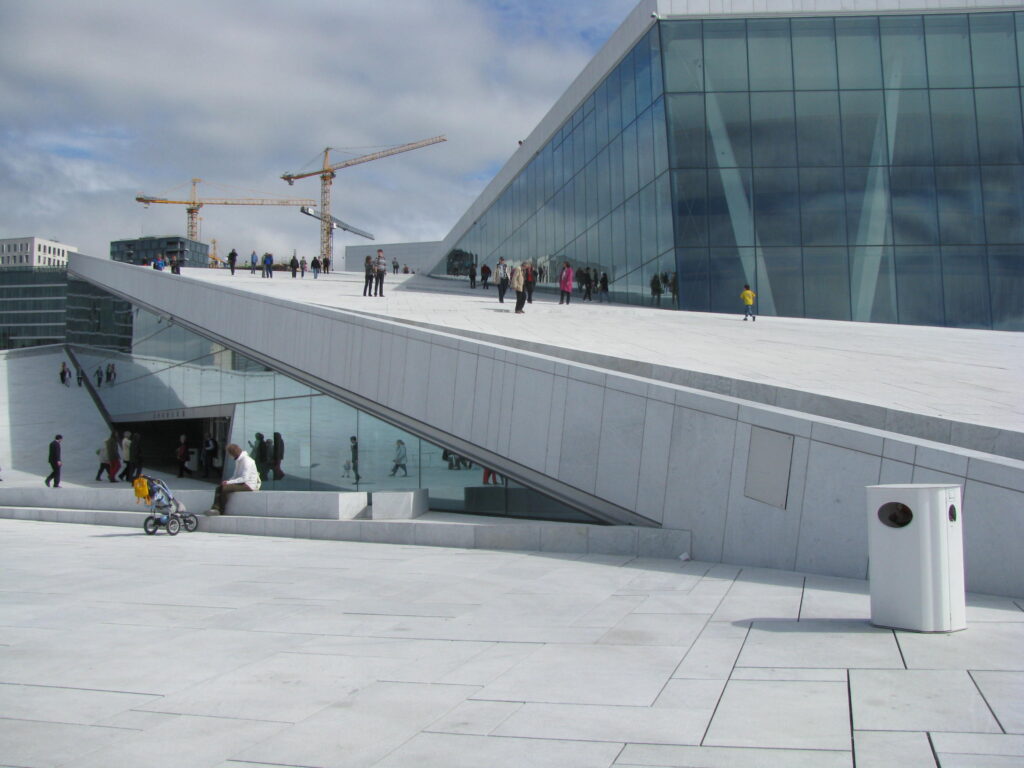
It’s not far from the station to the opera, so I started to walk. The sun was already shining brightly (at the end of May in Oslo the sunrise is after four in the morning), when I squinted, I saw a phenomenal, glistening snow-white lump resembling the tip of the glacier that entered the fjord. The impression was amazing! A real geomimic! Why a geomimic? Because the building fits into the intriguing current of modern architecture, which mimics geological forms and processes, becoming a landscape continuum. The architects from the Snøhetta studio managed to realize the programmatic intention to integrate the architectural solid into the surrounding landscape of the Bjørvik peninsula and the Oslofjord.
Publications

Publications
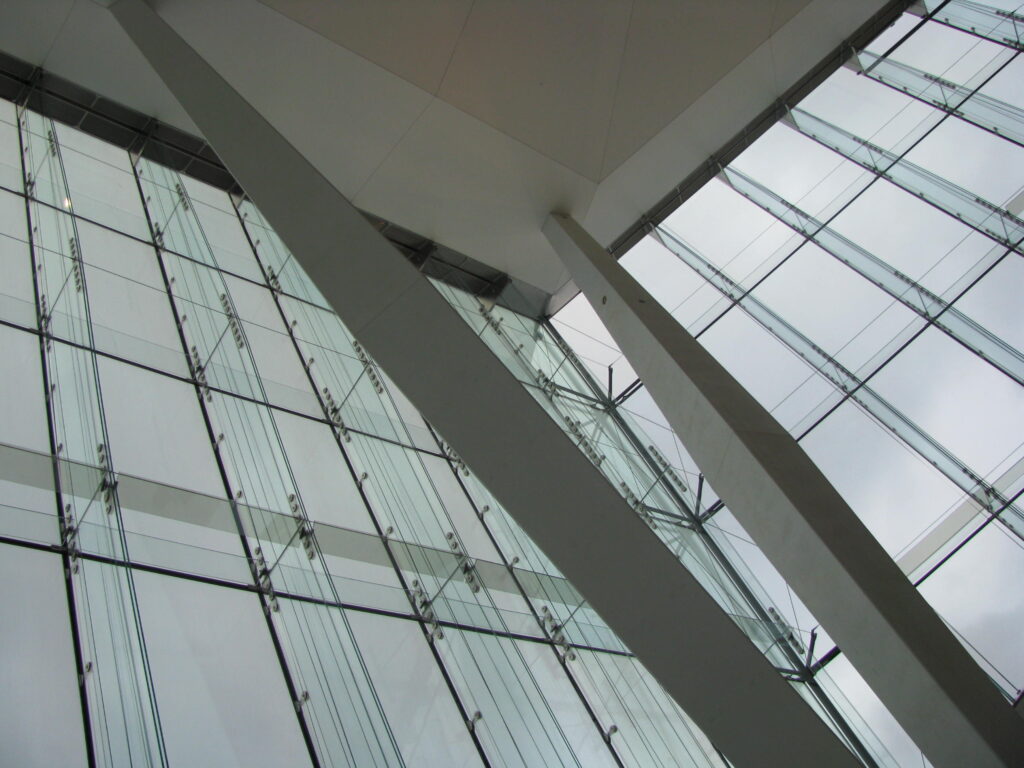
The roof was covered with a white Italian Carrara marble, which flows down to the waters of the fjord, creating a kind of agora accessible to everyone – not only for music lovers waiting for the entrance to the concert, but also for sunbathing locals, skateboarders, skaters, cyclists or tourists attracted by the fame of the building. This was a spectacular success not only as an excellent example of the peak possibilities of architectural art, but also acted as a phenomenal work of public art. The people of Oslo just loved this place. The glass fifteen-meter-high facade above the foyer looks like a thin melting ice sheet by day, and at night flashes of streaks of artificial light that flows from the illuminated interior. Designers also took care of the excellent interior acoustics, using specially profiled elements of oak wood.
Even the shape of the balconies and the ceiling in the main concert hall is not without significance for sound emission. The building also has important technical facilities, the so-called factory, where stage designs are prepared, costumes are sewn, and rehearsals take place. But the building is also a kind of gallery of the latest art. In the foyer, Olafur Eliasson created the installation “Another wall”, and the tapestry curtain in the concert hall, reproducing a photo of crumpled aluminum foil, is the work of the American artist Pae White. Outside the building, a steel and glass sculpture of the Italian artist Monika Bonvicini was placed on the water. She lies, inspired by the famous, extremely atmospheric painting by Caspar David Friedrich “Sea of Ice”.
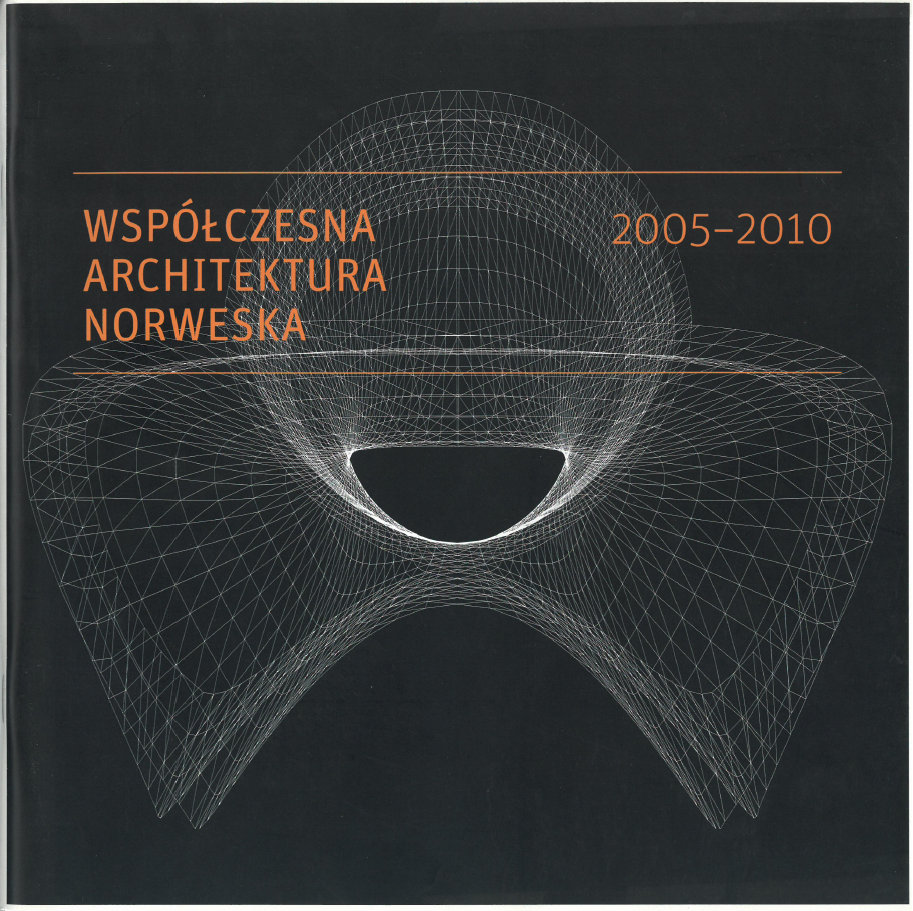
“Contemporary Norwegian Architecture 2005–2010″ exhibition, prepared in cooperation with the Museum of Architecture in Oslo, was presented at the ICC Gallery in 2012.
Publications