In the multifaceted reflection on issues of heritage, identity and civilisation, which the International Cultural Centre has been undertaking since it opened (on 29 May 1991), the urban dimension undoubtedly occupies a special place. On the one hand, the city is a lens through which the most pressing problems of the present day are focused; on the other, it is a mirror of civilisation, its achievements and its memory. It is also a place where different identities and urban narratives clash.
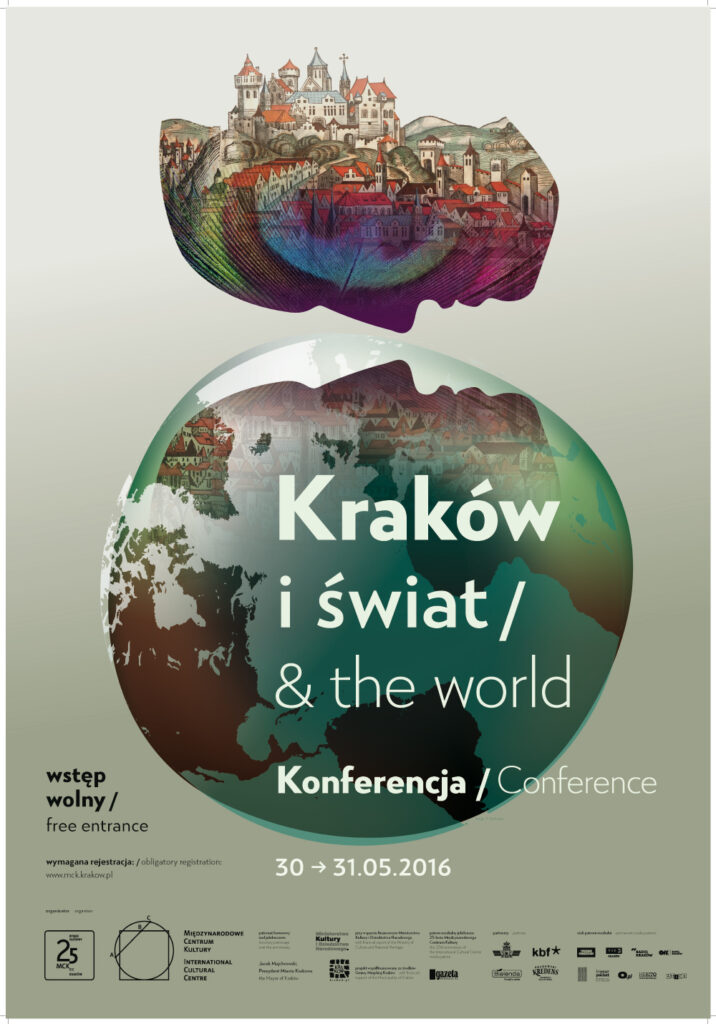
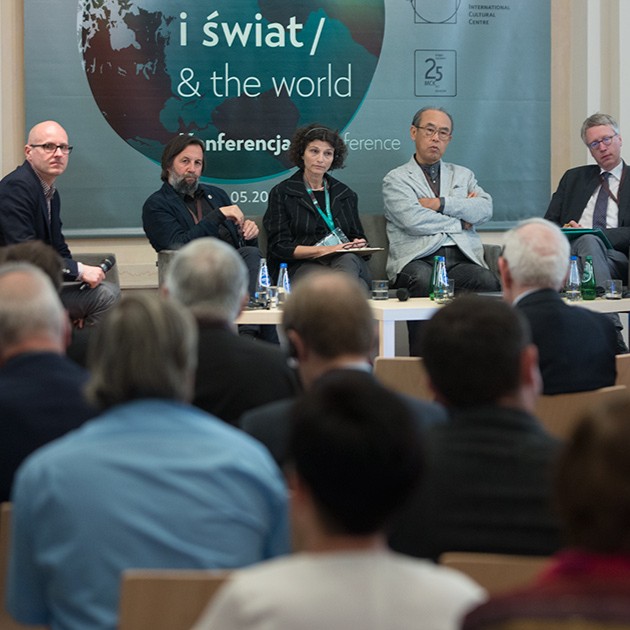
Over the course of the two-day conference, an international group of experts – historians, cultural studies scholars, literary scholars, cultural managers, urban planners and economists – debated the phenomenon of the city, focusing in particular on the nature of change and the character of the transformation over the last twenty-five years, narratives and stories about the city, as well as models of development and the challenges of the future. In six panel discussions, Kraków was presented as a metropolis of Central Europe. The issue of how it is perceived from a global perspective and the city’s portrayal in literature were also raised. Experts debated the city’s history and heritage. They also looked to the future, considering possible paths for Kraków’s development and the role of cultural policy and the cultural sector in this process. Special guests at the conference were Prof. Claudio Magris and Charles Landry.
READ THE INTERACTIVE REPORT SUMMARISING THE CONFERENCE
Discussion panels:
Krakow in Central Europe – If cities are mirrors of civilisation, how can the phenomenon of Central Europe be defined through urbanisation processes? What distinguishes the cities of Central Europe? To what extent does the legacy of the Habsburg Empire determine the identity of Central European cities today? How has the legacy of communism shaped the distinctive character of Central European cities? Does the nature of the changes between 1989 and 2015 weaken our identity? What is Kraków’s place and mission today within the network of Central European metropolises?
Krakow from a distance – Krakow is Poland’s strongest brand on the world stage. What is Kraków’s image and significance from a Central European, European and global perspective? Which elements of Kraków’s heritage are most prominent, and which seem to be underappreciated? On the one hand, Kraków is the ‘cradle of Poland’; on the other, it is a UNESCO World Heritage Site. Does it have the potential to function as a European, or even global, ‘lieu de mémoire’? What content might such a place of memory be filled with? Kraków is a city operating within the global constellation of heritage cities. What strengths should it highlight in this context, and what pitfalls should it avoid? Can Kraków, as a living heritage city, offer an alternative to the currently dominant trend of creating multimedia heritage museums?
Kraków in literature – What is the literary image of Kraków today? In the era of the spatial turn of the last few decades, does the image of the city constructed by local writers differ fundamentally from that created by foreign writers? Is the myth of Kraków as a symbol of national life and artistic bohemia still alive? Has it been replaced by other narratives? Is it a stage upon which various memories and identities clash: Polish (intellectual, working-class, bourgeois), Jewish, Galician? What is Kraków’s culture-forming potential today?
Kraków: a city of heritage – One of the fundamental questions regarding the future development of historic cities concerns the role that cultural heritage will play in this process. Will it continue to serve as a point of reference enabling us to understand a place’s identity in an ever-faster-changing world, or will it lose its power irrevocably? Another question is whether heritage will remain a strong factor shaping the city’s economy through the development of the tourism sector and cultural industries? The new service economy, in which the leisure industries play such a significant role, has given heritage a new function, and over the last three decades it has played an important part in the transformation of historic cities. In today’s world, with tourism becoming increasingly mass-market and globalised, will historic cities be able to hold their own and preserve their authenticity? Kraków embodies many of the phenomena mentioned, illustrating the changes taking place in the modern world. In what direction might these changes proceed?
Kraków: a city of the future – What is Kraków’s main potential for development? What makes it attractive to residents, tourists and investors? What role can the creative industries, the knowledge-based economy and new technologies play in Kraków’s development? Where do the greatest challenges lie in terms of the city’s socio-economic development? Is it uncontrolled suburbanisation? Social polarisation? The social, physical or economic decline of certain areas? Environmental pollution? What sort of initiatives (events, investments, projects) are needed in Kraków for it to be regarded as a good city in which to live, work, spend one’s leisure time and invest? Can culture play a significant role in the development of a city in the 21st century?
The city and culture – Kraków is the cultural capital of Poland. Is this a slogan or a stereotype? If culture is the strength of a city, what does it mean for Kraków? A product that attracts tourists? A key element in building the city’s brand? An essential part of its residents’ identity? The closing discussion of the conference will focus on the following dilemmas: should the city’s cultural offering be aimed at visitors or at the local community? Are major projects, such as festivals or strategic initiatives (e.g. the European Capital of Culture), an opportunity or a curse for cities? How can urban cultural policies be reoriented so that funding makes a tangible contribution to broadening the range of participants in cultural life, and subsequently to building social skills? But is social change through culture even possible? And does this not require us to reinvent urban culture?
Panellists: Shlomo Avineri, Yaarah Bar-on, Franco Bianchini, Emil Brix, Krzysztof Czyżewski, Milena Dragićević Šešić, Ruth Ellen Gruber, Gaja Grzegorzewska, Andrew Hallam, Jerzy Hausner, Eva Hoffman, James Hopkin, Faith Liddell, Peter Oliver Loew, Robert Palmer, Robert Piaskowski, Mykola Riabchuk, Mathias Ripp, Joan Roca and Albert, Tokimasa Sekiguchi, Simona Škrabec, Gabor Soós, Paul Spies, Magdalena Sroka, Stsiapan Stureika, Alois Woldan, Larry Wolff, Nathaniel Wood, Andrzej Zdebski.
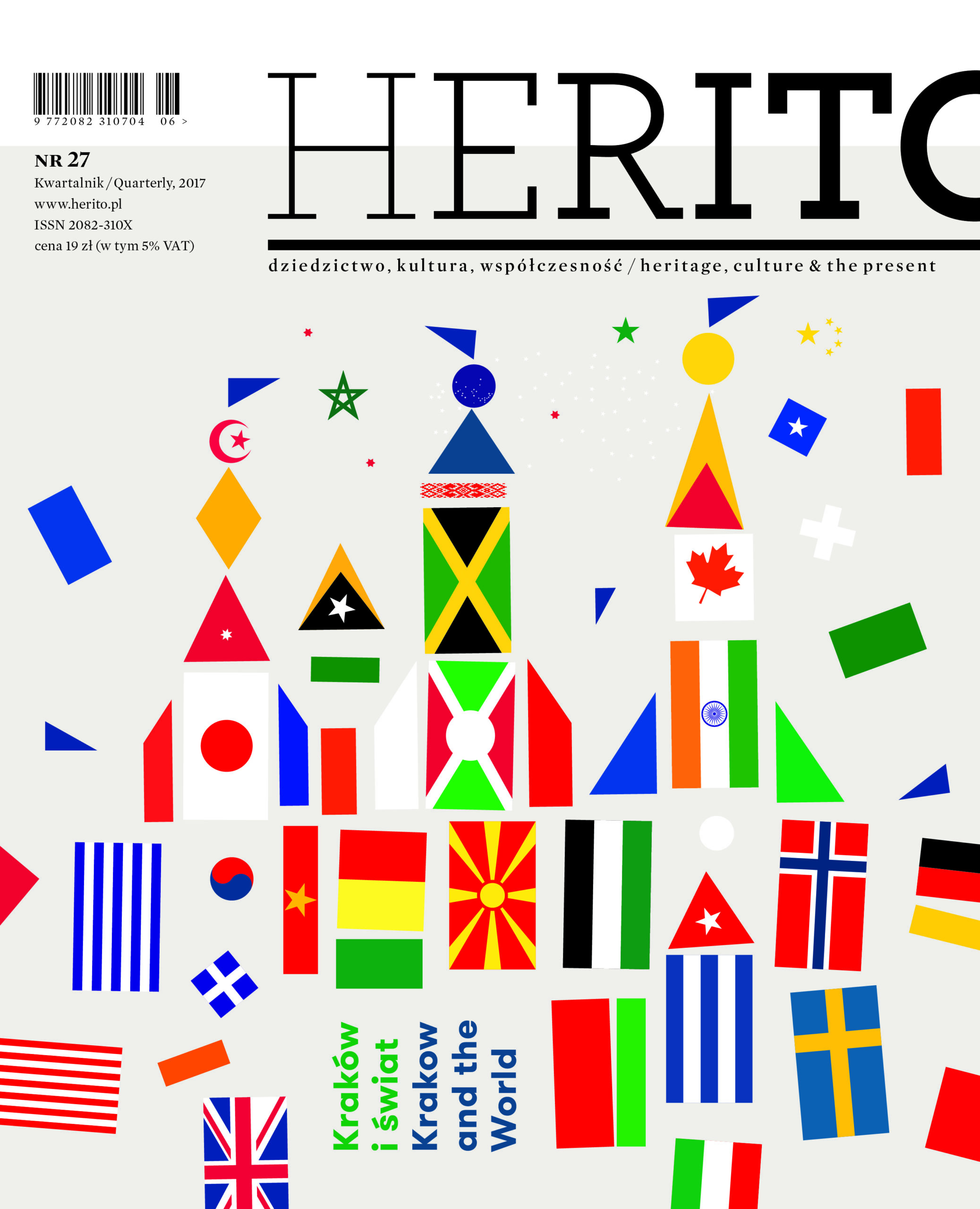
Materials from the conference were used to prepare a special issue of the magazine “Herito”.
Publications
Publications
Materials for download
PDF (0.47 KB)