
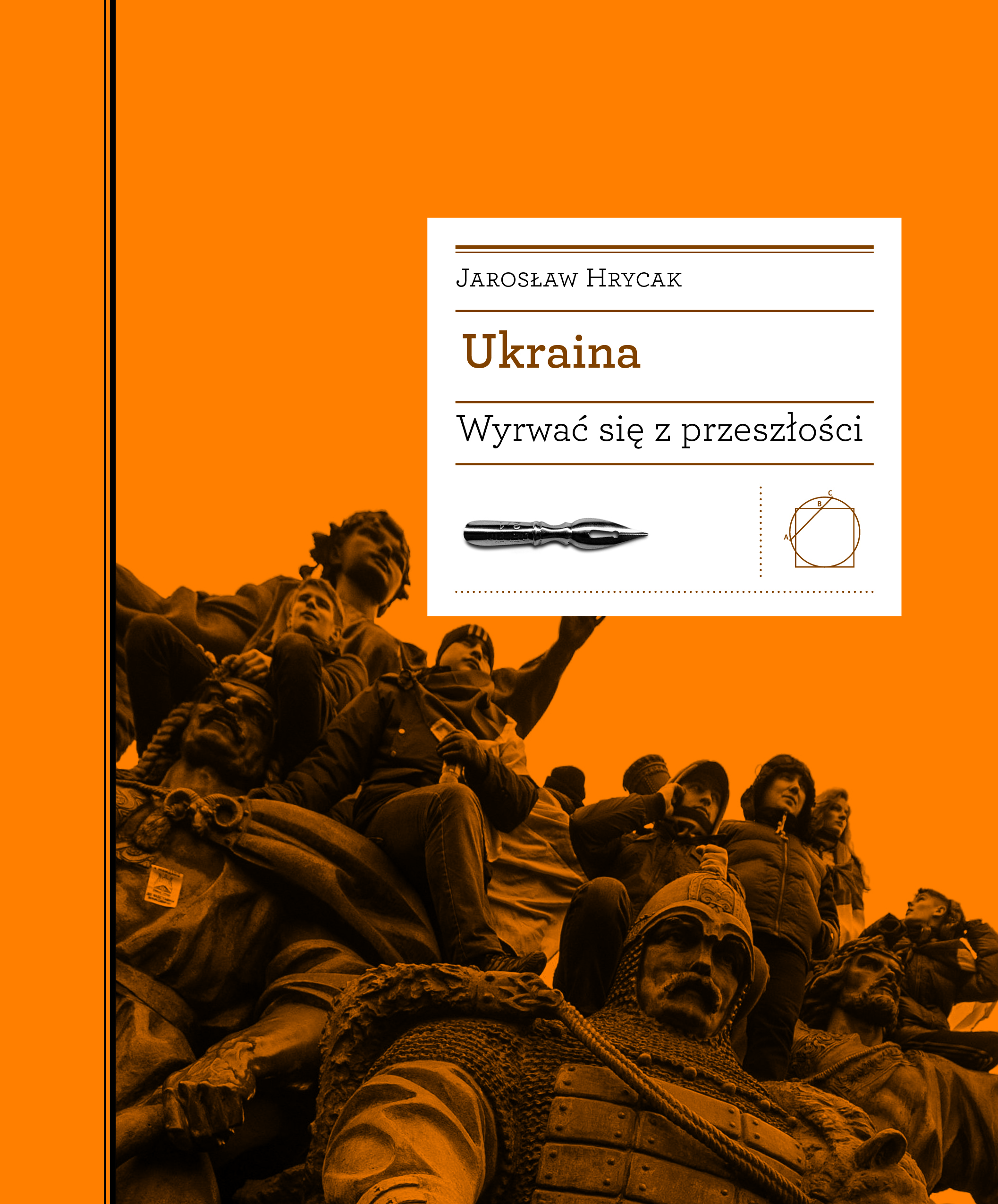
Unusual because it was written with an eye to the future. It tells the story of the country from the baptism of Kiev’s Prince Vladimir in 988 until full-scale Russian aggression in 2022. It was written for young people; for Ukrainians gaining their civic shilling on the Maidan and for their peers abroad, on whom the future of Europe and the world depends.
Hrytsak’s history of Ukraine is based on the local history of Europe, on the country’s relations with Poland, Belarus, and Russia, but it is also global in its scope, with the author referring to political and social processes in other corners of the globe: Argentina, Burkina Faso, Chile, China, Germany, United States. Although Hrytsak wrote the final pages of this book in the early months of the 2022 war, he focused as much on the political, economic, social, and linguistic developments of the last 200 years. That is why his history of Ukraine is strikingly modern, combining entirely new perspectives with those that are presently well known in Poland: Hrytsak critically addresses the legacy of serfdom, examines the roots of Ukrainian anti-Semitism, studies all shades of nationalism, separates the language, the nation, and the land. He confronts other researchers and theories, and their final verifier becomes the reality of war as the ultimate context of the writing process.
Between the chapters, addressing the history of Ukraine, Hrytsak inserts shorter essays focused on selected topics that cut across history, developed in accordance with the perspective of the longue durée: grain, songs, borderland, violence, language. They intertwine into dramatic, engaging narratives, micro-histories where – in keeping with Albert Camus’s imperative – Hrytsak is always against the perpetrators, and on the side of the victims and the heroes. The front lines intersect here extremely often, notions become ambiguous, the spiral of violence winds up like in no other place in the world, Ukraine repeatedly becomes the site of ethnic, political, economic, and nuclear experiments – this moral imperative derived from the words of the author of The Fall thus marks the horizon of Hrytsak’s account.
Unlike other researchers, Hrytsak does not turn to the past, but directs his gaze towards the future, writing for people who gained their civic skills during Maidan or Euromaidan. He poses questions not so much about the identity and formation of the nation, but about the chances and ways of modernising Ukraine.
He avoids historical memory, believing that going beyond stereotypes only allows one to look at the facts – no matter how painful they may be. In his story, the wide perspective makes various events, treated as local and specific only to Ukraine, suddenly become part of a larger whole: the processes of globalisation and modernisation that have shaped the world at least since the discovery of America.
This is a book that speaks openly about certain complex phenomena, here Yanukovych is an ex-criminal and Putin is an ex-Kagievist who does not believe in the sincerity of any grassroots political movement.
Translated into Polish by Katarzyna Kotyńska and Joanna Majewska‑Grabowska
Content
Wstęp
Dlaczego jeszcze jedna historia Ukrainy?
Jak pisać historię Ukrainy?
Rozdział pierwszy. Co tkwi w nazwie?
Ukraina i Ukraińcy
Ruś i inni
Tradycja i nowoczesność
Rozdział drugi. Ruś
Między światem cywilizowanym a barbarzyńskim
Między Waregami a Grekami
Ruś państwowa i prawosławna
Długi cień Rusi
Krótka historia ukraińskiego zboża
Rozdział trzeci. Kozacka Ukraina
Rzeczpospolita: Zachód w polskim kontuszu
Od Kolumba do Kozaków
Jak Kozacy zostali Ukraińcami
Państwo kozackie
Krótka historia ukraińskiej pieśni
Rozdział czwarty. Długie XIX stulecie
Ukraińskie długie XIX stulecie
Odrodzenie narodowe
Wymiar geopolityczny
Literacka Ukraina
Walka poetów
Urbanizacja i industrializacja
Chłopskie morze
Krótka historia ukraińskiego pogranicza
Rozdział piąty. Ukraina 1914–1945
Wielka Wojna
Ukraińska rewolucja
Wojna wszystkich ze wszystkimi
Rewolucja chłopska
Ukrainizacja
Hołodomor
Ukraina Zachodnia
Radykalizacja ukraińskiego ruchu nacjonalistycznego
Kwestia ukraińska w drugiej wojnie światowej
1914–1945: podsumowanie
Krótka historia przemocy
Rozdział szósty. Powojenna Ukraina
Kraj bez przeszłości
Sześćdziesiątnicy: globalne pokolenie
Rewolucja, która się nie odbyła
Stracone dziesięciolecia
Nieobywatelska rewolucja
Przemyślenie Ukrainy na nowo
Krótka historia ukraińskiego języka
Rozdział siódmy. Niepodległa Ukraina
Posłowie
Podziękowania
Bibliografia
Indeks nazwisk
Spis map
Spis ilustracji
O autorze