
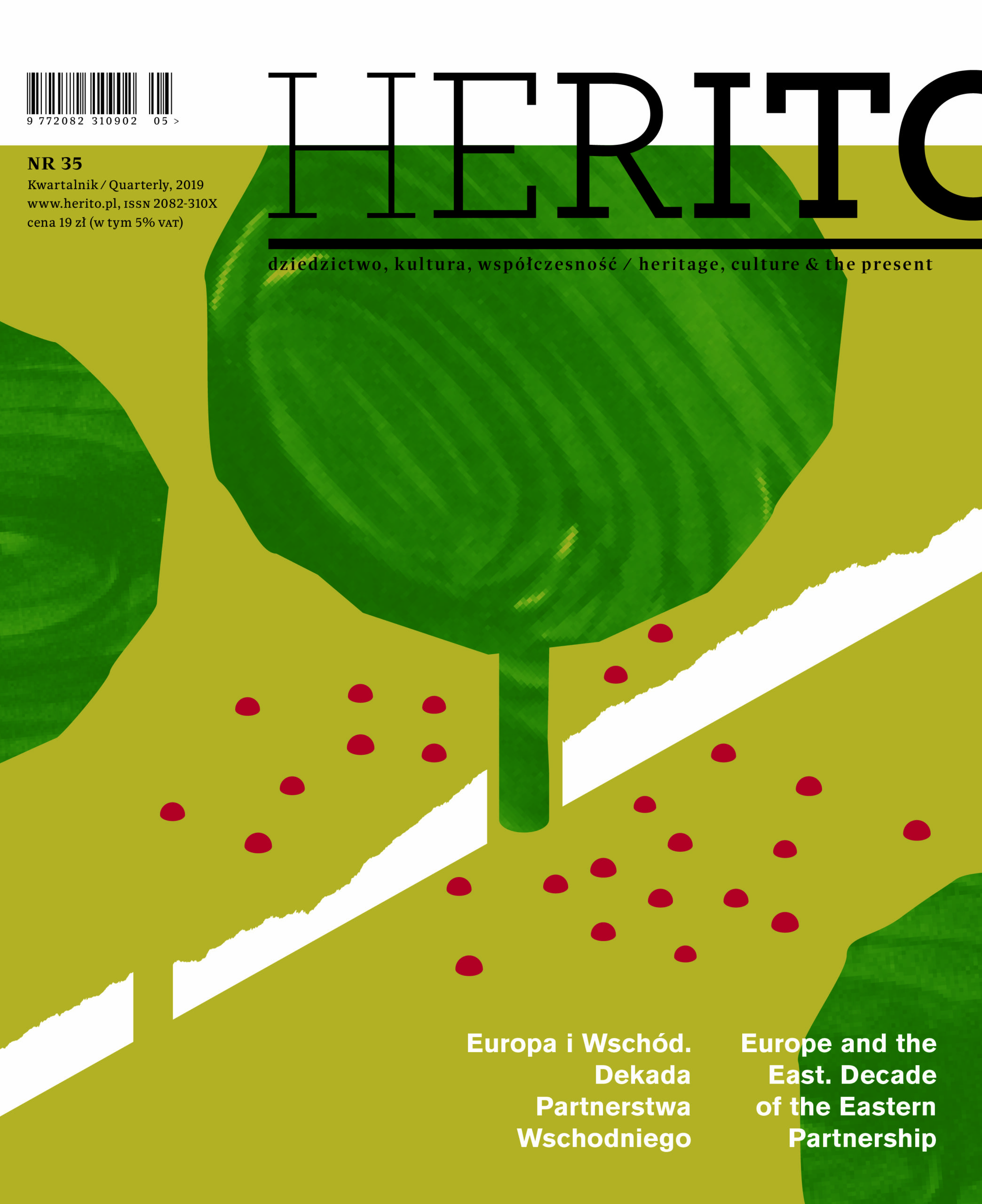
Has the East ceased to interest the West and how has the “new East” been defined after the political transition of 1989? What was the role of the Dnieper in the formation of the Ukrainian national identity and why is the future of this country dependent on this river? Who has won the unofficial competition for the contemporary national hero of Moldova? What can we learn from the Crimean Tatars? Has Europe begun in Georgia and what did the Eastern Partnership offer to the countries of South Caucasus?
The Eastern Partnership, orchestrated by Poland with the support of Sweden, is a part of the European Neighbourhood Policy. Initiated in 2009, it is addressed to three Eastern European countries: Belarus, Moldova, and Ukraine, as well as three countries of South Caucasus: Armenia, Azerbaijan, and Georgia. Ten years later we are in a convenient moment to recapitulate the program; it is also an exceptional time, since both Europe as well as its geopolitical contexts have undergone dramatical changes. New challenges together with cultural and historical aspects of the Eastern Partnership are the subject of this issue.
Paweł Kowal discusses the genesis of the Eastern Partnership, Krzysztof Czyżewski writes about the significance of “small global centres” to the formation of intercultural dialogue, Mykola Riabchuk, Katarzyna Kotyńska and Mykola Kniazhytsky, Anna Łazar, Ramin Mazur, Wojciech Górecki, Ewa Polak and Michał Jurecki present the member countries of the Eastern Partnership, Rafał Dutkiewicz describes the history of the monument to Polish professors in Wuleckie Hills in Lviv, while Adam Balcer and Żanna Komar reveal the heritage of Crimea and the Crimean Tatars. The issue features John Maciuik’s text on the 100th anniversary of Bauhaus with his analysis of the school’s impact on the arts, architecture, and design of Central Europe.
Content
Editorial
Worth a Look
Paweł Kowal – The origins of the Eastern Partnership
The East as cultural project. Łukasz Galusek talks with Krzysztof Czyżewski
Mykola Riabchuk – Through lands and centuries. In the Dnipro mirror
Ukrainian culture: in search of institutions. Katarzyna Kotyńska talks with Mykola Kniazhytsky
Rafał Dutkiewicz – Neighborhood in practice. Monument to the Lviv professors
Anna Łazar – Desperately seeking culture
Ramin Mazur – Moldova: finding a hero
Wojciech Górecki – Georgia. Where Europe started
Ewa Polak – On both sides of the mirror. Armenia and Europe
Michał Jurecki – Nakhchivan. Journey into the depths of Caucasian cultures
Adam Balcer – Crimean Tatars. Between Europe and Caucasus
Żanna Komar – Amazing stories of Crimea
John V. Maciuika – Ideals and politics. On the centenary of Bauhaus
Worth a Thought