
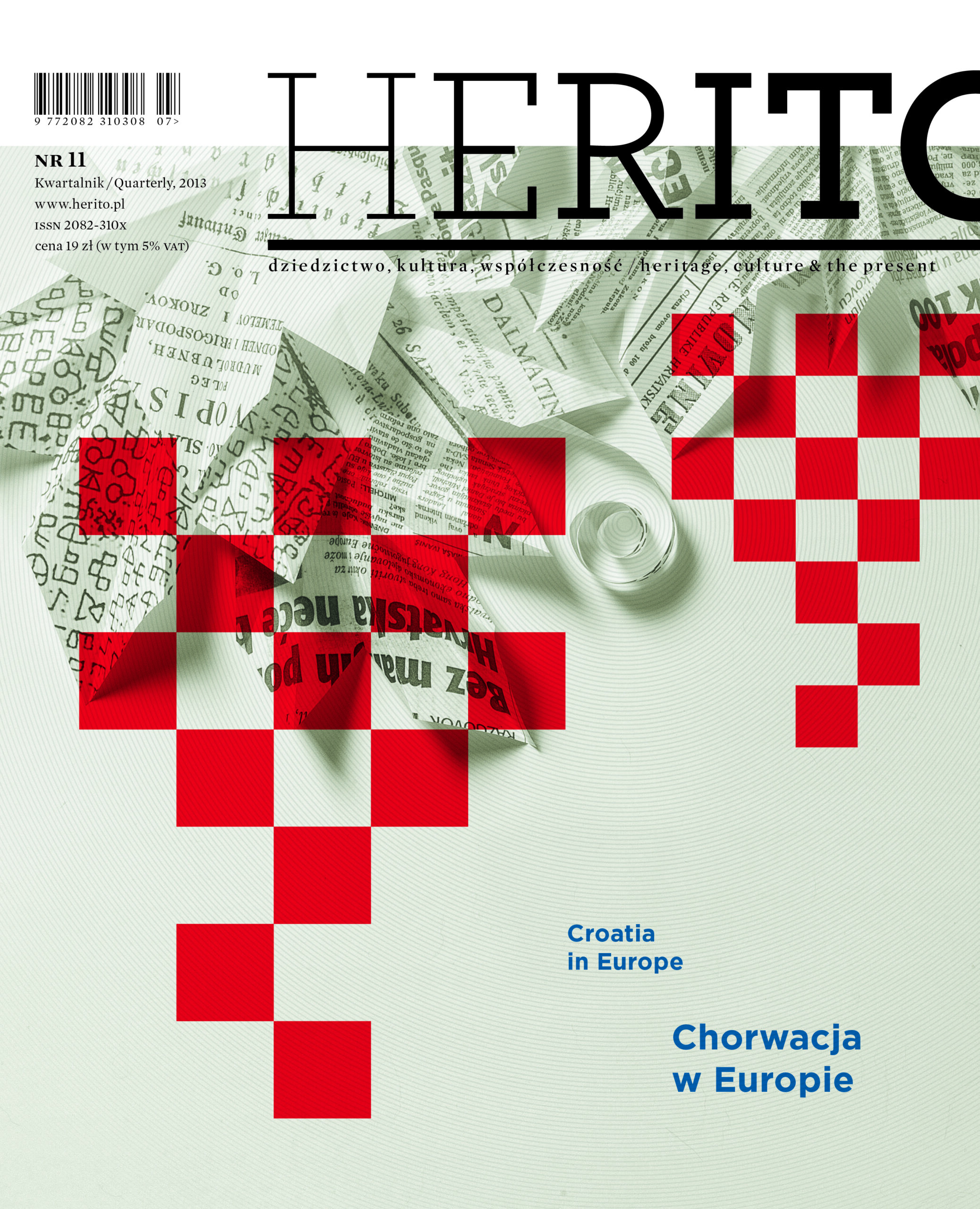
Democratic Croatia was created 23 years ago, but it is difficult to talk of this country as being young. Although it has its debut in the European Union, Croatia has been co-creating European culture for millennia. However, the success of European integration does not obliterate the significant questions. Who do the Croatians feel themselves to be? Do they believe they belong to Central Europe, or rather to the Mediterranean? What is national identity and does it make sense to talk about it? Where is the border between the “past” and the “present”? Should the Yugoslavian idea be thrown on the scrap heap of history?
The Croatian dilemmas are discussed by Maciej Czerwiński, Slavenka Drakulić, Predrag Matvejević, Marko Špikić, and Zvonimir Milanović. We also talk about art and politics with Andrzej Wajda, and about the European Capital of Culture Marseille-Provence 2013 with its artistic director; as well as reviews and reports of what’s going on in Central Europe, and the travel notes of Mykola Riabchuk.
Content
Editorial
Worth a look
Maciej Czerwiński – Croatia in Europe: ex occidente lux
Slavenka Drakulić – Croatia on the EU train, but in second class
Predrag Matvejević – The Yugoslavian idea before and after Yugoslavia
Marko Špikić – The future of the past in Croatia
Zvonimir Milanović – The spirit of Europe
On politics and art. An interview with Professor Andrzej Wajda
Euro-Mediterranean Capital of Culture. Ulrich Fuchs talks to Joanna Sanetra-Szeliga
Agnieszka Zabłocka-Kos – Cheap, attractive, modern – the Werkbund estates
Andrzej Rottermund – Andrzej Tomaszewski’s philosophy of heritage
Beata K. Nykiel – Memory of Königsberg – amnesia of Kaliningrad?
Wojciech Wilczyk – Silence over 6 mètres avant Paris
Peter Michalík – The photographer of change
Csaba G. Kiss – Krakow for Zagreb…
Żanna Komar – One hundred landmark buildings in Lviv
Mykola Riabchuk – Notes from a journey (2)