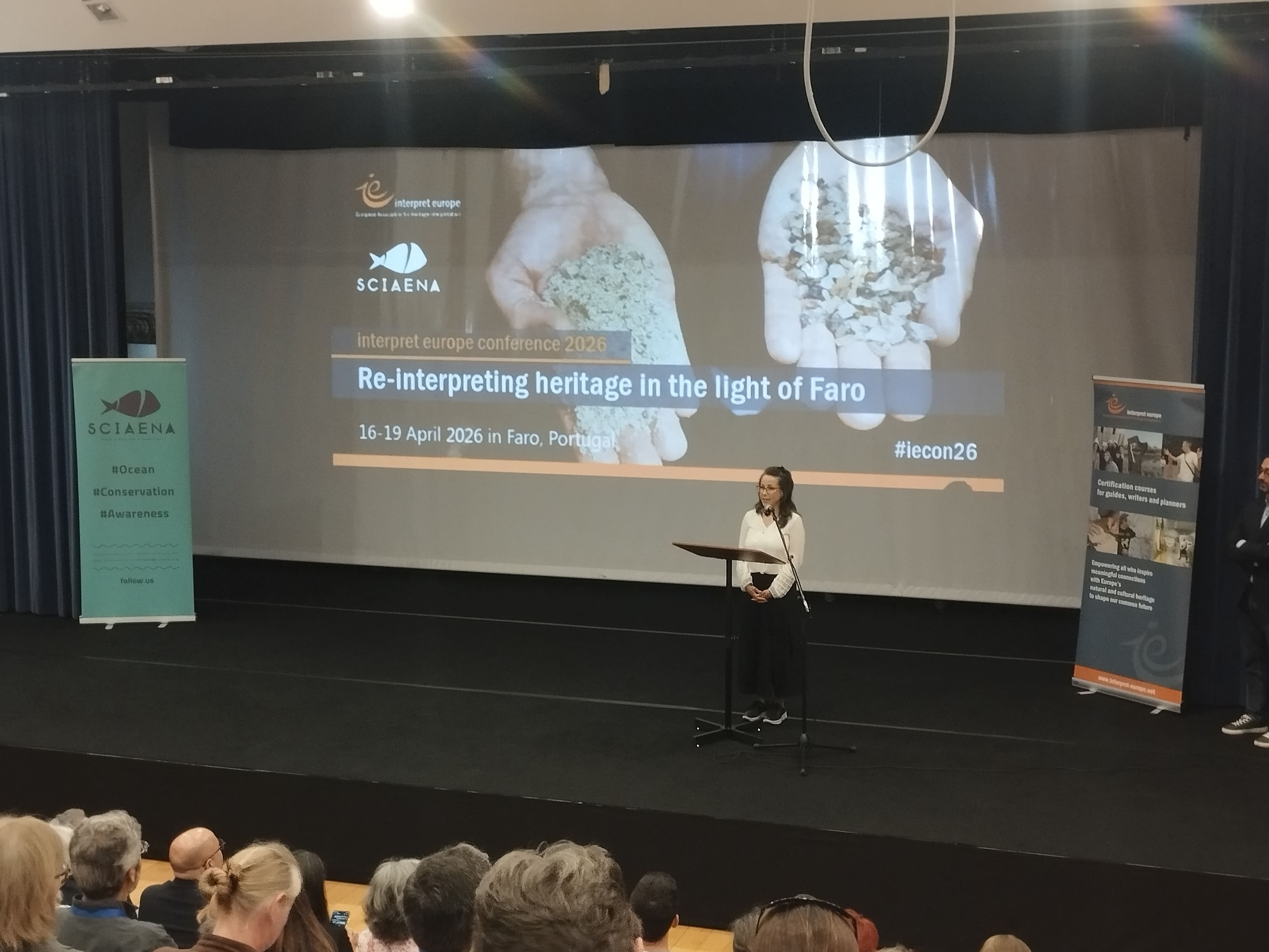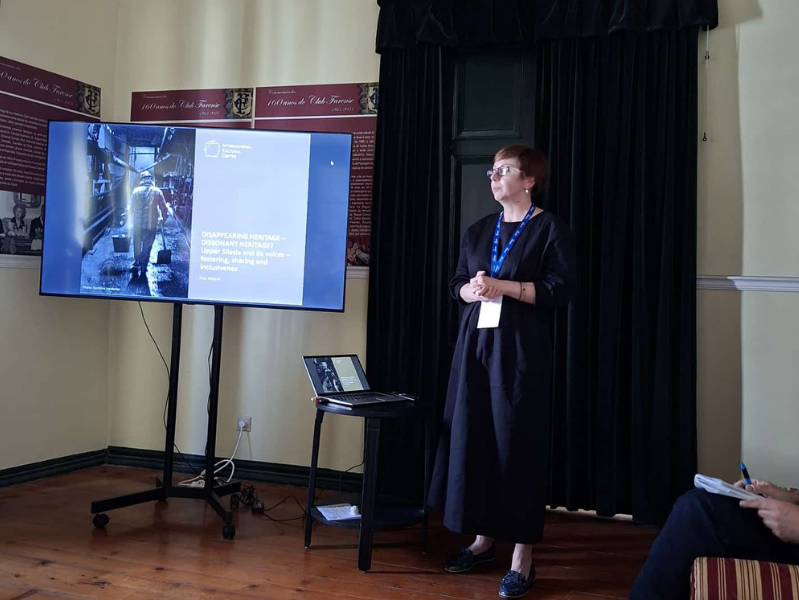
Ewa Wojtoń delivered a presentation titled “Disappearing heritage – dissonant heritage? Upper Silesia and its voices – fostering, sharing, and inclusiveness”.
The Faro Convention 20 Years On
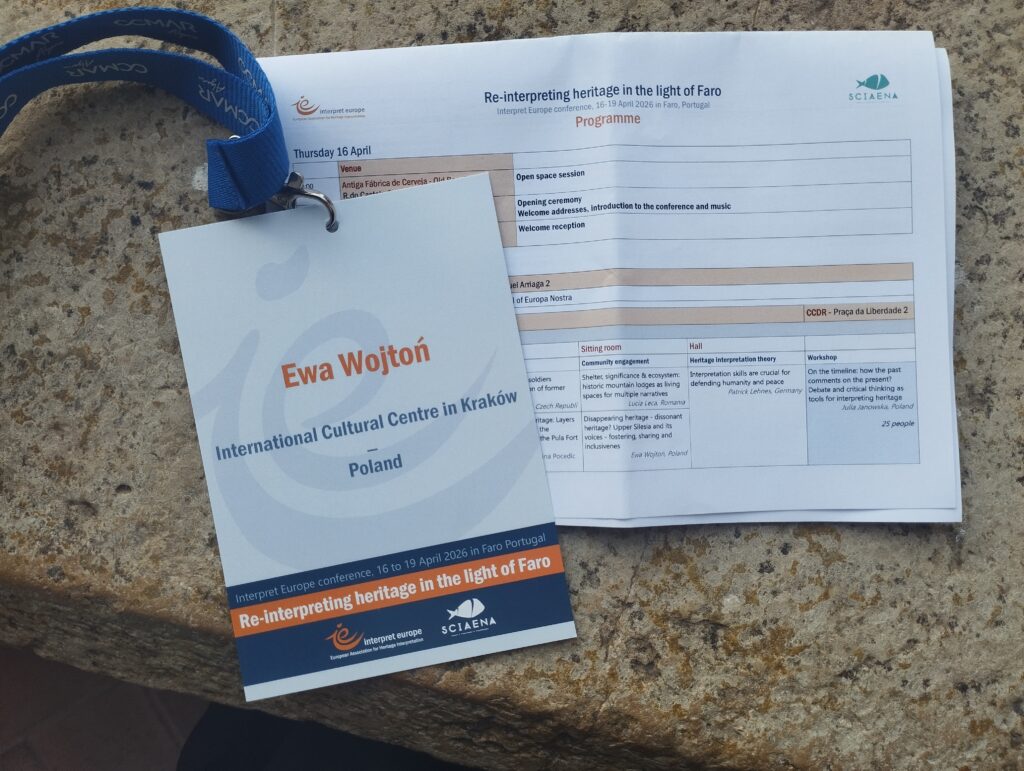
The Interpret Europe network organized an international conference titled “Re-interpreting heritage in the light of Faro,” aimed at examining this document—crucial for heritage interpretation and promotion—20 years after its signing. It was in Faro in 2005 that the Council of Europe adopted the Convention, setting the stage for more democratic, people-centered and values-based practices in managing European heritage. This year’s conference provided an opportunity to reflect on how interpretation can enhance the value of heritage—both natural and cultural—for people and societies in European democracies.
Conference 2026: “Re-interpreting heritage in the light of Faro”
Participants in the event discussed how the provisions of the Faro Convention might be interpreted today and whether they still resonate as strongly as they did 20 years ago. The group of researchers also included voices from Central Europe. Ewa Wojtoń spoke about the Polish experience, using Upper Silesia—and particularly the voices of women from mining families—as an example to address the broader Polish context of interpreting intangible heritage, including oral history, while highlighting the dynamics of the Upper Silesian region’s transformation.
An ICC representative on the power of Upper Silesia’s oral history
In her presentation “Disappearing heritage – dissonant heritage? Upper Silesia and its voices – fostering, sharing, and inclusiveness”, she reflected on how to discuss the traditions and culture that form the foundation of the region’s identity. She noted that the stories of women from mining families in Upper Silesia represent an area that has been undervalued for years, still largely undiscovered, and is only now beginning to be appreciated. Ewa Wojtoń pointed out that in order to preserve collective memory, it is important to document oral histories, and that creating such resources involves shaping and interpreting local heritage and the identity of a place, while also influencing the co-creation of narratives about the region, laying cultural foundations, and simultaneously boosting residents’ self-esteem.
The speech by the representative of the ICC referred to the provisions of the Faro Convention, particularly those concerning participation in the enjoyment of heritage—both individual and communal—and contributing to its enrichment, as well as enhancing its value through identification, research, interpretation, protection and presentation.
Ewa Wojtoń – expert at the ICC Research Institute of European Heritage
Ewa Wojtoń is a historian and museum professional specializing in cultural heritage management; she coordinates numerous national and international projects. At the ICC, she is responsible for matters related to world heritage and for national cooperation with local NGOs and international bodies, including Europa Nostra.
Co- financed by the Minister of Culture and National Heritage of the Republic of Poland.
Organizers: Interpret Europe; Sciaena.
Special thanks to the Adam Mickiewicz Institute for supporting the participation of the ICC researcher in the conference “Re-interpreting heritage in the light of Faro”
More about the Interpret Europe conference 2026