
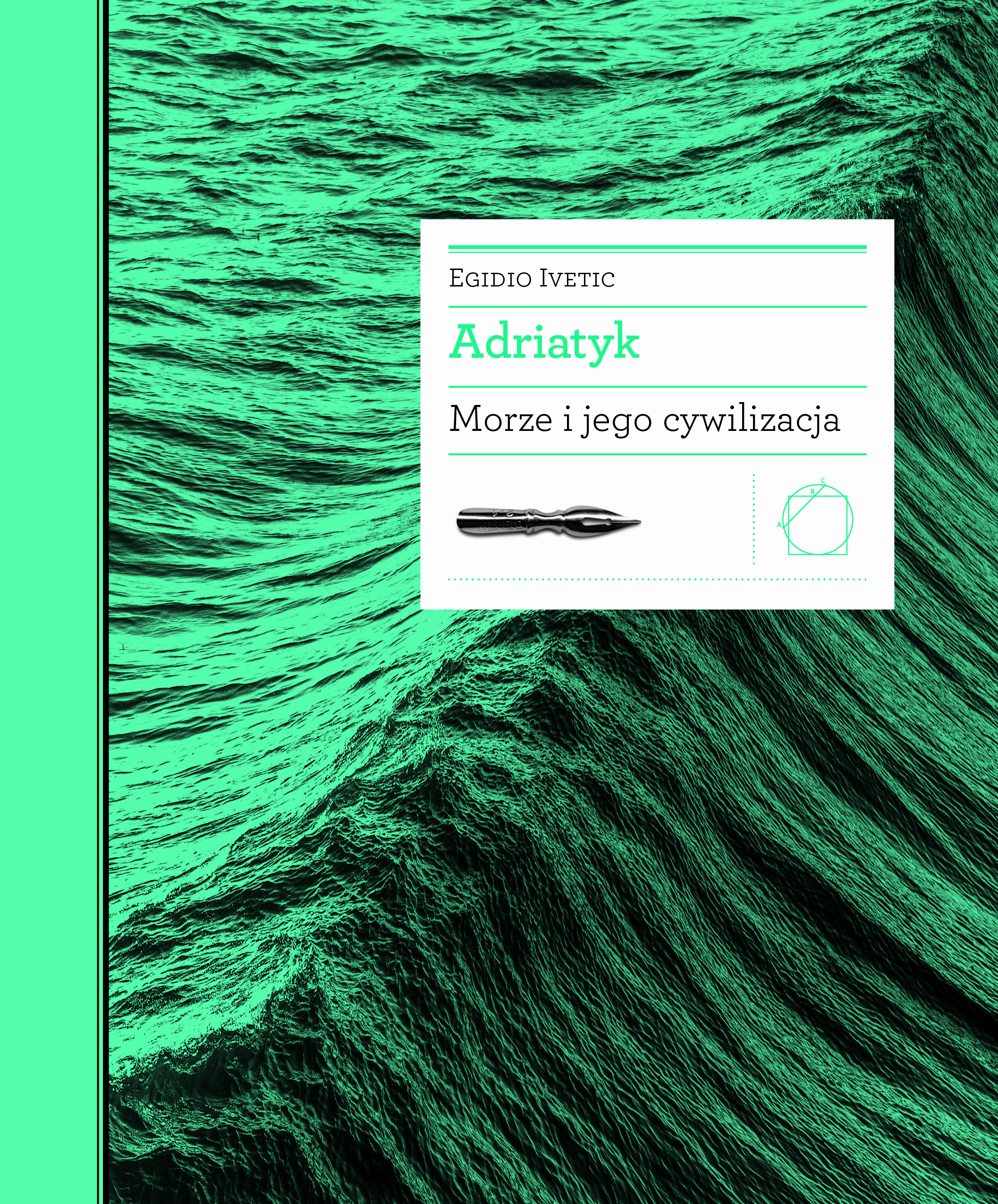
The Adriatic, a sea that binds together coasts and peoples, is part of the cradle of European civilization. It is both an organism and a mechanism, as well as a travel route for goods, people, ideas, inventions, languages, and cultures. For Egido Ivetica, the Adriatic Sea is a symbolic space that reflects local and national communities. He treats it as a place of contact between the inland and the coast, East and West, Catholicism and Orthodoxy, and finally Roman and Slavic cultures.
The sea was a natural border of several empires: the Byzantine Empire, Charlemagne’s Empire, the Ottoman Empire, the Holy Roman Empire, Napoleon’s Empire, and the Austro-Hungarian Empire. Therefore, its history is one of Central Europe and the formation of its borders.
Egidio Ivetic got familiar with the Adriatic Sea during his work as a sailor on a warship. The idea to study the history of this area first came to him one harsh winter, during long hours of boring duty. Much later, after many years of work as a scholar and university teacher, he decided to take on the reflection on the Adriatic’s past again. In his comprehensive essay, Ivetic investigates the history of the sea and its surroundings from the discovery of 150,000–200,000-year-old human traces to the 21st century, or to put it differently, from the birth of civilizations, migration, and dispersal to new borders and unification in the European Union.
Combining a broad perspective with micro-history, as well as an outsider’s view with personal experience, The Adriatic is a book of extraordinary intellective value.
Published with the financial support of the Italian Institute of Culture in Kraków.
Translated into Polish by Joanna Ugniewska, Piotr Salwa, Mateusz Salwa and Marta Duda-Gryc
Content
Słowo od autora
Wprowadzenie. Historyczne znaczenie morza
Morze Śródziemne w miniaturze
Terytorium morskie
System regionów
Wymiar adriatycki
Wyższe morze
Początki
Ludy adriatyckie
Grecy i Rzymianie
Mare Superum
Akwileja, Pula, Solin, Brindisi, Rimini
„Trzecia starożytność” w wiekach średnich
Bizancjum
Zachód i Wschód
Słowianie
Venetiae
Odrodzenie systemu
Rawenna i Zadar
Między Wschodem a Zachodem
Kierunek: wschód
Komuny miejskie
Zatoka Wenecka
Udzielne państewka
Królestwo Neapolu
Statki, towary, powiązania
Wenecja i Adriatyk
Przedmurze
Równowaga na granicy
Kultura wenecka
Adriatyk turecki
Adriatyk habsburski
Wybrzeża Państwa Kościelnego
Wybrzeża Neapolu
Adriatycki ancien régime
Dubrownik i Ankona
Obrzeża cesarstwa, granice narodowe
Nowa epoka
Restauracja i rok 1848
Włochy i Austro-Węgry
Orient, który wciąż trwa
Nowoczesność na morzu
Kwestia narodowa
Kwestia adriatycka
Triest, Rijeka, Bari
Konflikty i zjednoczenia
Ostrożna wojna
Bolesny pokój
Trudne wybrzeże
Między imperium a rewolucją
Granica Europy
Druga połowa XX wieku
Unia Europejska
Wspólna przestrzeń kulturowa
Przypisy
Chronologia
Toponimy
Indeks nazwisk
Spis map
O autorze