
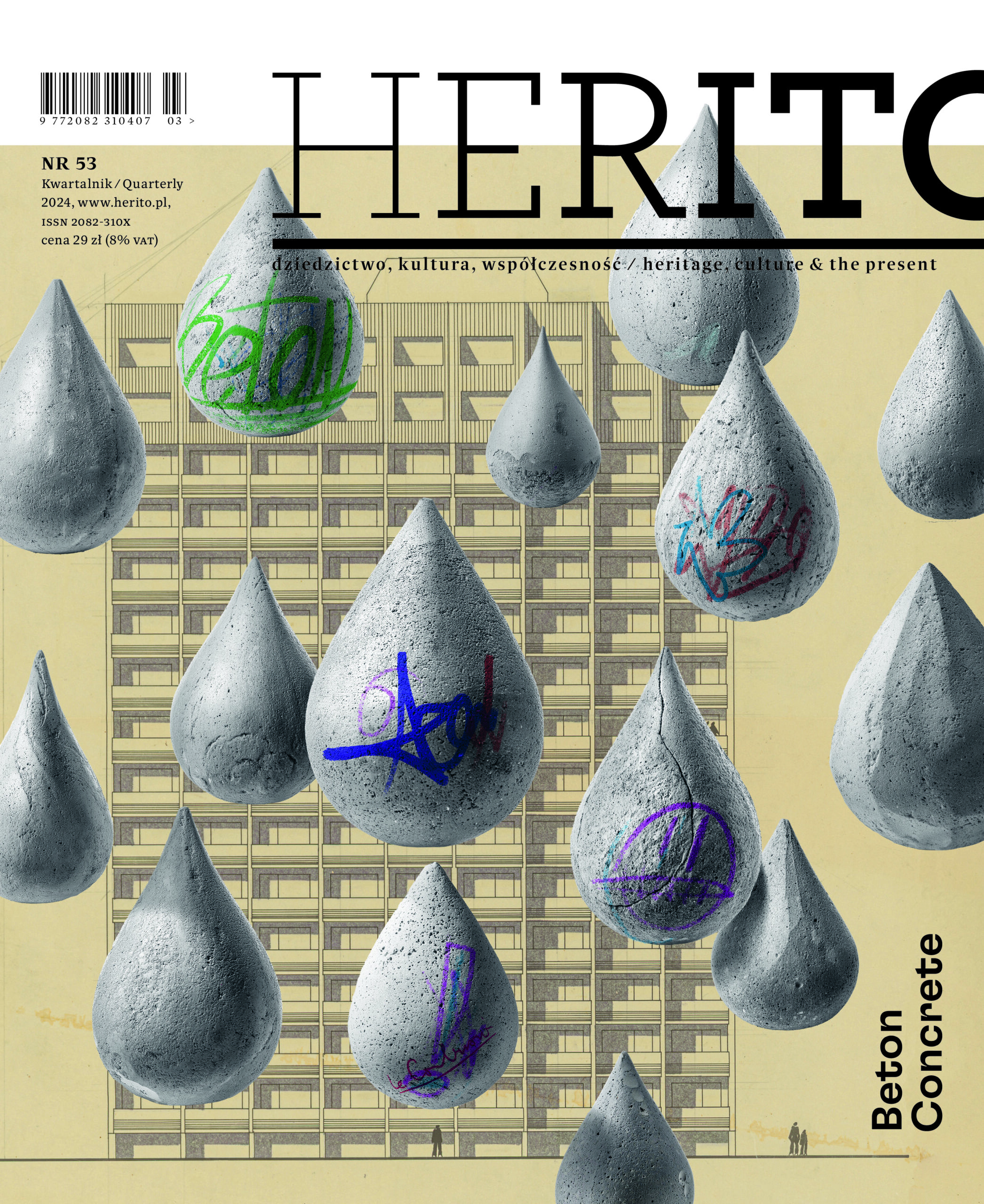
Two hundred years ago, Joseph Aspdin obtained the patent for the Portland concrete. This unassuming event laid the foundation for the giant revolution in the history of architecture, which changed the landscape of the whole world in the next century.
Central Europe is severely marked by the stereotype of degraded space in our cities, dominated by blocks of flats. The large panel system building, intended to resolve the hunger for living estates in the socialist realism era, has unified the cultural landscape of cities between Eastern Berlin and Vladivostok. But did concrete deserve this bad reputation?
Two hundred years after Aspdin’s patent, we look at the inapparent history of this material, we talk about the most curious projects made of concrete, and we look for the answer: what material will our future be made of?
Content
Editorial
Michał Wiśniewski – The Legacy of the Concrete Box
Żanna Komar – A Bridge to the Future
Robert Hirsch – Gdynia, a City of Sea and Concrete
Jerzy Ilkosz – The Subtle Giant
Irma Kozina – The Brute from Katowice. A History of Lost Architecture
Semen Shyrochyn – The Concrete Heritage of Kyiv
Błażej Ciarkowski – The Good, the Bad and the Honest. On the Aesthetics, Ethics and Hidden Meanings of Concrete
Owen Hatherley – The Berlin Concrete Twins
Aleksandra Wojtaszek – A Dream Pressed Into Concrete
Beata Chomątowska – Concrete‑Made Utopias
Wojciech Stanisławski – Bunkers, or the Marriage of Cadmos and Harmonia
Dorota Jędruch – Concrete – the Matter of Liminal Landscapes
Andrzej Marzec – Architecton: Concrete and Junk Architecture