
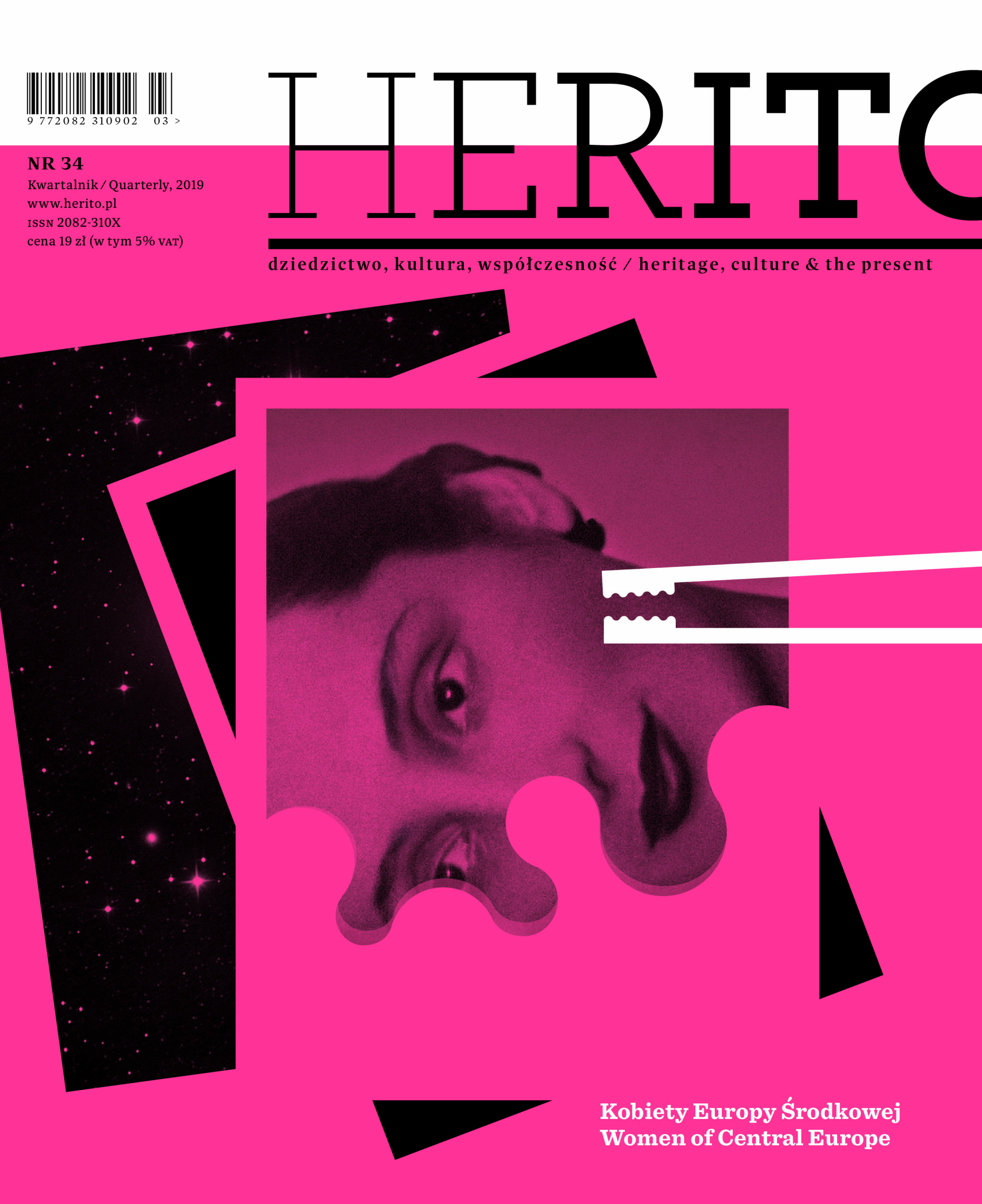
It is only recently that the role of women in history has been more fully recognised. In the early 1970s, the term “herstory” was coined to refer to history told from a woman’s point of view. Although “Herito” always seeks to offer as much space to women authors and their topics as possible, we decided to dedicate the new issue entirely to women that were significant to Central European history, culture, politics, and arts – women often forgotten, underappreciated, or intentionally erased.
To tell the history of Central Europe from a woman’s perspective and to “uncover” elusive stories we invited outstanding male and female authors. The result is an issue with more than two hundred pages, dedicated to bringing back the memory of poignant women narratives, heroines, and their accomplishments.
In the new issue, Olga Drenda examines the celebration of Women’s Day in people’s democracies. Małgorzata Rejmer investigates the role of women in Albanian culture across many centuries. Osap Sływynski searches for the traces of Zuzanna Ginczanka and other writers of Jewish descent in Lviv, while Małgorzata Radkiewicz writes about avant-garde artists that lived and worked in this city. Marta Madejska narrates the story of Maria Przedborska – an invaluable poet-inspector from Łódź. Teresa Worowska introduces the life story of Alaine Polcz – a Hungarian psychologist and writer, author of a touching memoir of the final days of World War II entitled One Woman in the War, excerpts of which were translated for “Herito” by Karolina Wilamowska.
The issue also features Ewa Furgał’s text on the history of Polish women freedom fighters, Grzegorz Piątek’s essay about the previously unknown “Le Corbusier’s first Polish female student”, as well as Jacek Dehnel’s story about the role of women in the Polish uprisings in the 19th century, inspired by several unremarkable photographs, and Maciej Jakubowiak’s text about instances of overcoming patriarchy in recent Polish literature.
There is also a notable atlas of Central European “ladies of design”, created by Czesława Freilich and Irma Kozina, Kama Buchalska’s interview with the Czech publisher Barbora Baronova about women’s oral history, Krisztián Nyáry’s essay about the pioneer of Hungarian feminist movement, Aleksandra Wojtaszek’s text about the “Croatian female version of Andersen”, and Beata Nykiel’s recollection of Karolina Lanckorońska – “the ultra-Polish European woman”.
Content
Editorial
Worth a Look
Olga Drenda – Flowers for Eve
I’m old, so can I do anything? Barbora Baronová talks to Kamila Buchalska
Czesława Frejlich, Irma Kozina – First ladies of design
Jacek Dehnel – From “Die, Prince!” to “Fare thee well, Eleonora!”
Marta Madejska – A poet from the Labour Inspectorate
Ewa Furgał – Free women, free country
Małgorzata Radkiewicz – Women of the Lviv avant‑garde
Ostap Sływynski – “And dresses, bright dresses, will remain of me”
Grzegorz Piątek – The first student of Le Corbusier in Poland
Beata K. Nykiel – Professor Karla, the most Polish European
Krisztián Nyáry – The Hungarian who conquered two continents
Teresa Worowska – To live, to survive and to die
Alaine Polcz – The women on the frontline
Aleksandra Wojtaszek – Escape from the world of fairytales
Małgorzata Rejmer – Tears are a woman’s fate
Maciej Jakubowiak – Fallen patriarchs
Worth a Thought