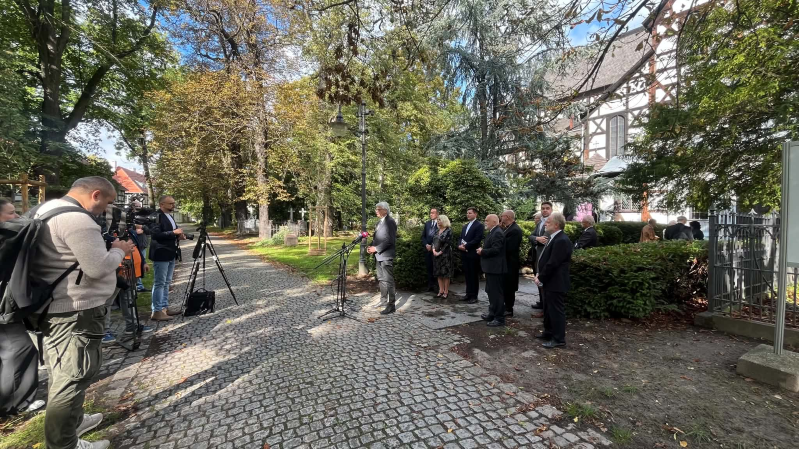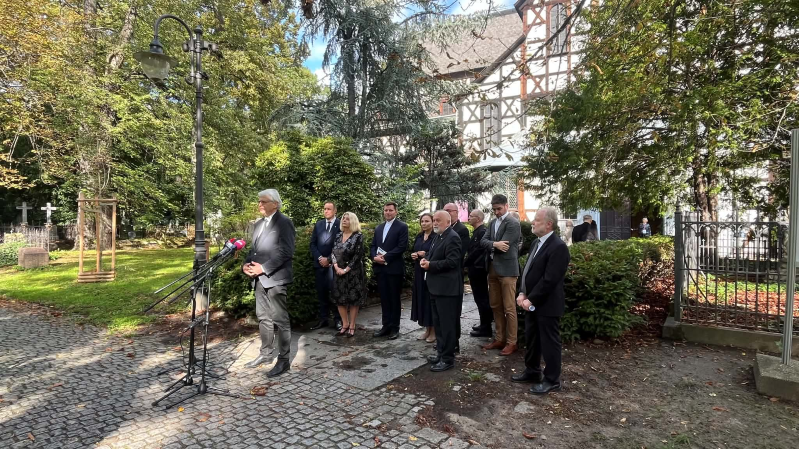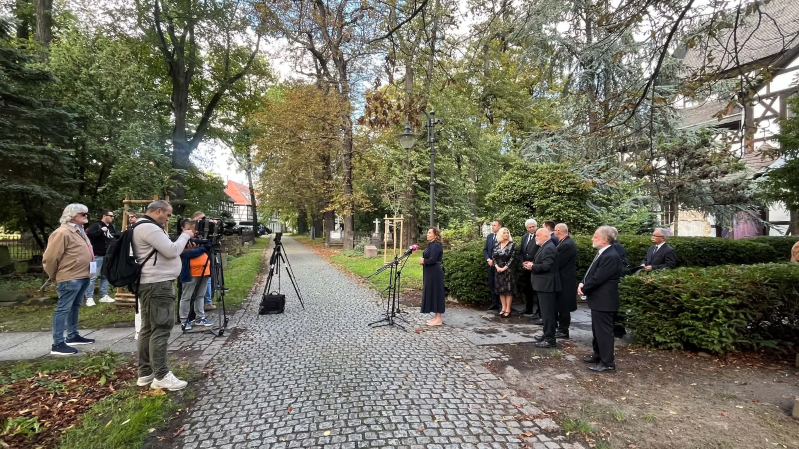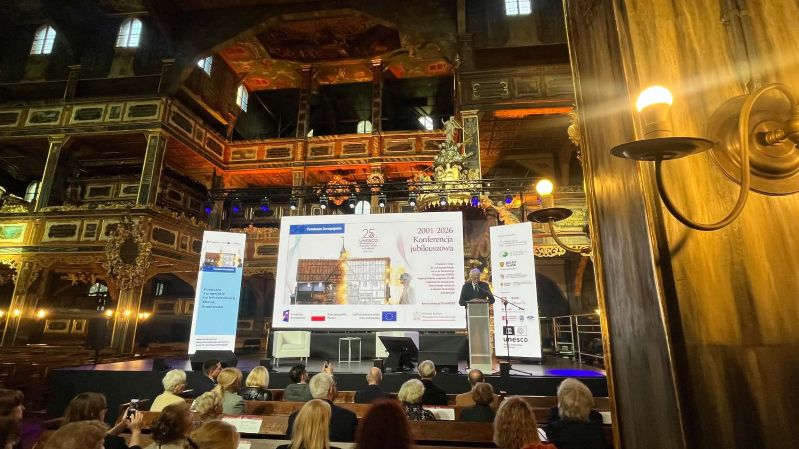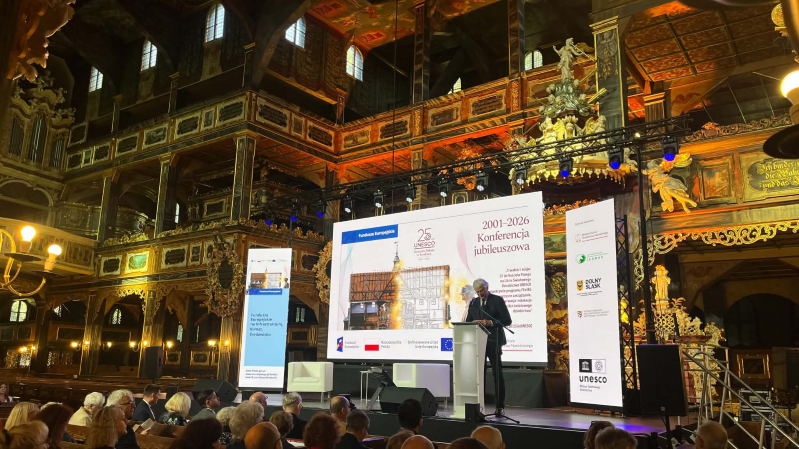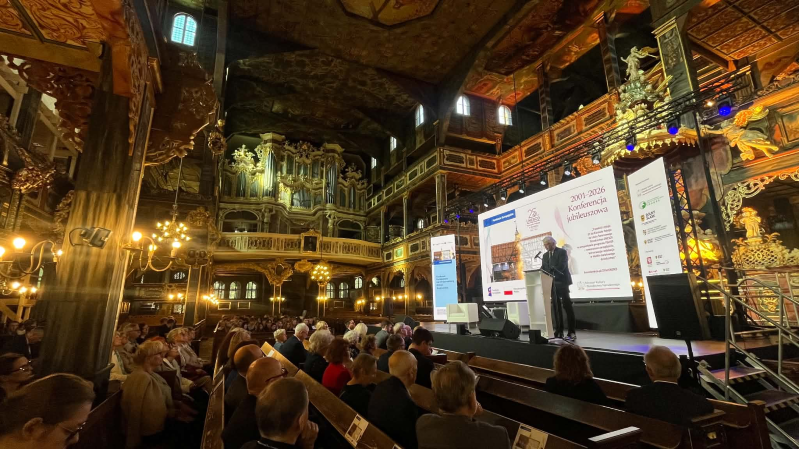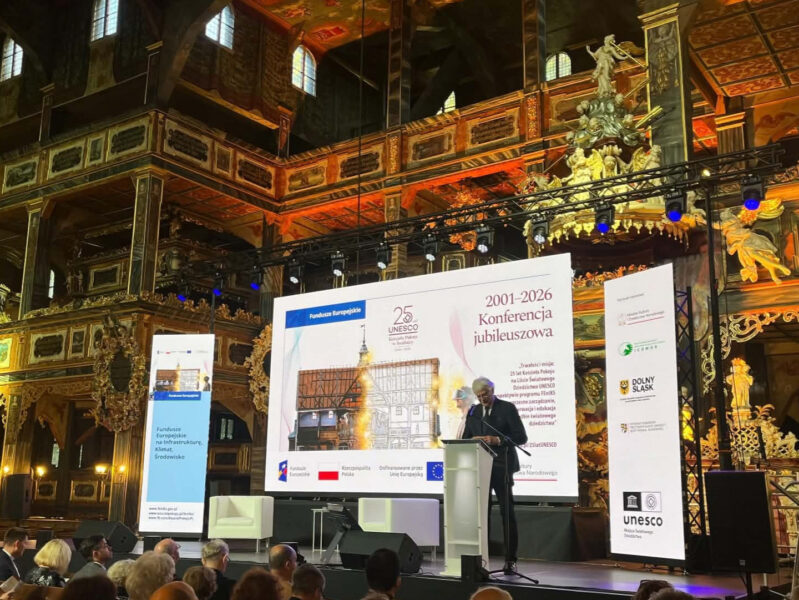
The Church of Peace in Świdnica is a Historic Monument, the largest wooden church in Europe and one of the seven new wonders of Poland. On 13 December 2001, the World Heritage Committee unanimously inscribed this church on the UNESCO World Heritage List, which comprises cultural and natural sites of the highest value, recognised as the common heritage of humanity and subject to special protection. The justification for this decision highlighted the church’s exceptional value as a testament to the tradition of half-timbered construction pushed to the limits of technical feasibility, an extraordinary example of the coexistence of Baroque art and Lutheran theology, and a work in which history, architecture and faith have come together to form a single, unique whole.
During a conference organised to mark the 25th anniversary of this prestigious inscription, Prof. Dr hab. Jacek Purchla, Vice-President of Europa Nostra and the ICC Director’s representative for academic affairs, delivered a paper entitled “The Church of Peace as a phenomenon of European cultural heritage – 25 years on the UNESCO World Heritage List”. Meanwhile, Dr Monika Smoleń-Bromska, Director of the Department of Funds and European Affairs at the Ministry of Culture and National Heritage, discussed the role of the FEnIKS programme in modern heritage conservation.
Significantly, in 2025, Prof. Jacek Purchla and ICC Director Agata Wąsowska-Pawlik were appointed to the Team for Poland’s Membership of the Intergovernmental Committee for the Protection of the World Cultural and Natural Heritage (UNESCO World Heritage Committee) for the 2025–2029 term, with Professor Purchla serving as a national expert.
The Church of Peace – a symbol of Polish-German reconciliation
Following the outbreak of the Thirty Years’ War, the Catholic Habsburgs imposed conditions on the Lutherans that marginalised their community, and their modest church was not destined to stand the test of time. The Church of Peace in Świdnica, established under the Peace of Westphalia concluded in 1648, was one of three built in Lower Silesia. The Lutheran community were only permitted to erect it outside the city walls, without towers or a belfry, and using only perishable materials: wood, sand, straw and clay. The building was not to resemble a church, and its construction was not to take longer than a year. The oldest Church of Peace, in Głogów, burnt down in the mid-18th century. The churches in Świdnica and Jawor have survived to this day. The Church of Peace in Świdnica forms part of the Świdnica parish of the Evangelical Church of the Augsburg Confession in Poland. It is a regular stop on sightseeing tours of Lower Silesia. After 1989, Tadeusz Mazowiecki and Helmut Kohl visited it to pray for peace, which meant that the church also became a symbol of Polish-German reconciliation.
When, in 2001, during the 25th session of the World Heritage Committee in Helsinki, the Church of Peace in Świdnica was inscribed on the UNESCO World Heritage List, it was emphasised that the Churches of Peace bear unique witness to a particular political and spiritual development in Europe and showcase technical and architectural solutions, designed to meet the challenging conditions faced by builders and communities.
Cooperation between the ICC and the Church of Peace in Świdnica
The International Cultural Centre has been collaborating with the Church of Peace in Świdnica for many years. Among other things, it was there that the 9th edition of the V4 Heritage Academy summer school took place – a programme organised by the ICC for young cultural heritage specialists from the Visegrad Group countries. Bishop Waldemar Pytel, who has been the parish priest of the Evangelical Church of the Augsburg Confession in Świdnica for almost 40 years (until 2025) and Bishop of the Wrocław Diocese of the Evangelical-Augsburg Church, has maintained close and cordial ties with the ICC for many years. When, in 2019, Bishop Pytel received the Prof. Aleksander Gieysztor Award, presented to outstanding individuals and institutions dedicated to the protection of Polish cultural heritage, Prof. Jacek Purchla, founder and long-standing director of the International Cultural Centre, delivered a laudation in honour of the laureate on behalf of the Chapter; who himself had been awarded this prestigious honour in 2010.